In modern trading, combining market liquidity structure with short-term momentum helps traders identify price areas with a higher probability of reaction. An effective strategy should first determine where supply and demand imbalances exist, and then use momentum signals to time entries within those zones.
The combination of Imbalance Profile Lidar and StochRSI Pro follows this principle. Imbalance Profile Lidar identifies areas of strong market imbalance, while StochRSI Pro provides momentum confirmation to determine appropriate entry timing at those price levels.
Strategy Structure
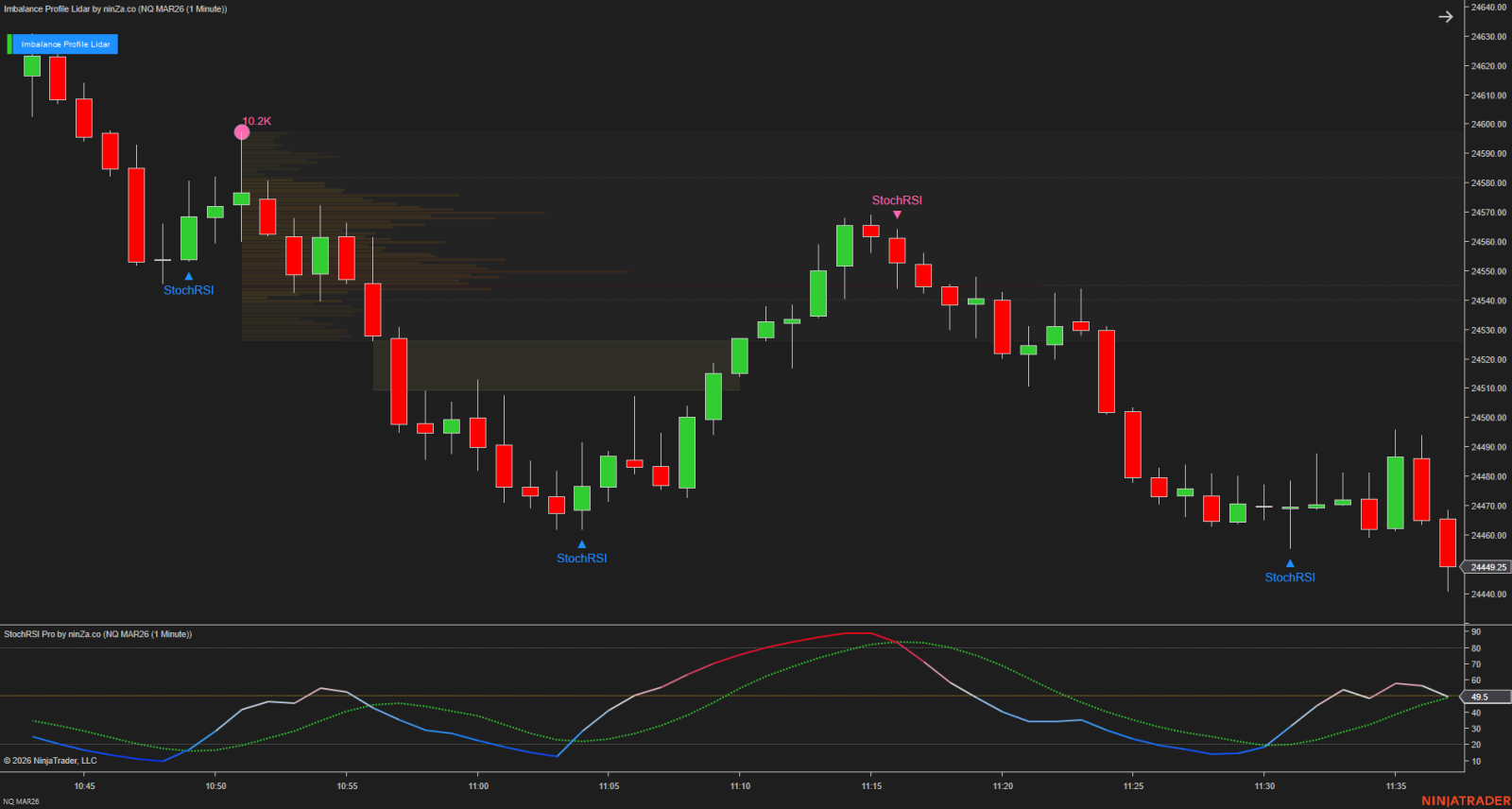
1. Identifying Key Price Zones with Imbalance Profile Lidar
Imbalance Profile Lidar is used to detect price zones where a strong imbalance between buying and selling pressure has occurred. These areas often form when the market moves quickly, leaving behind liquidity gaps or zones where trading activity was limited.
Imbalance zones typically act as:
The strategy focuses on observing how price reacts when returning to these imbalance areas rather than trading during strong moves in the middle of the market.
2. Momentum Confirmation with StochRSI Pro
StochRSI Pro is used to confirm short-term momentum when price reaches an imbalance zone.
When StochRSI Pro enters the oversold region and begins to turn upward, it indicates weakening selling pressure and the potential return of buying momentum.
When StochRSI Pro enters the overbought region and begins to turn downward, it suggests that bullish momentum is weakening and selling pressure may emerge.
StochRSI Pro is not used as a standalone trading signal. It acts only as a confirmation tool at previously identified imbalance zones.
Trading Rules
Long Setup
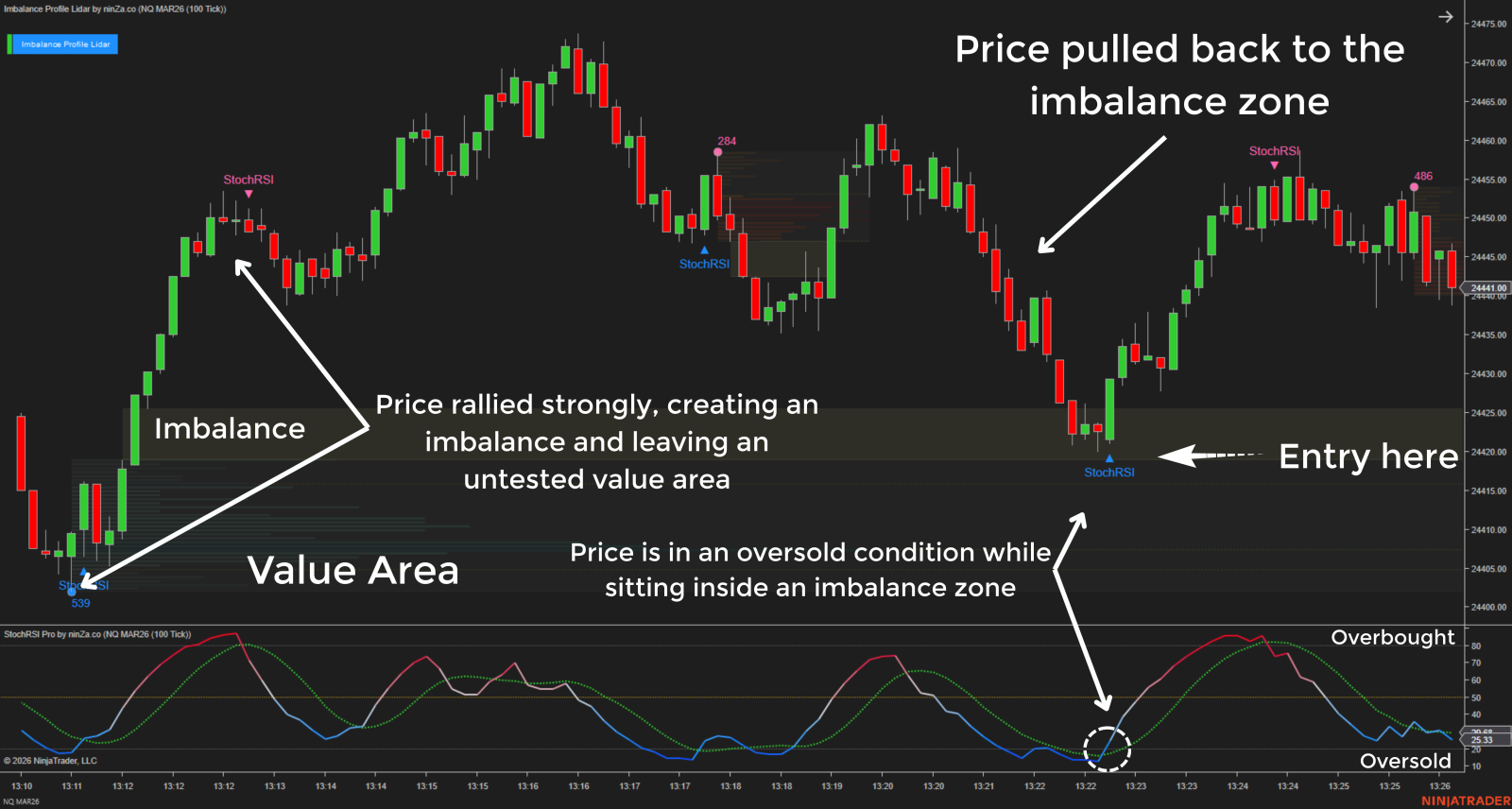
Required conditions:
Price returns to a support imbalance zone identified by Imbalance Profile Lidar.
StochRSI Pro reaches the oversold region and begins turning upward.
Price action shows confirmation of buying interest at the imbalance level.
A long position is executed when momentum begins to shift upward at the imbalance support zone.
Stop loss is placed below the imbalance zone or below the nearest structural low.
Profit targets can be set at the next imbalance zone above or at a minimum Risk–Reward ratio of 1:2.
Short Setup
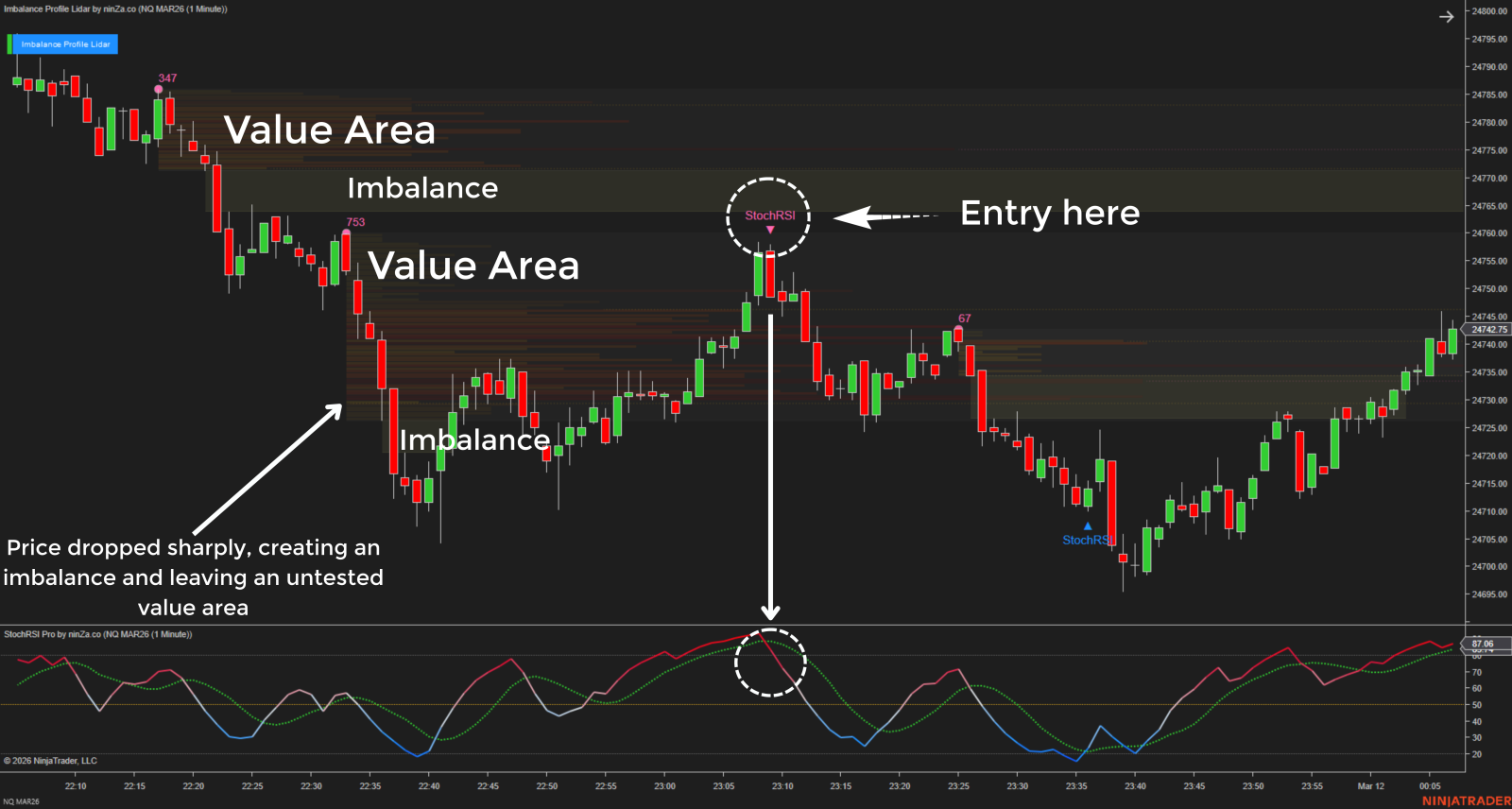
Required conditions:
Price returns to a resistance imbalance zone identified by Imbalance Profile Lidar.
StochRSI Pro reaches the overbought region and begins turning downward.
Price action shows confirmation of emerging selling pressure.
A short position is executed when momentum begins to weaken at the imbalance resistance zone.
Stop loss is placed above the imbalance zone or above the nearest structural high.
Profit targets can be set at the next imbalance zone below or at a minimum Risk–Reward ratio of 1:2.
Operational Guidelines
Do not trade when price is located in the middle of the market and away from significant imbalance zones.
Do not use StochRSI Pro as an independent signal.
Only execute trades when price clearly reacts within an imbalance zone.
Maintain consistent risk management for each trade.
This strategy focuses on entering the market at price levels where meaningful reactions are more likely, while using momentum signals to refine entry timing.
Strategy Assessment
Strengths:
Focuses on trading around important liquidity zones.
Combines market structure with short-term momentum confirmation.
Reduces trading in areas without a clear edge.
Applicable across multiple timeframes.
Limitations:
Requires experience in interpreting imbalance zones.
Performance may decline in narrow sideways market conditions.
Demands patience while waiting for price to revisit imbalance levels.
Conclusion
The combination of Imbalance Profile Lidar and StochRSI Pro forms a structured trading strategy centered on market imbalance zones. Imbalance Profile Lidar identifies where price is likely to react, while StochRSI Pro helps confirm the appropriate timing to participate.
By focusing on structured price areas rather than trading in the middle of the market, the strategy aims to concentrate on higher-probability setups while reducing unnecessary trades.