GC (Gold Futures) moves fast and aggressively – which can easily cause traders to lose discipline and enter trades based on emotion. The real problem is usually not a lack of setups, but a lack of clear context to understand what state the market is currently in and which sessions are actually worth trading.
Market Profile helps you see the market through a broader perspective: where price is accepted (Value Area), where most trading activity occurs (POC), and whether the market is balancing or expanding into a trend. Once the context is clear, you don’t need to guess – you simply prepare scenarios and wait for the market to confirm.
Analysis process (4 steps):
- How did price move during the session?
- Where did price close?
- Where was volume concentrated?
- What key price levels should we monitor for the next session?
Below, I’ll walk you through how to “read” the market using Market Profile Flexible and build a trading plan across the 3 main trading sessions in UTC -5:
- Asian session: 7:00 PM – 4:00 AM
- London session: 2:00 AM – 11:00 AM
- New York session: 8:00 AM – 5:00 PM
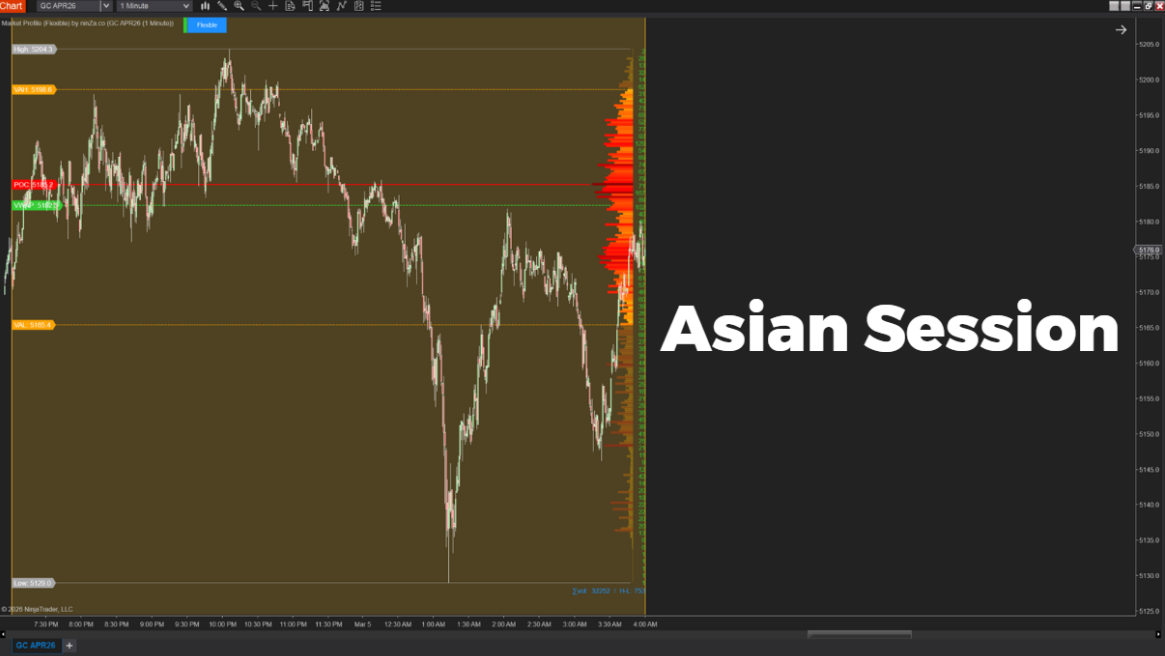
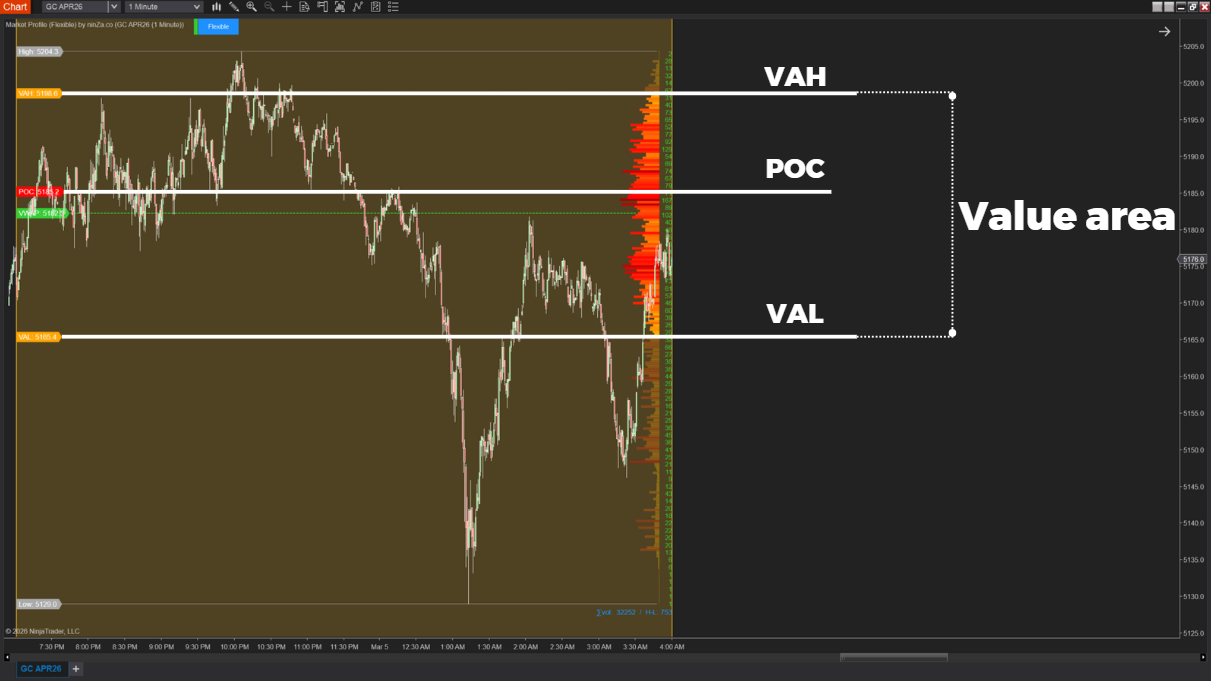
This is the overall picture of the Asian session. Let’s see what we can learn from the information provided by Market Profile Flexible.
- At the start of the session, price pushed up quite strongly and formed a high around 5204.
- However, the market failed to hold those levels and was gradually sold off.
- Mid-session, price dropped sharply to around 5129, then quickly bounced back.
- Toward the end of the session, price was hovering around the 517x area.
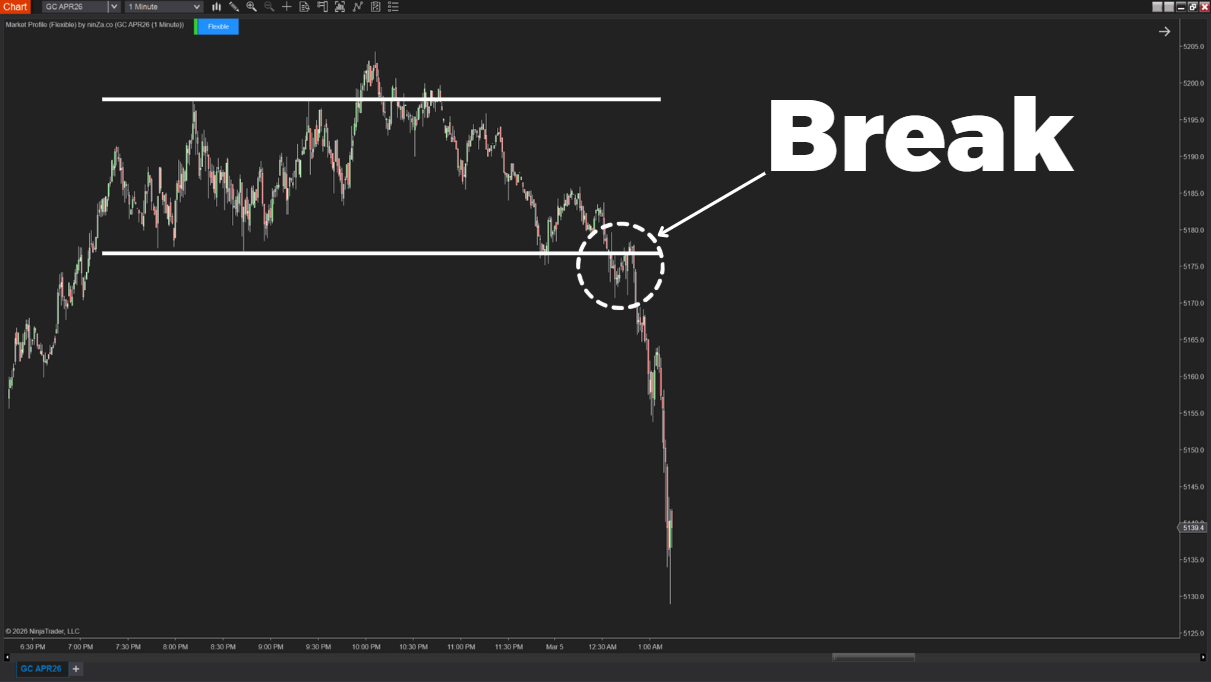
Step 1: What was the price behavior during the session?
Nearly half of the session was spent trading around a clear balance area. This is where traders accepted price for a long period before the market eventually broke to the downside.
→ When price breaks out of a large trading range during the first session of the day, the market often continues moving in the direction of that breakout during the following session.
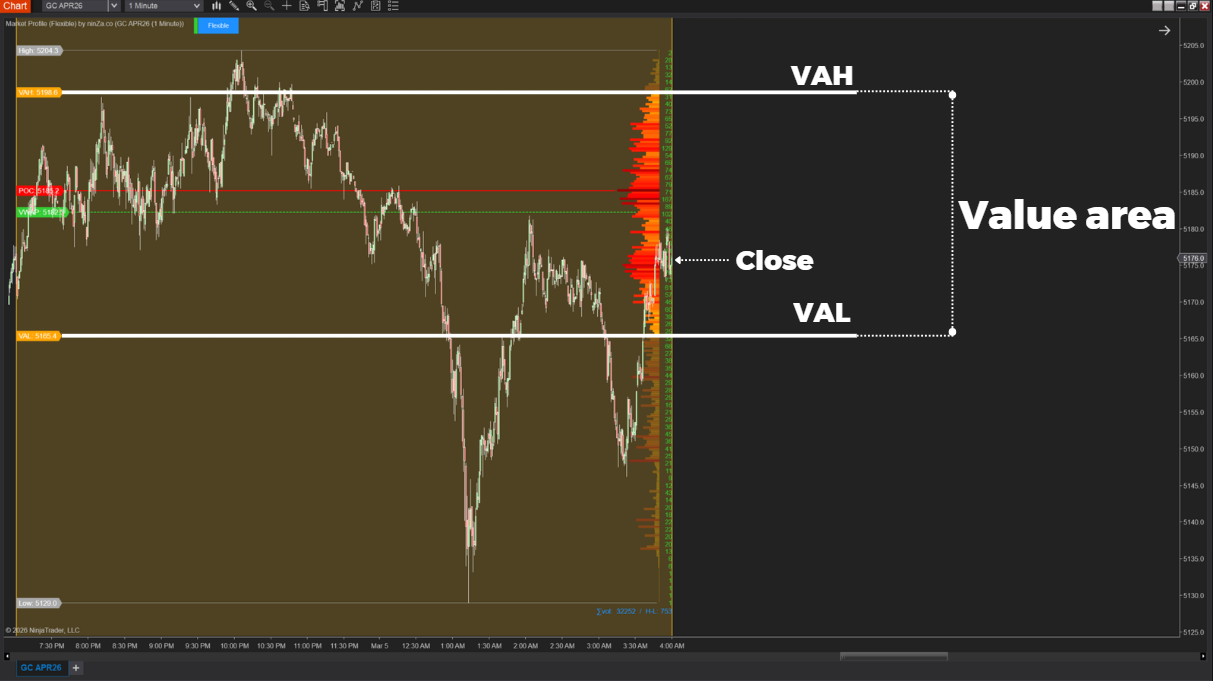
Step 2: Where did price close?
By the end of the session, price returned to the Value Area – the range where the market spent the most time trading during that session. This suggests that after the strong move earlier in the session (especially during the first half), the market cooled down and shifted back into a more balanced state.
However, closing inside Value also tells us that the market has not yet committed to a clear direction. Selling pressure appeared, but we still need to observe the next session to see whether the market will expand further in that direction.
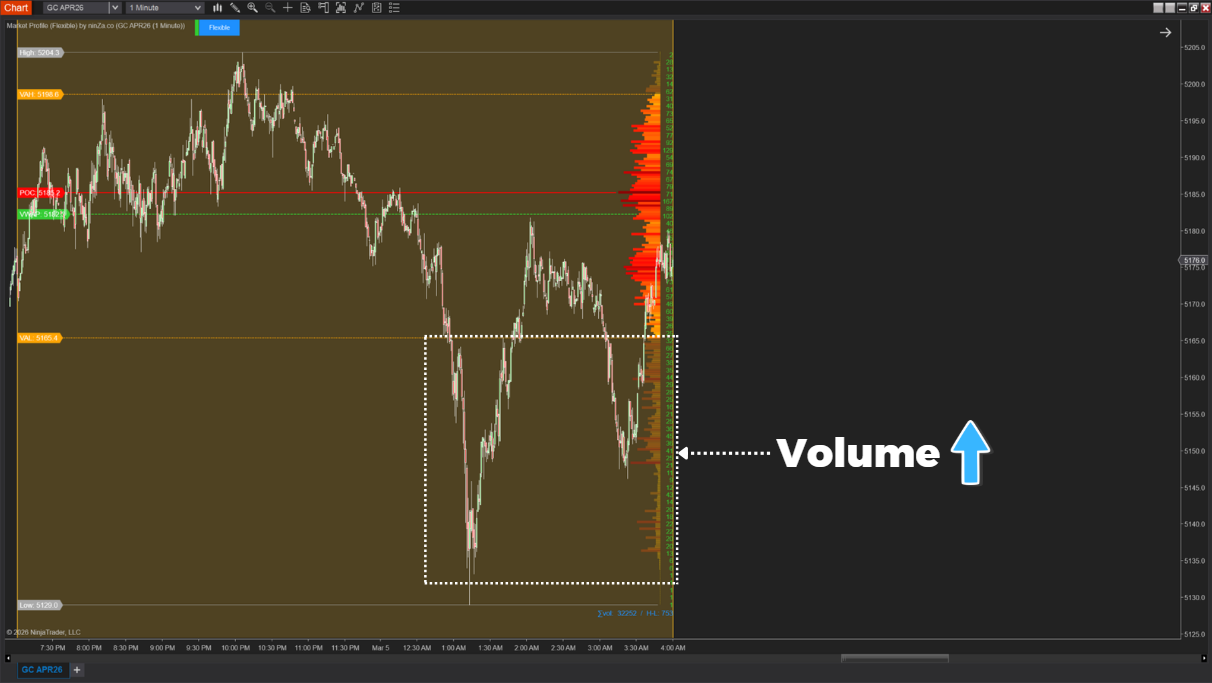
Step 3: Where was the major volume concentrated?
Pay close attention to the volume during the selloff that occurred outside the Value Area. If this had simply been a sharp liquidity sweep followed by a quick recovery, the volume would typically not be this large.
→ Large volume suggests the market may be preparing for a genuine bearish reversal rather than just a liquidity grab.
→ Because of this, the following sessions may have a higher probability of continuing lower. That’s why we want to focus on areas where price could rotate back down so we can prepare potential trade plans.
Step 4: What key levels should we monitor for the next session?
Once we identify a bearish scenario for the next session, levels such as VAH, VAL, and POC become the primary areas where we look for confirmation signals based on the scenario we have already prepared.
Possible sell scenarios could include:
- Sell near the VAH area.
- Sell at POC if price retraces back to that level.
- Sell at VAL after price breaks below VAL and then retests it.
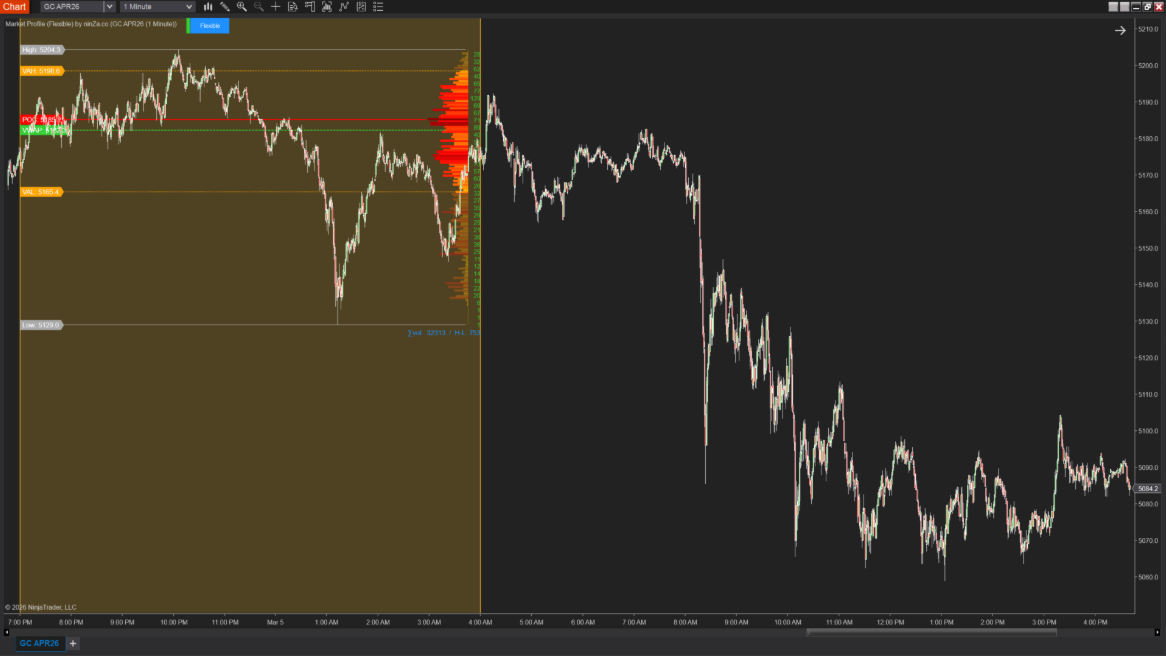
Each trading session has its own behavior and liquidity structure. When you understand how the Asian session, London session, and New York session typically move, it becomes much easier to build a trading plan instead of trading based on impulse.
The goal is not to catch every opportunity – it’s to act when the market conditions align with your strategy.
Victor Dan / Trader at ninZa.co