Two Modes for Detecting Liquidity Sweeps
Mode 1 – Follow Direction
(Designed for scalpers and intraday traders seeking early momentum and favorable risk-to-reward at the start of a move.)
Understanding Internal Liquidity
In trending markets, price does not always produce obvious swing highs or lows. However, liquidity continues to form throughout the trend.
This liquidity is commonly found around:
Trailing stops are particularly significant because they represent dynamic liquidity. Even when clear structural highs or lows are absent, clusters of trailing stops still create liquidity that larger market participants can execute against.
The Follow Direction mode focuses on the internal stop runs that occur inside an existing trend – brief liquidity sweeps that typically happen before the trend resumes.
How It Works
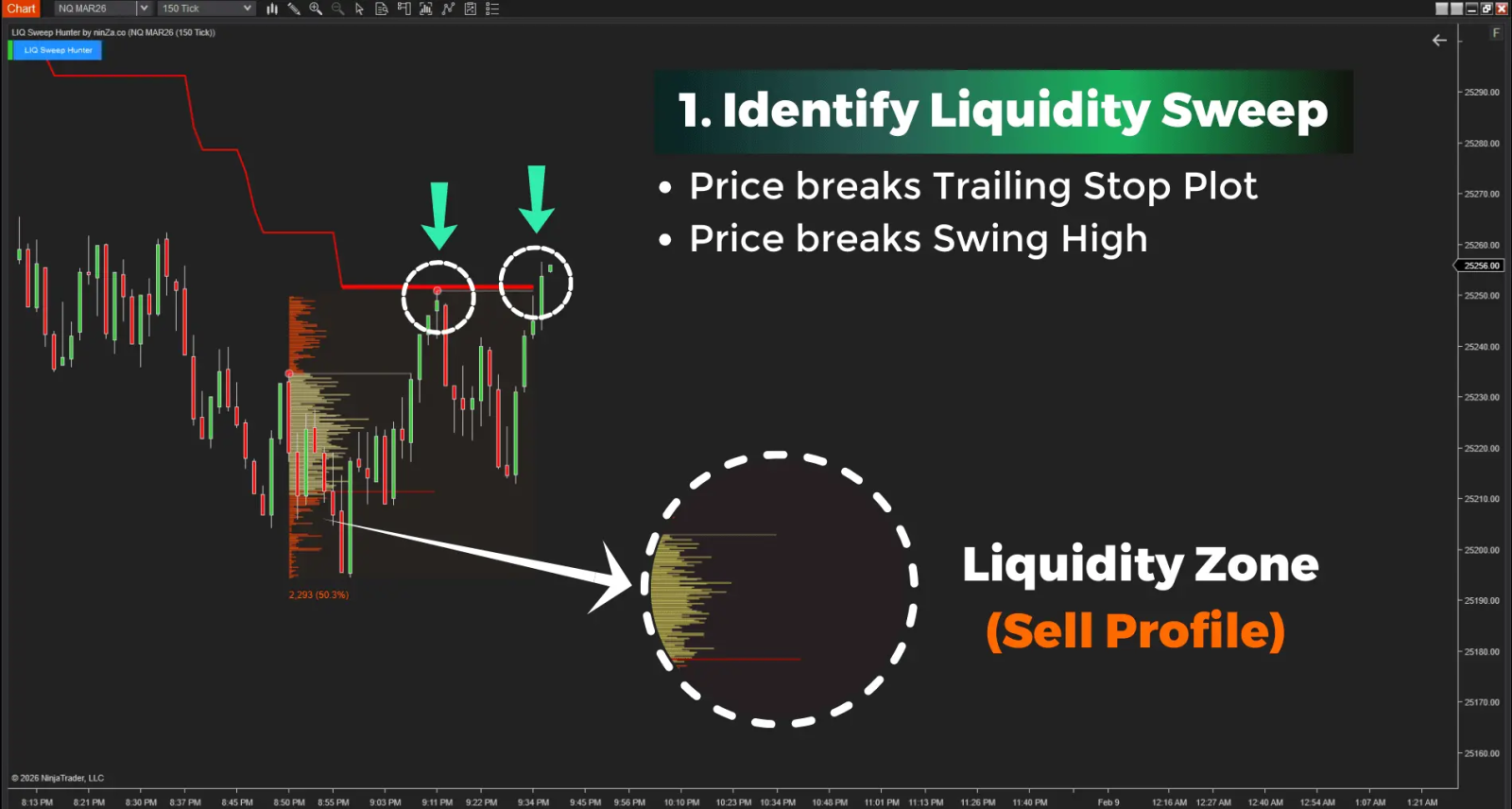
1. Liquidity Detection
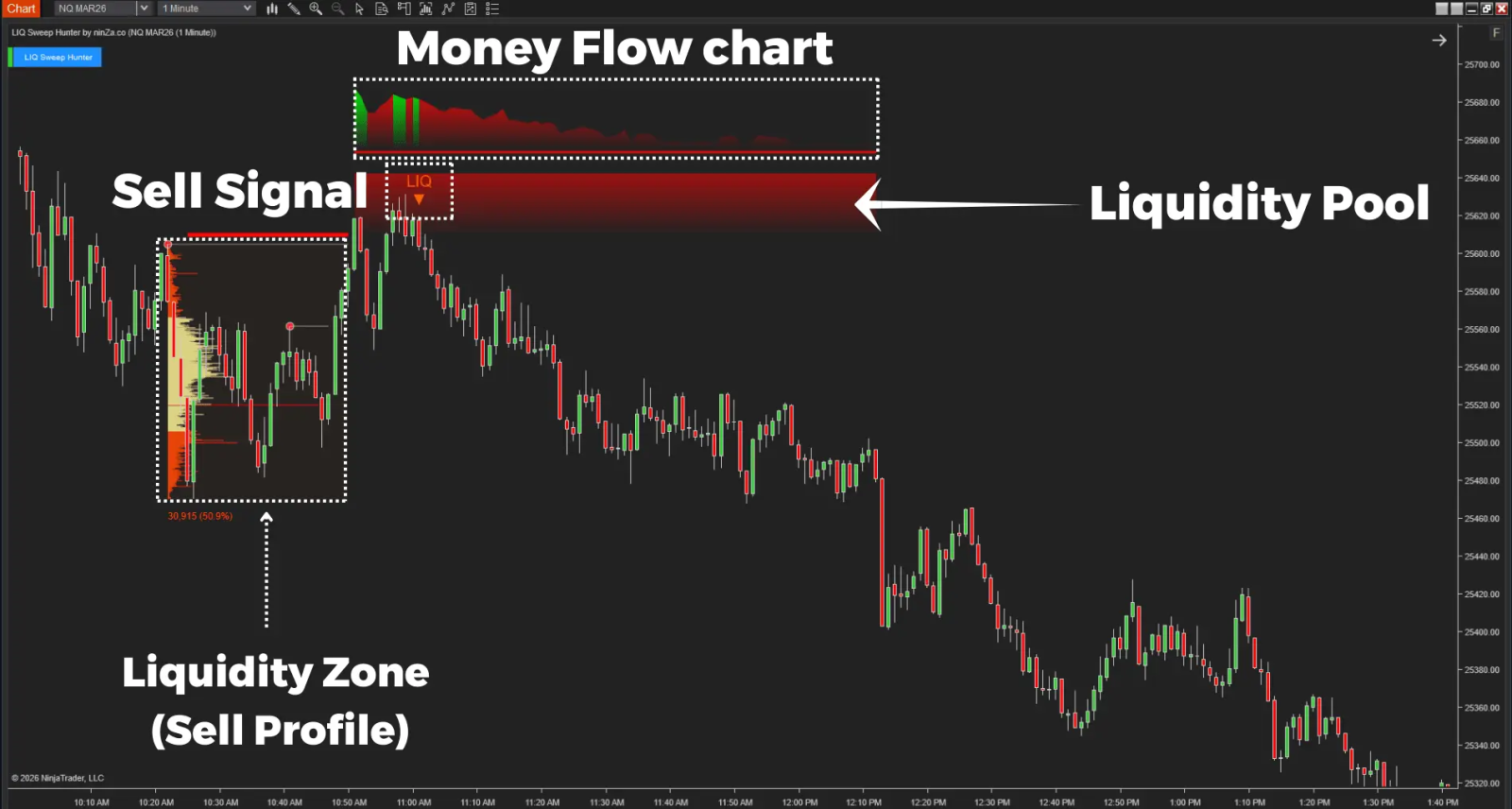
The indicator detects a liquidity sweep when price moves beyond short-term swing highs or lows while simultaneously sweeping the trailing stop line.
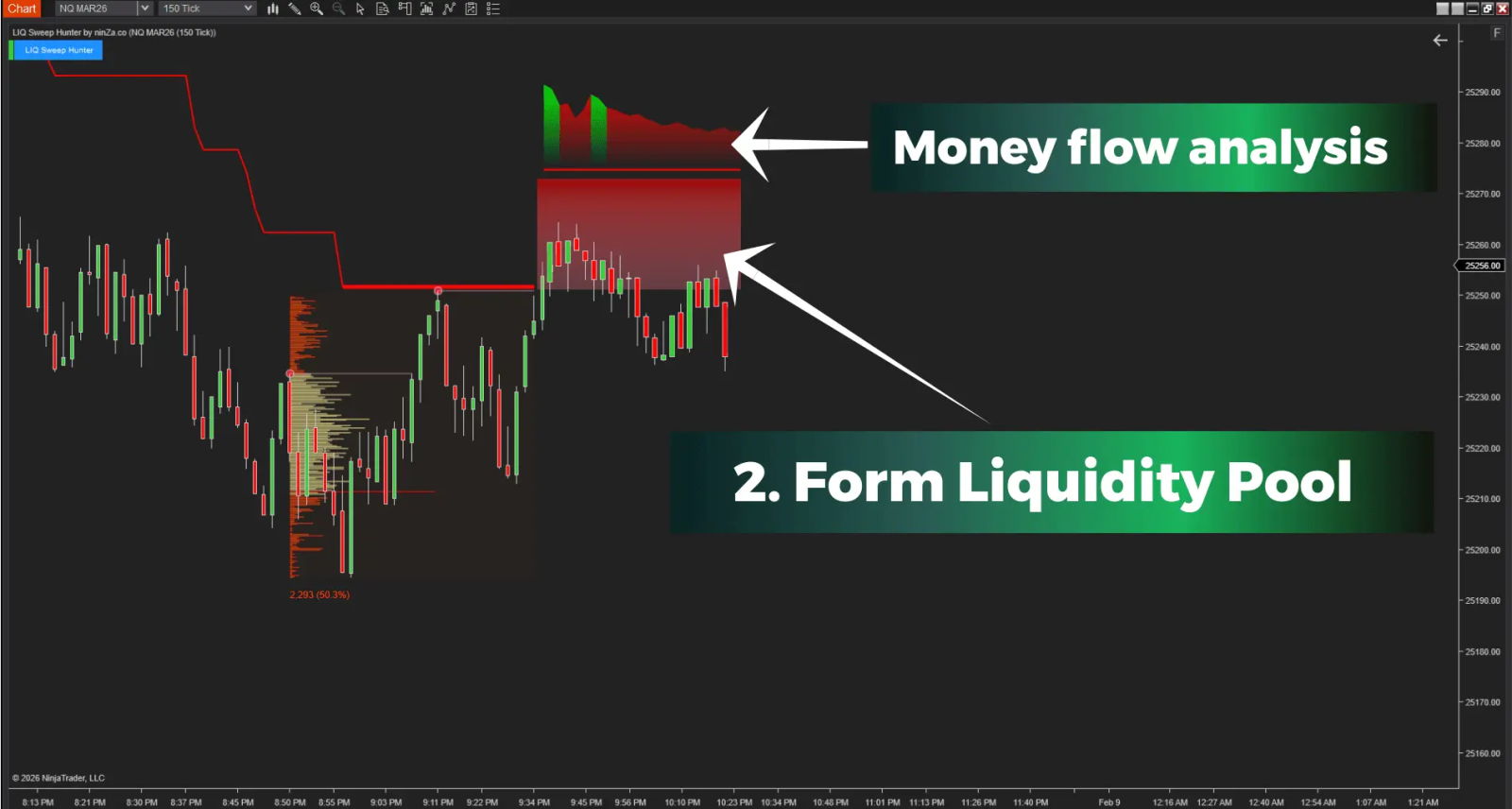
2. Liquidity Pool Formation
After the sweep occurs, a defined Liquidity Pool is created. This pool serves two key purposes:
If price remains within this framework and fails to expand beyond it, the move is likely a liquidity sweep. If price gains acceptance beyond the pool, the market is more likely to continue in that direction.
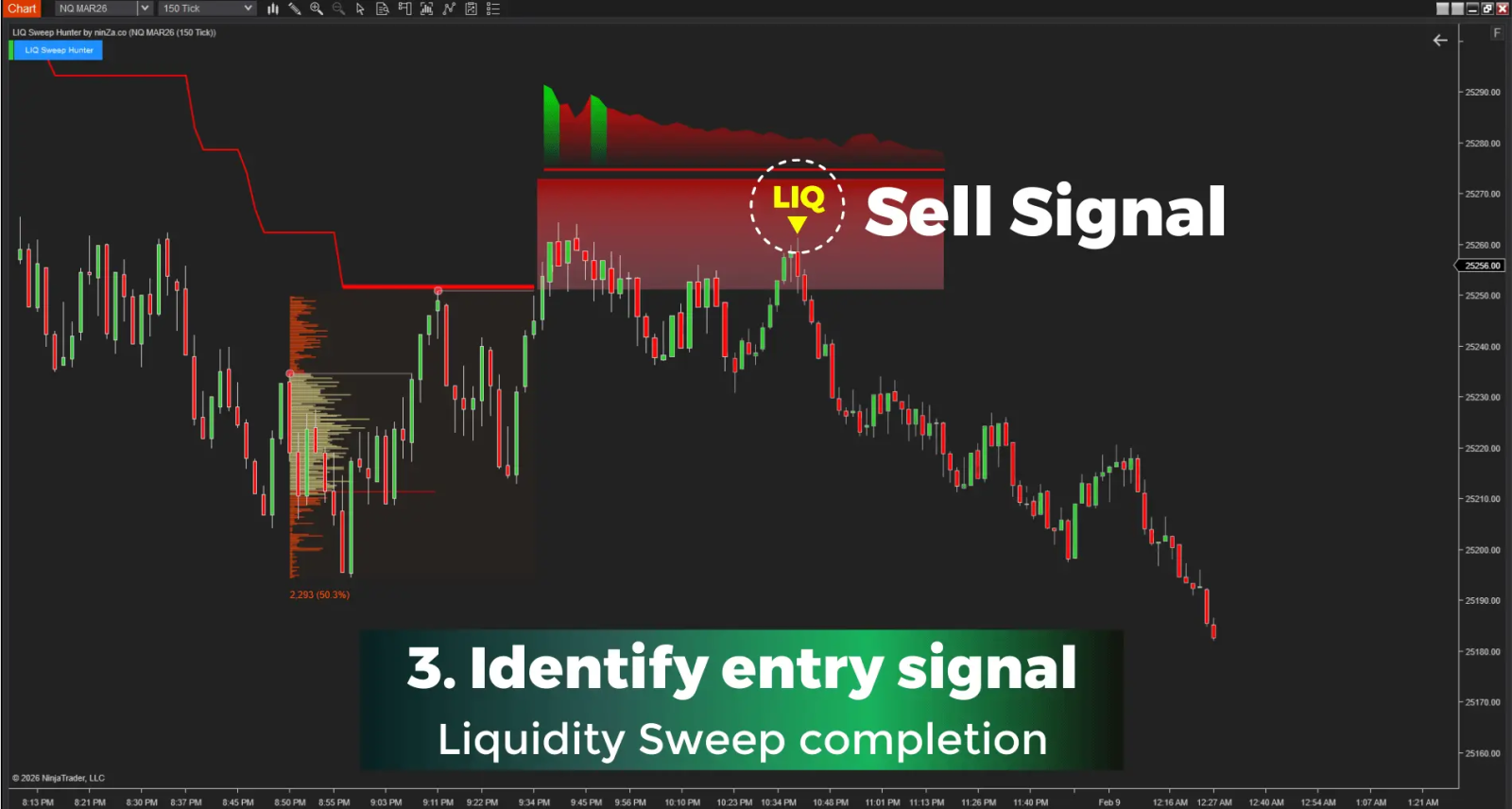
3. Signal Confirmation
The indicator then evaluates price behavior within the Liquidity Pool to determine whether the trend is ready to resume.
This sequence improves signal quality by ensuring entries occur after internal stop runs are completed, rather than during them.
Supporting Components
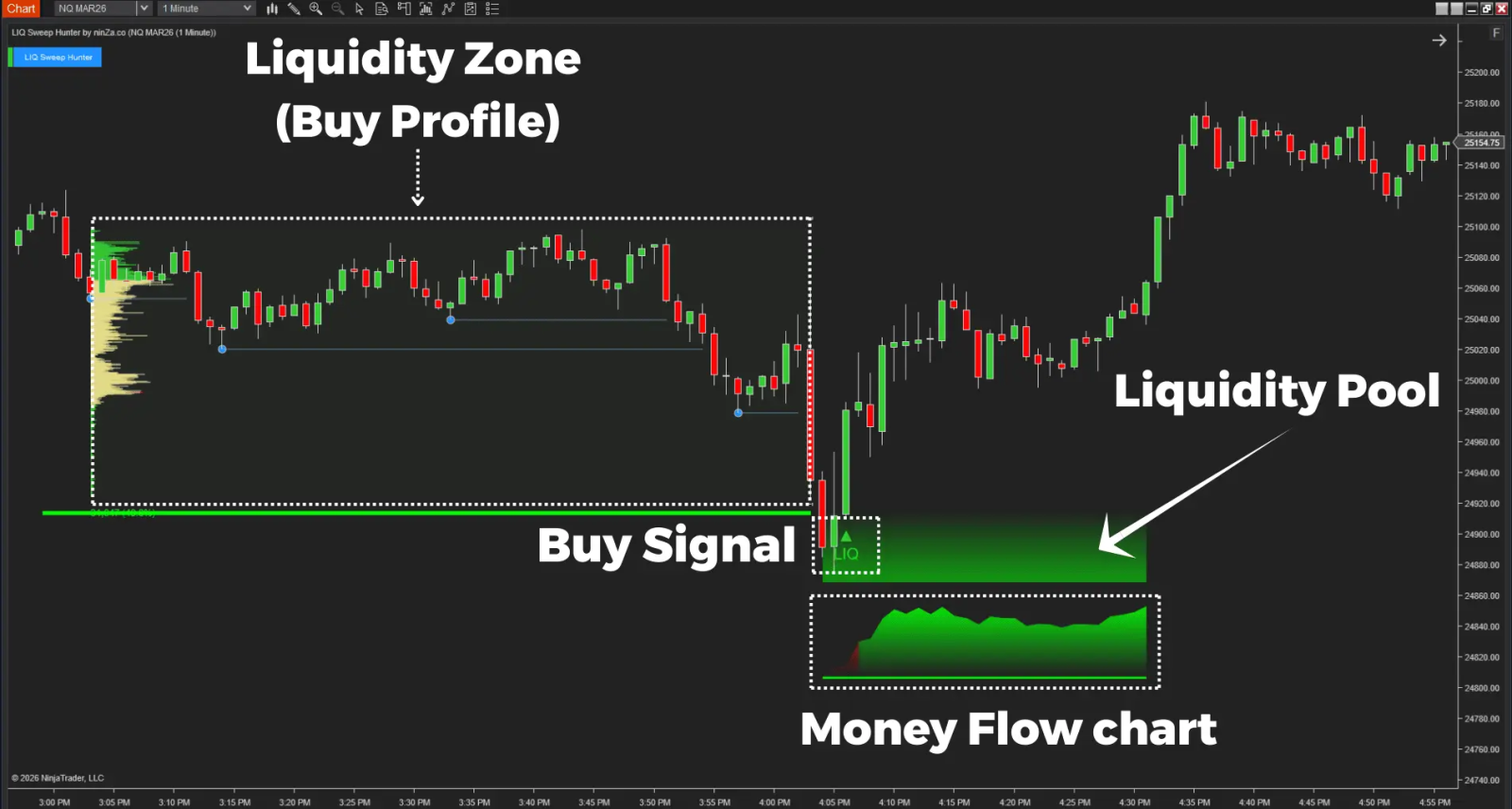
1. Liquidity Zone
Highlights where trading activity is concentrating and which side of the market is currently dominant. It reveals where participation is expanding – not just where price is moving.
2. Money Flow Analysis
Tracks order-flow dynamics within the Liquidity Pool:
Mode 2 – Counter Direction
(Built for swing traders who aim to position around major structural reversals.)
Where Major Liquidity Builds
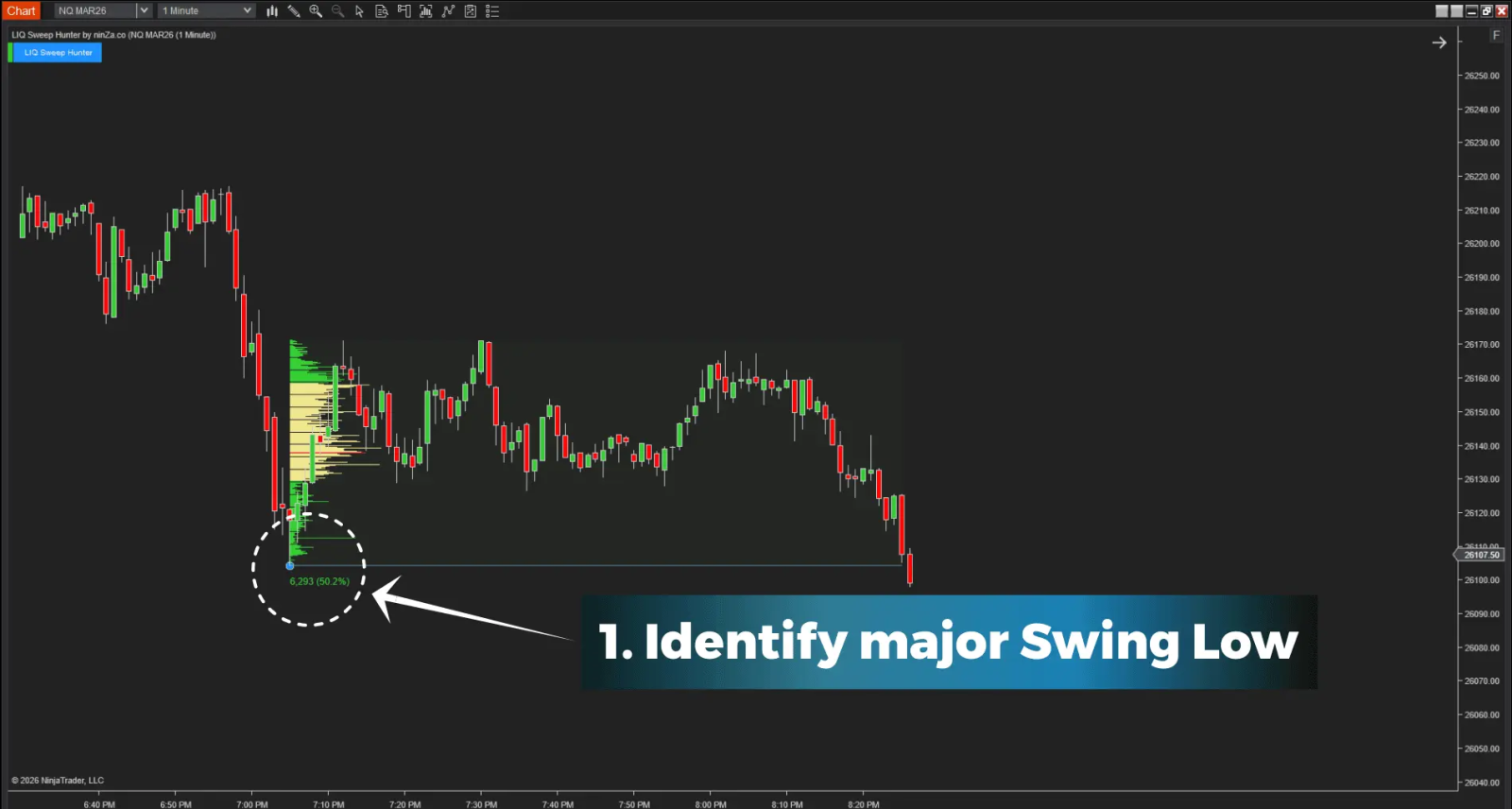
The Counter Direction model shifts attention to significant swing highs and lows that previously triggered strong directional moves.
These levels are structural reference points, not minor intraday areas. They often represent zones where:
Breakout traders initiate positions
Longer-term stop orders accumulate
Early reversal traders attempt to anticipate turning points
When price revisits these levels, liquidity tends to concentrate.
A break of a major swing does not automatically confirm continuation.
The break provides information.
The reaction provides confirmation.
How It Works
1. Level Projection
The indicator identifies important historical swing highs and lows and projects them forward as active liquidity levels.
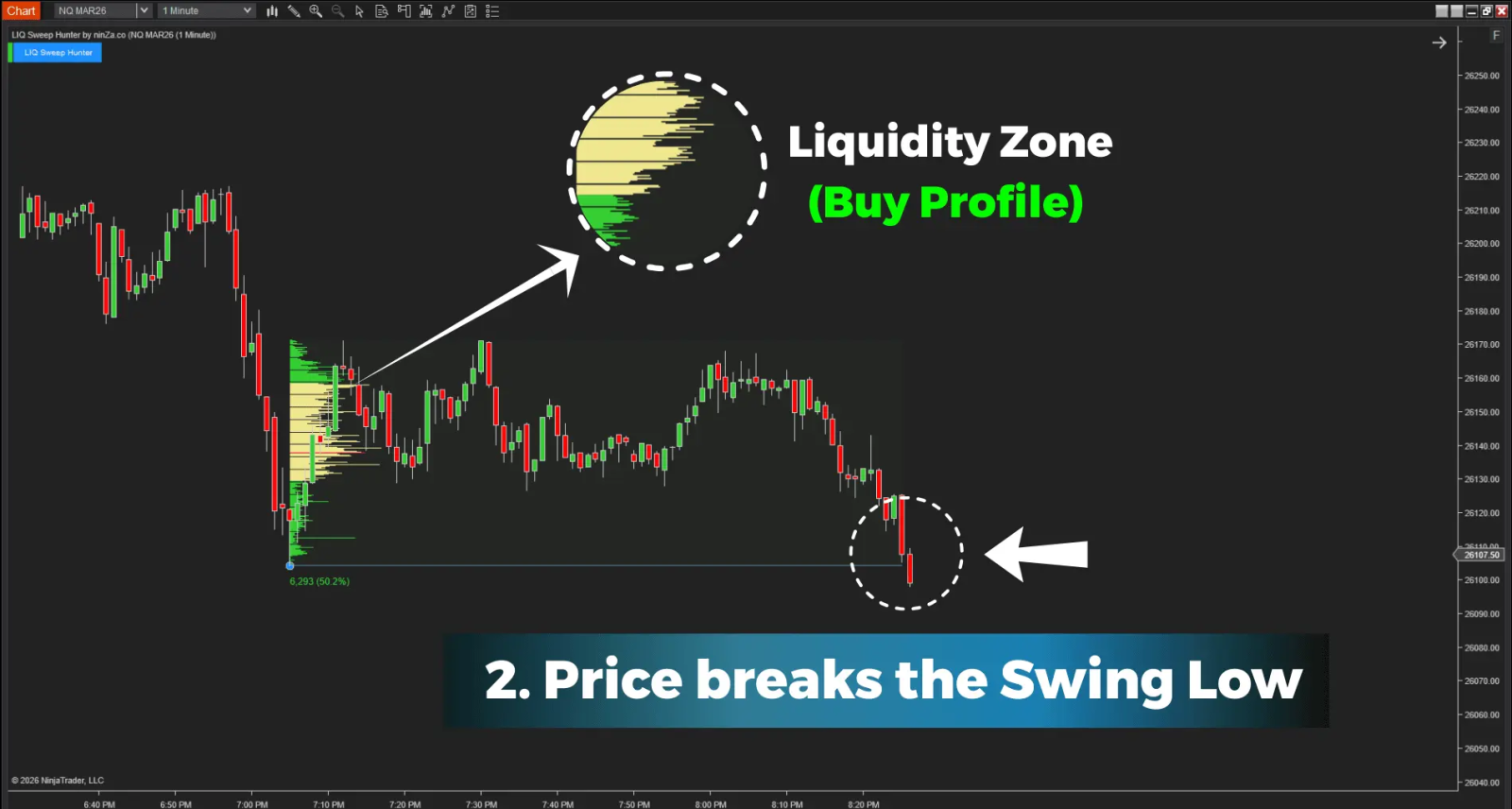
2. Initial Break
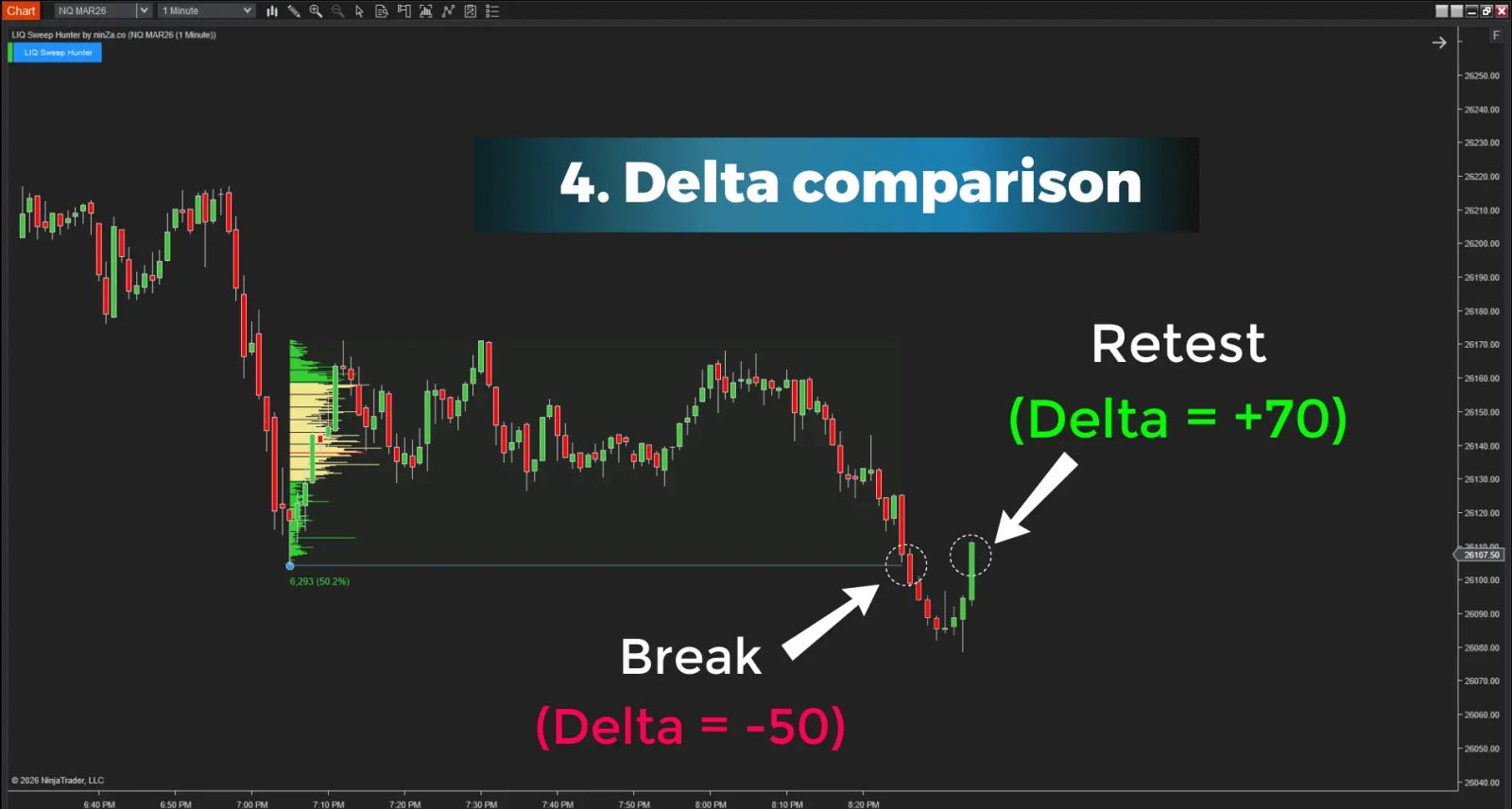
Price moves beyond the level, triggering clusters of stop orders. Delta during this breakout is recorded.
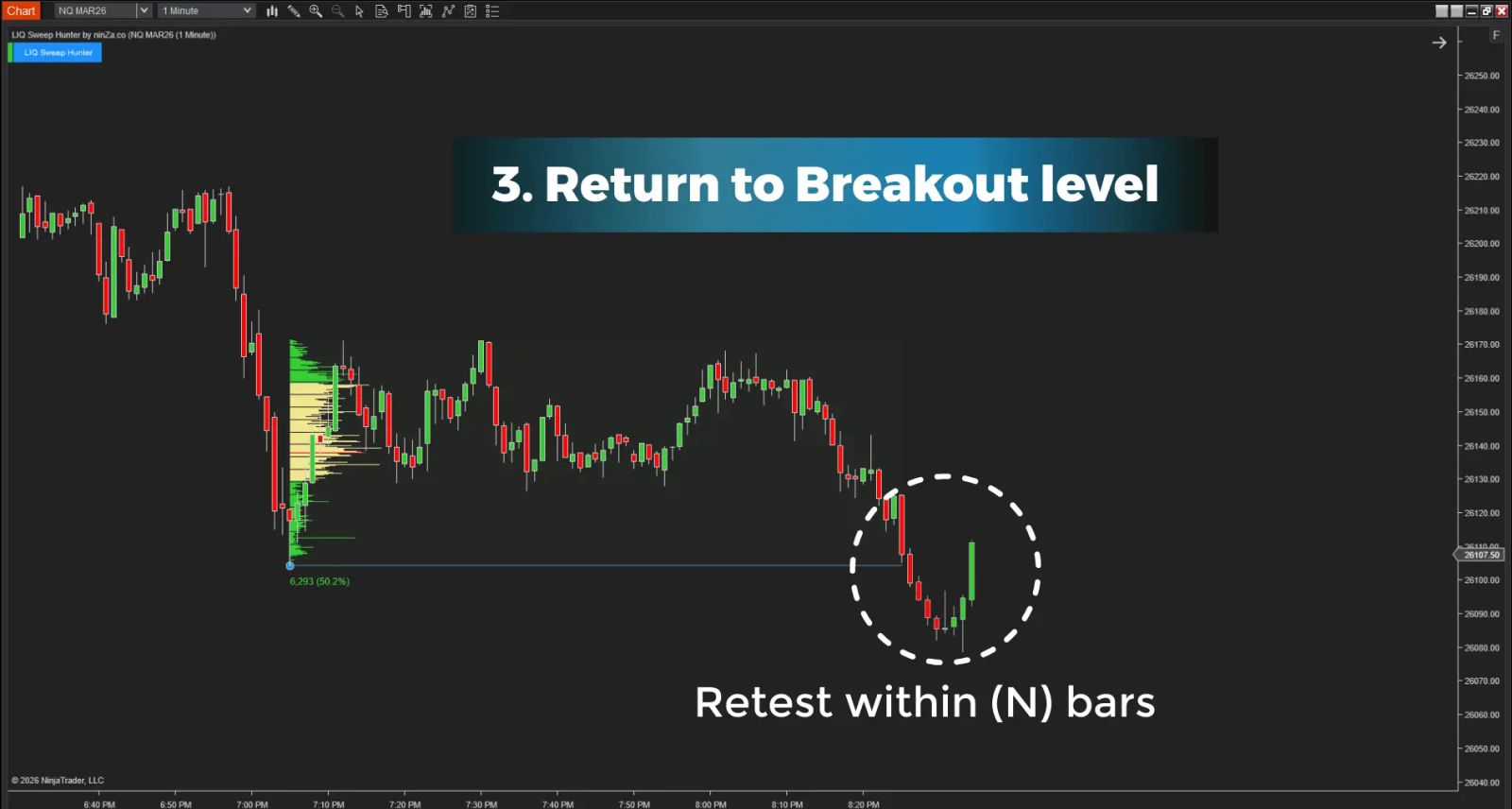
3. Return to the Breakout Level
Within a defined number of bars, price must return to the previously broken support or resistance level.
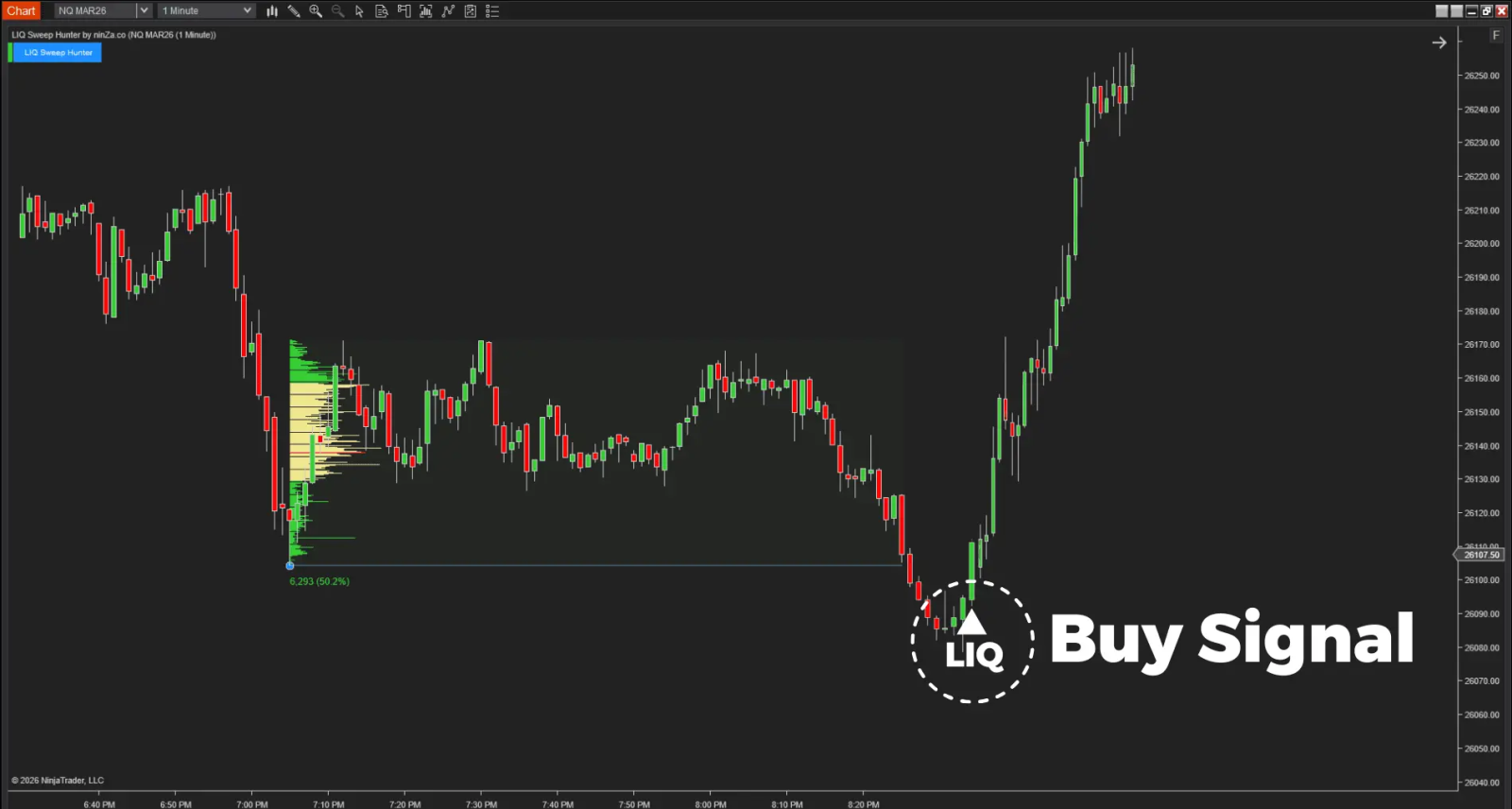
4. Delta Comparison
If the Delta observed during the return opposes the Delta seen at the breakout, the move is more likely to signal a reversal rather than genuine continuation.
👉Explore more details about this indicator here: https://ninza.co/new/liq-sweep-hunter-ninjatrader?utm_source=social&utm_medium=forum&utm_campaign=liq