Strategy Overview
This strategy is based on reversal confirmation and momentum validation using indicators.
1. Strategy Scope and Definition
This is an indicator-based trading strategy, designed to:
Capture price reversal scenarios
Filter out reversal signals lacking momentum
Support entry decisions aligned with newly forming trends
This strategy is not a complete trading system, because it:
Does not standardize capital management
Does not define a fixed timeframe
Does not include position sizing rules or a risk model
The strategy serves as a decision-support tool for entries and exits, highly dependent on market context and trader discretion.
2. Indicators Used
2.1 Bollinger Reversal Pro
Function:
Identifies potential price reversal zones
Provides signals in the form of setups
Must not be used as a standalone entry signal
Bollinger Reversal Pro reflects conditions where price is excessively extended relative to its current distribution.
2.2 Superior RSI
Function:
Evaluates momentum and trend control
Uses the 50 level as a momentum threshold
RSI is not applied using overbought/oversold logic for entries
In this strategy, RSI plays a confirmation role, not a predictive one.
3. Strategy Execution Logic
The strategy follows a fixed logical sequence:
Bollinger Reversal Pro generates a reversal signal
Superior RSI confirms momentum via the 50 level
Entry decisions are considered only after RSI confirmation
If RSI fails to confirm → the Bollinger signal is ignored.
4. Trading Checklist
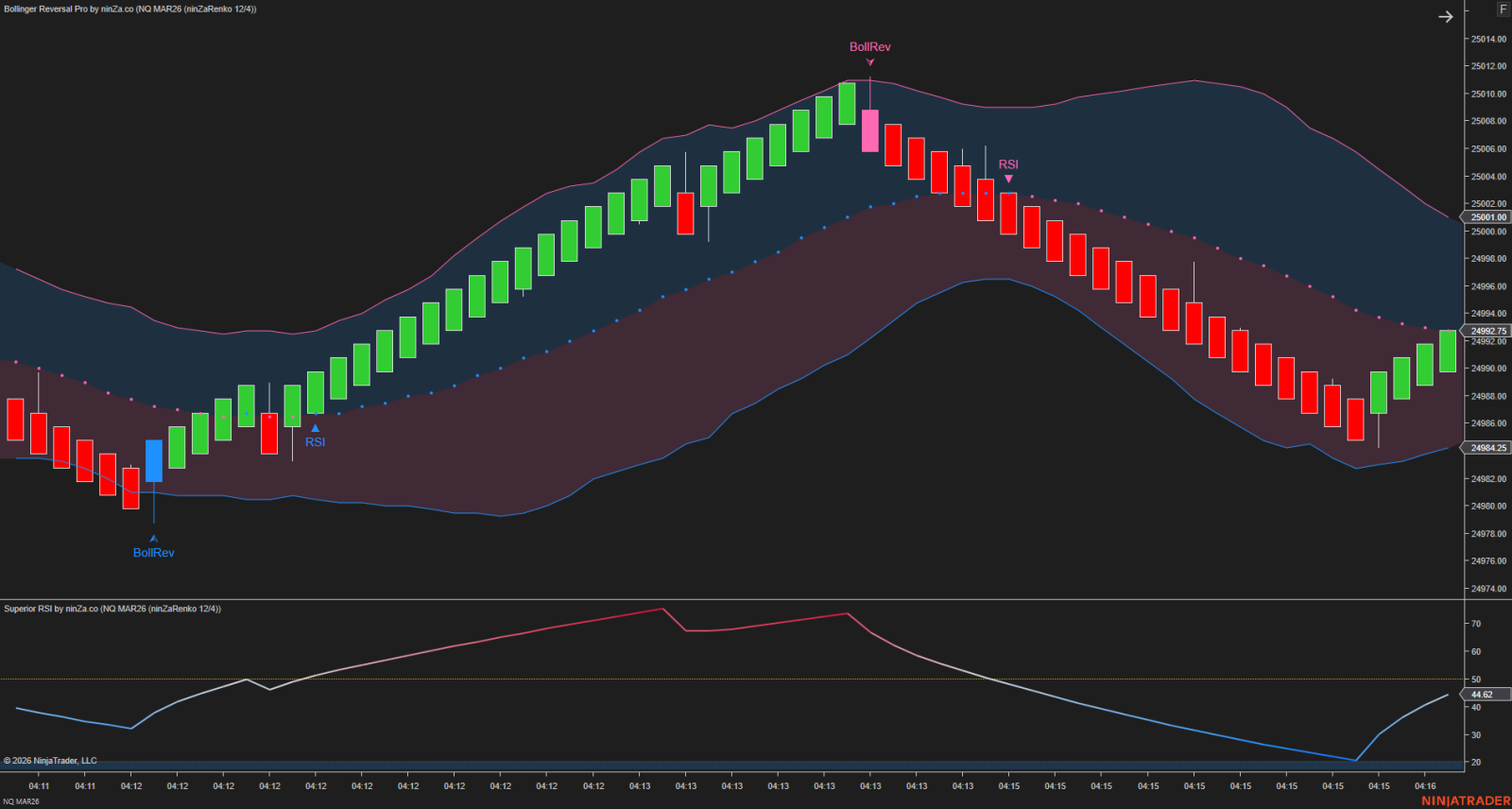
4.1 BUY Scenario (Bullish Reversal)
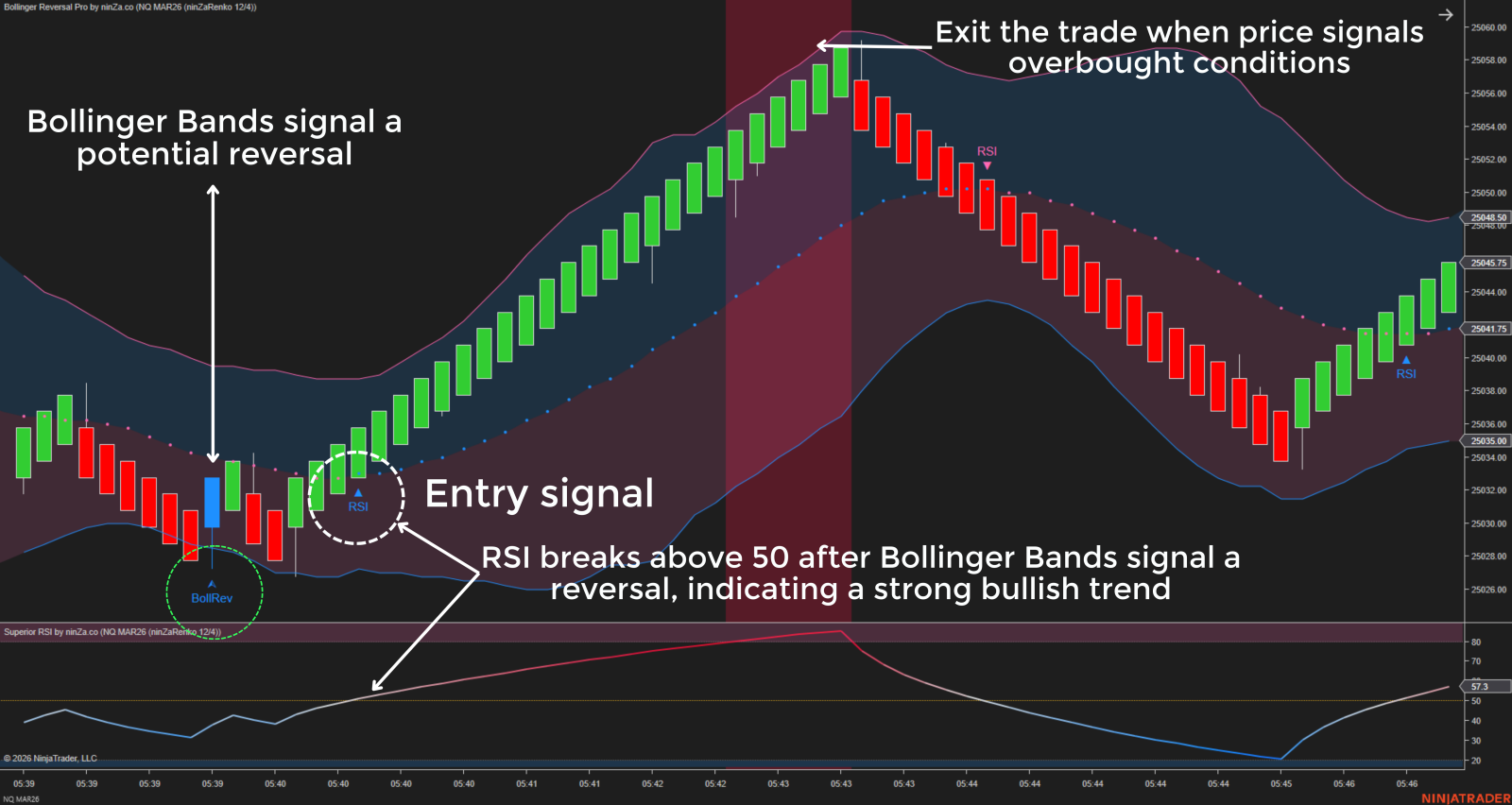
Required Conditions:
Bollinger Reversal Pro signals a bullish reversal
RSI moves upward and breaks above 50
RSI crosses 50 with clear momentum (not ranging)
Entry Rules:
4.2 SELL Scenario (Bearish Reversal)
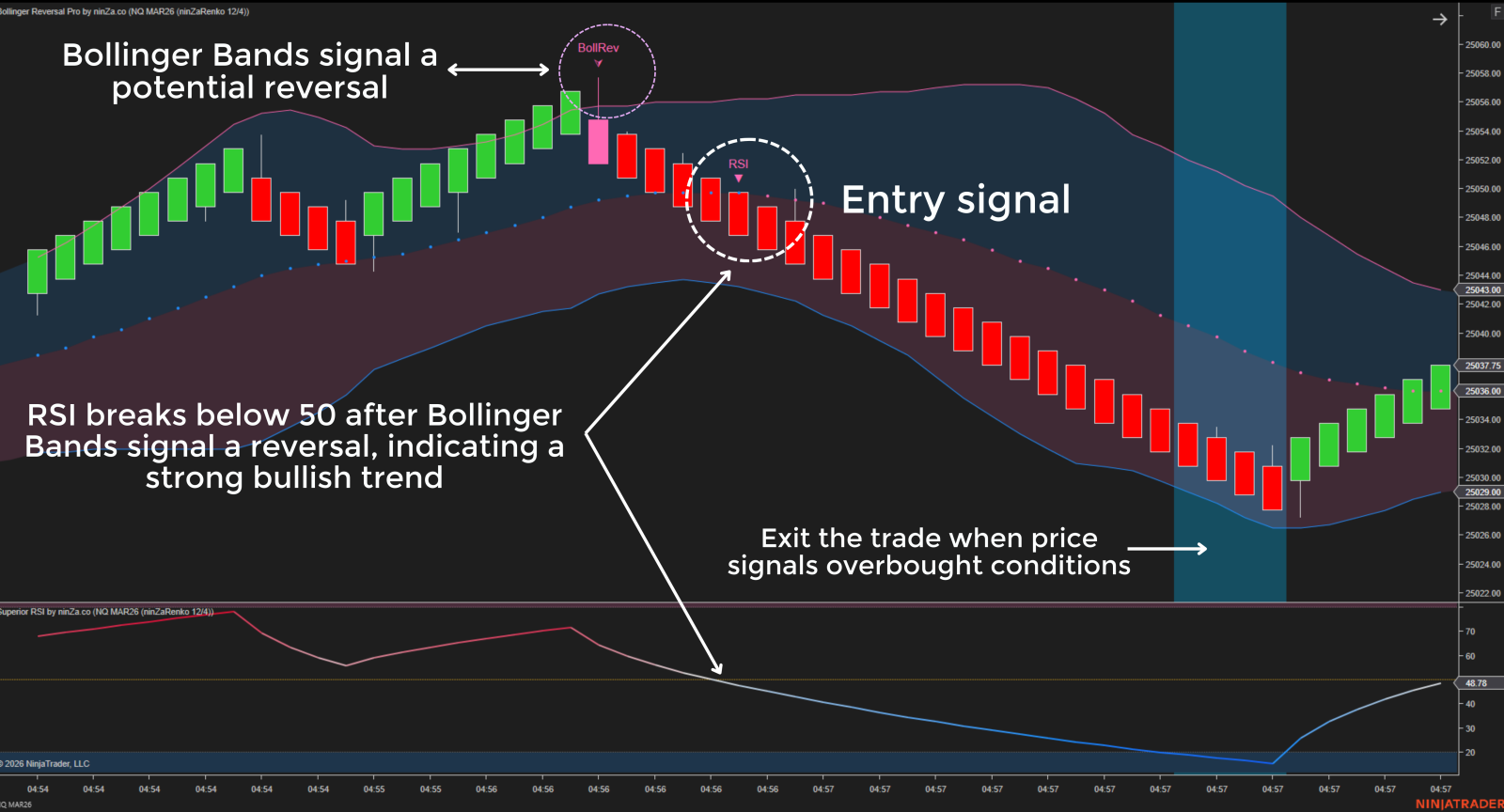
Required Conditions:
Bollinger Reversal Pro signals a bearish reversal
RSI moves downward and breaks below 50
Bearish momentum is clearly present
Entry Rules:
5. Strategy Usage Principles
This is a probability-based strategy, not a guaranteed system
Entry delay is intentional, trading confirmation for reduced risk
Avoid using the strategy in tight ranges or low-volatility conditions
The strategy is best suited for:
Integration with price action
Acting as a signal filter for discretionary traders
Serving as an entry logic module in semi-automated trading models
6. Common Mistakes When Applying the Strategy
Treating Bollinger Reversal as a direct entry signal
Trading while RSI fluctuates around the 50 level
Using RSI overbought/oversold to catch tops or bottoms
Applying the strategy without considering market context