Flex TPO — Structure First, Decisions Second
Flex TPO combines Initial Balance with TPO / Market Profile to give you objective, rule-based references for when to trade and where to act.
Instead of reacting to every price move, you anchor decisions to balance, value, and participation.
Initial Balance — Defined by Time or Volume
Flex TPO offers two ways to define Initial Balance, depending on how you read the market.
Mode 1: Continuous (Time-Based)
In Continuous mode, Initial Balance is defined by the high–low range of the first N bars of the session.
This mode is built for traders who prefer a simple, session-based structure.
Why it works:
Fixed time logic creates consistent, repeatable market context
One structure that behaves the same across timeframes
Clear balance boundaries help prevent overtrading and random entries
You get a stable reference that holds until the market proves otherwise.
Mode 2: Volume Trigger (Participation-Based)
In Volume Trigger mode, Initial Balance forms only when real participation shows up.
The indicator:
Groups N consecutive bars into a volume block
Compares that block with previous N blocks in the same segment
Triggers Initial Balance only when the current block has the highest volume
Draws the balance zone from that block’s High–Low
This mode filters out low-activity periods and highlights areas where meaningful participation occurs.
It’s ideal for traders who prefer fewer trades, higher quality setups, and stronger conviction.
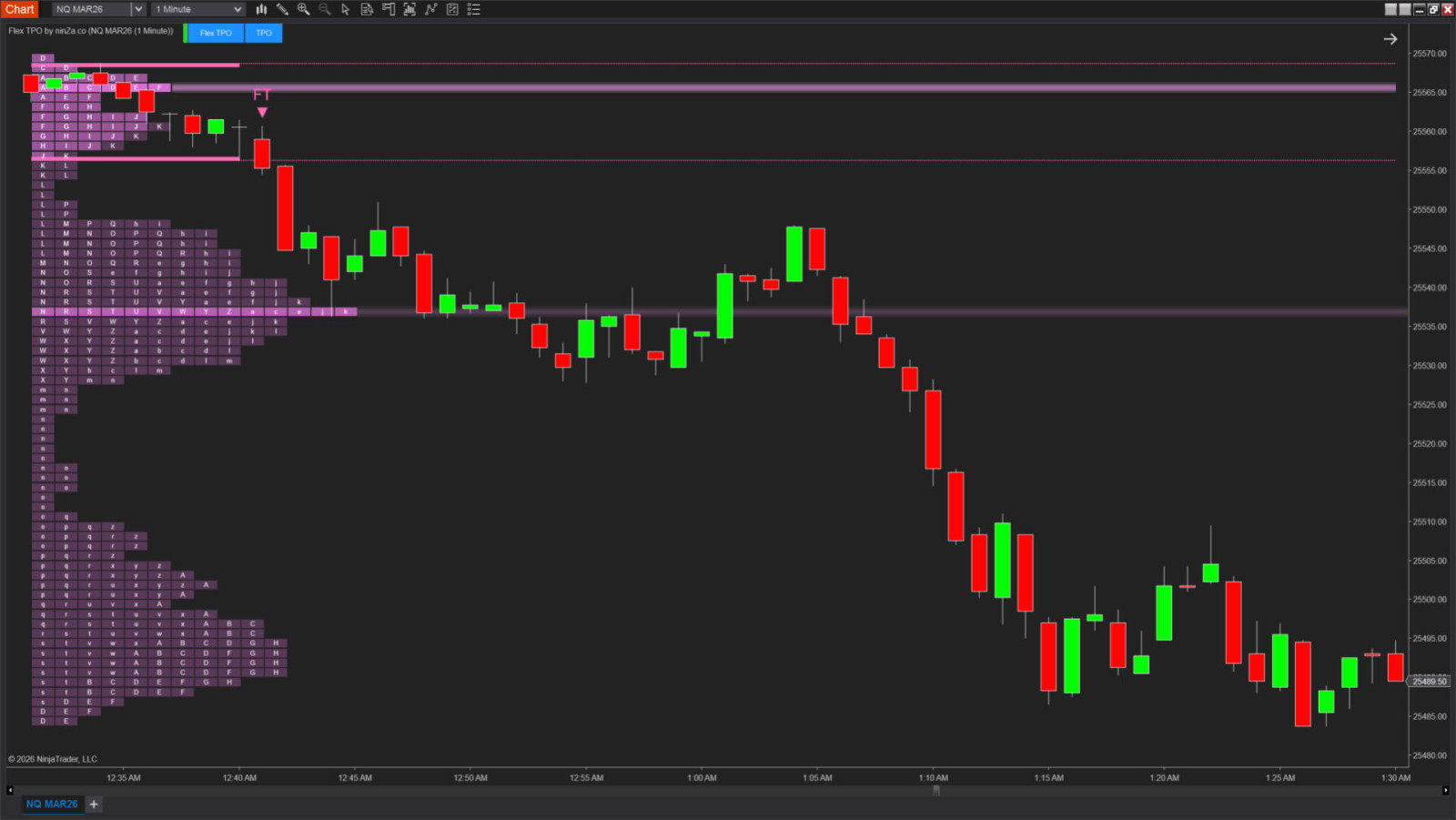
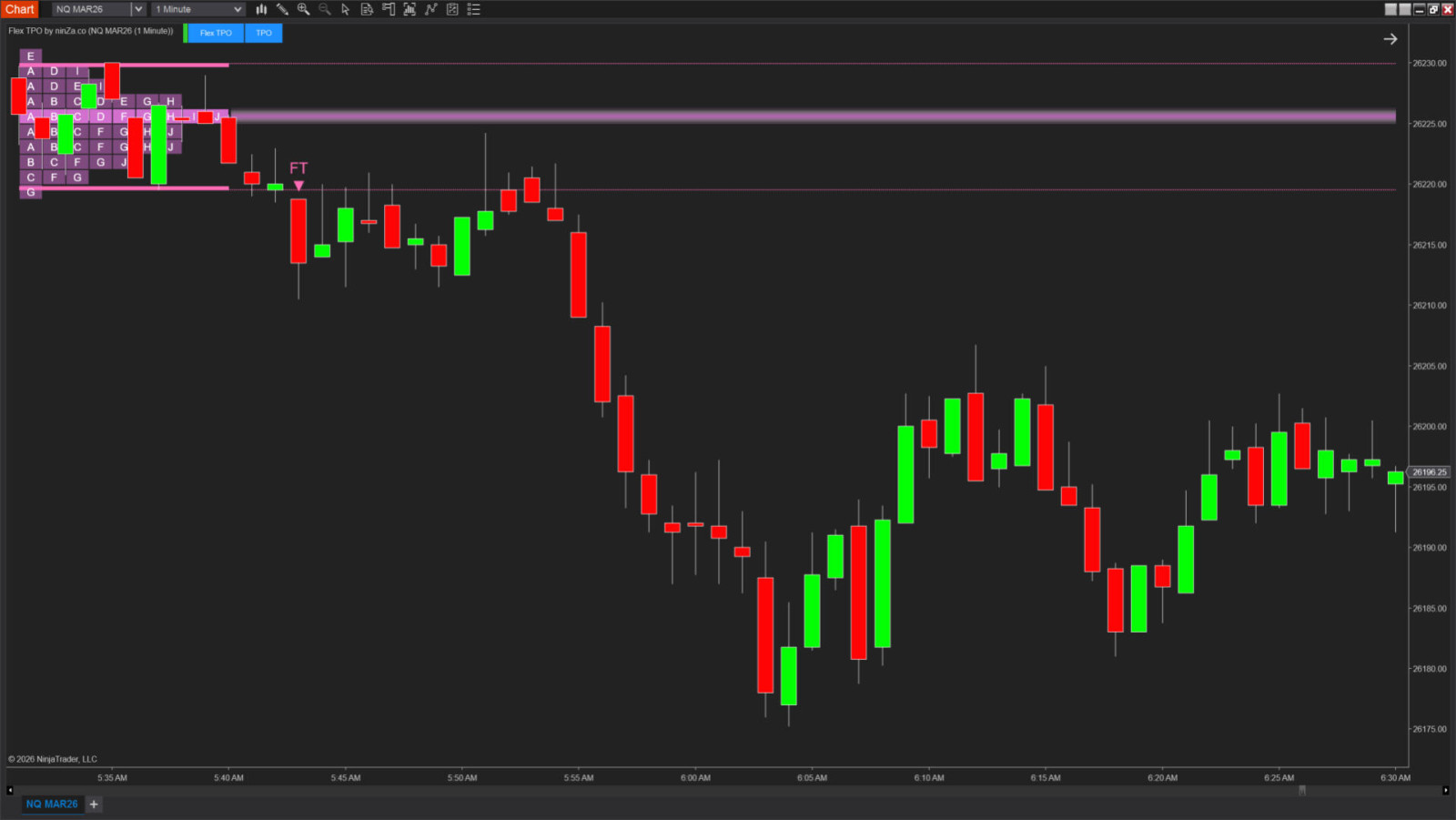
TPO / Market Profile & Point of Control (POC)
TPO / Market Profile answers one critical question:
“Which price did the market accept the most?”
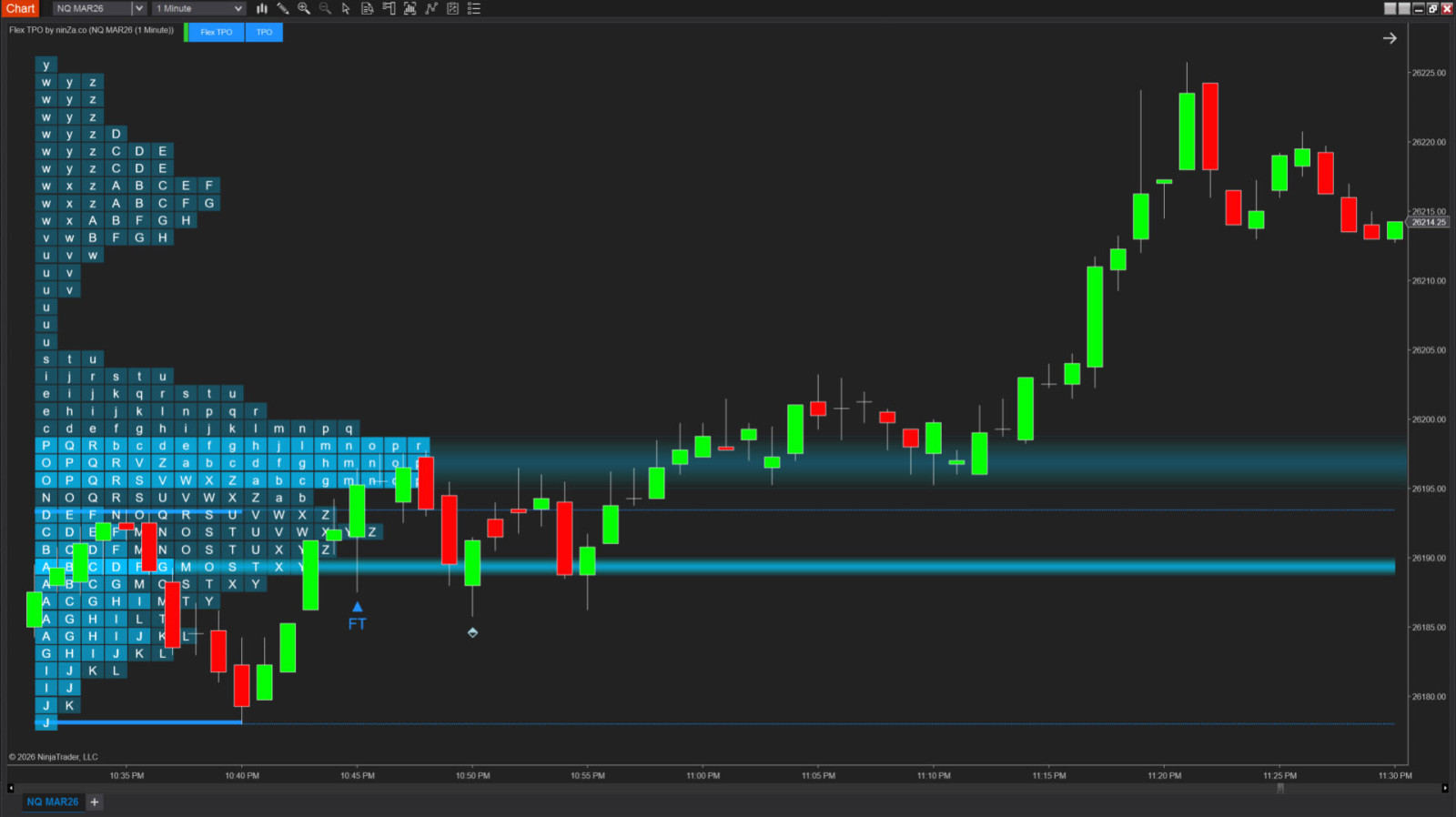
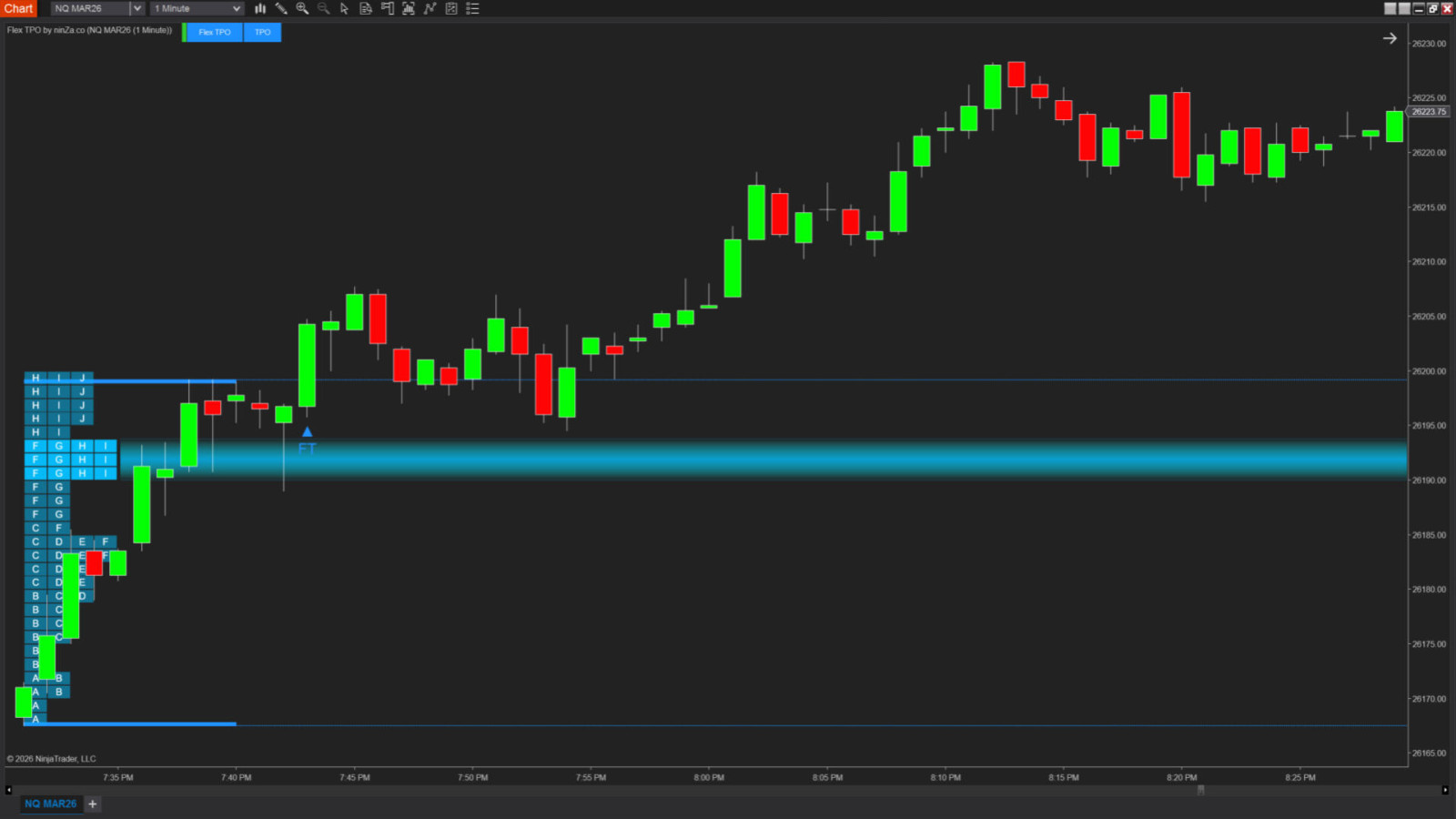
Inside each Initial Balance, Flex TPO builds a mini TPO profile to extract a single key level — the Point of Control (POC).
The POC represents:
Turning Balance Into Behavior
By anchoring decisions to the POC, Flex TPO transforms Initial Balance from a simple range into a value-based, behavior-driven framework.
This is where Flex TPO shifts you from reacting to price… to reading intent and control.