Trendlines and Absorption Candles
1. The problem with standard trendline breakouts
In real trading, not every trendline break offers an edge. Many breakouts occur briefly and then fail, with price quickly returning back inside the structure. These false breakouts usually happen because price breaks the line, but order flow does not support the move.
The key question is not whether price breaks the trendline, but which side is in control at the moment of the breakout.
2. Trendlines from an order-flow perspective
A trendline represents a defensive area where one side has repeatedly maintained control.
In a downtrend, the trendline reflects selling dominance.
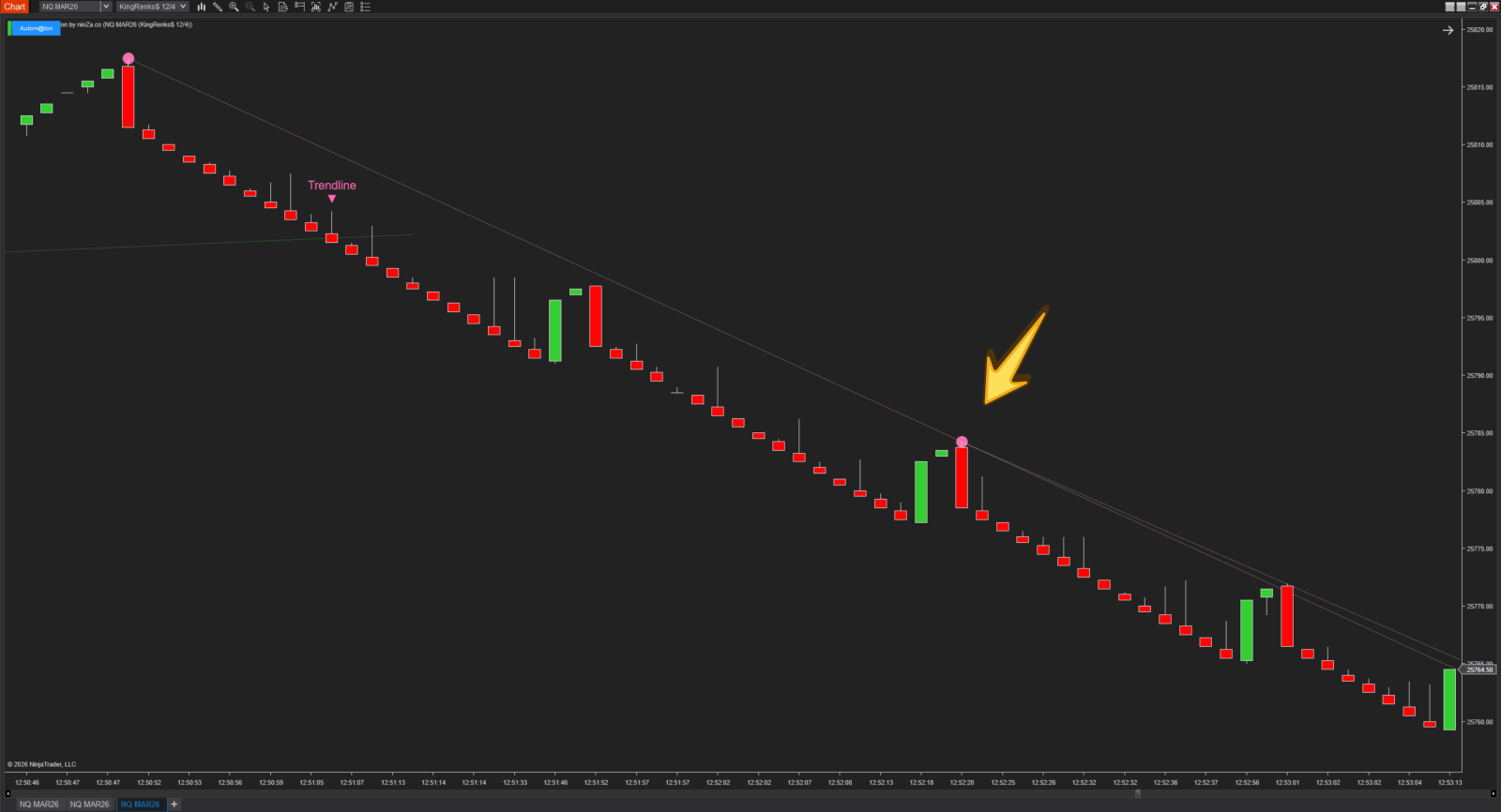
In an uptrend, the trendline acts as dynamic support controlled by buyers.
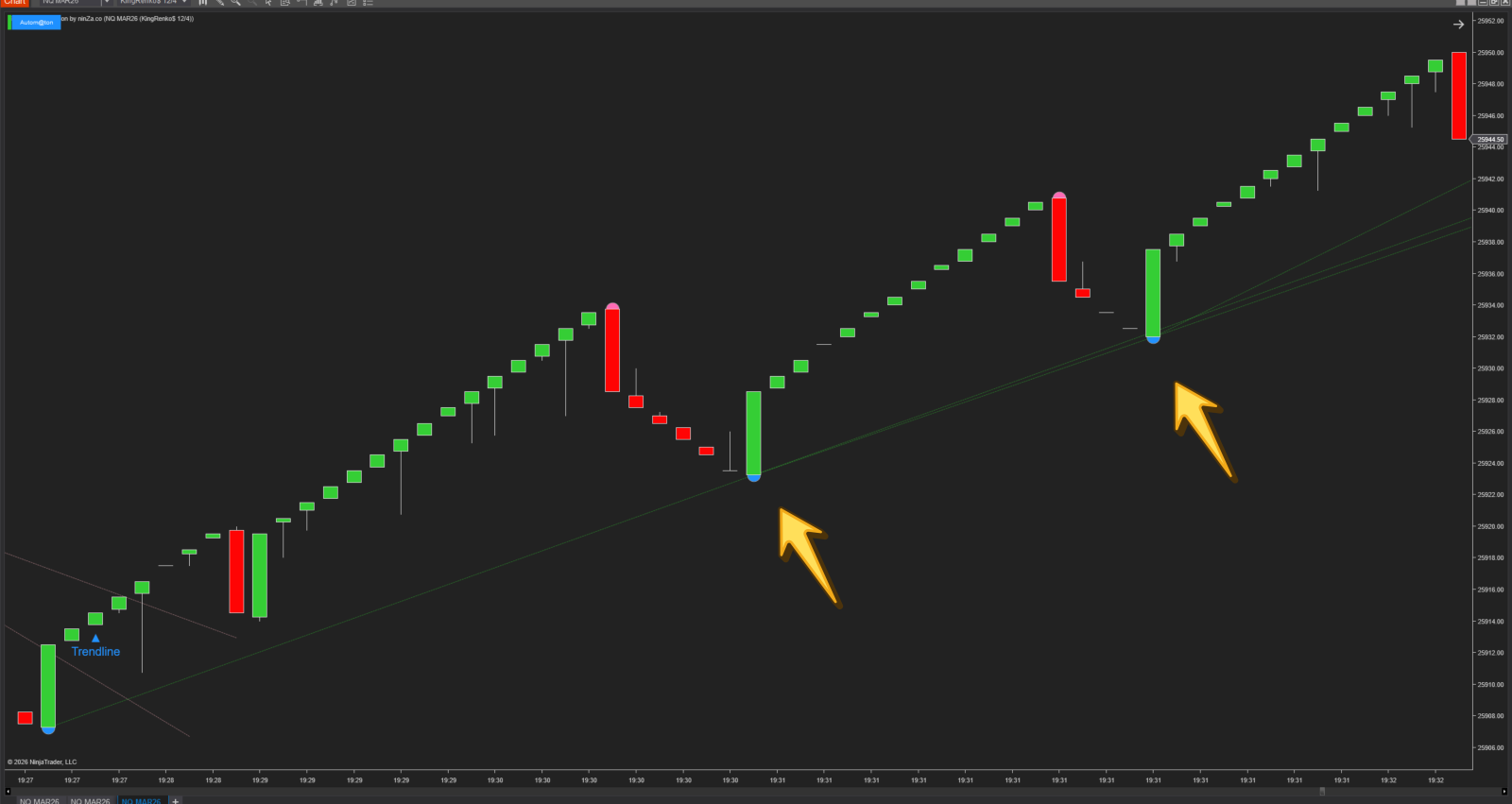
Each time price approaches the trendline, supply and demand are tested again. For this reason, price behavior and volume at the trendline carry significantly more information than at random price levels.
3. What absorption candles really tell us
An absorption candle reflects a disconnect between volume and price movement.
This indicates that one side is actively absorbing the other side’s orders, often setting the stage for continuation or a shift in market control.
4. Breaking a trendline with a Sell Absorption Bar
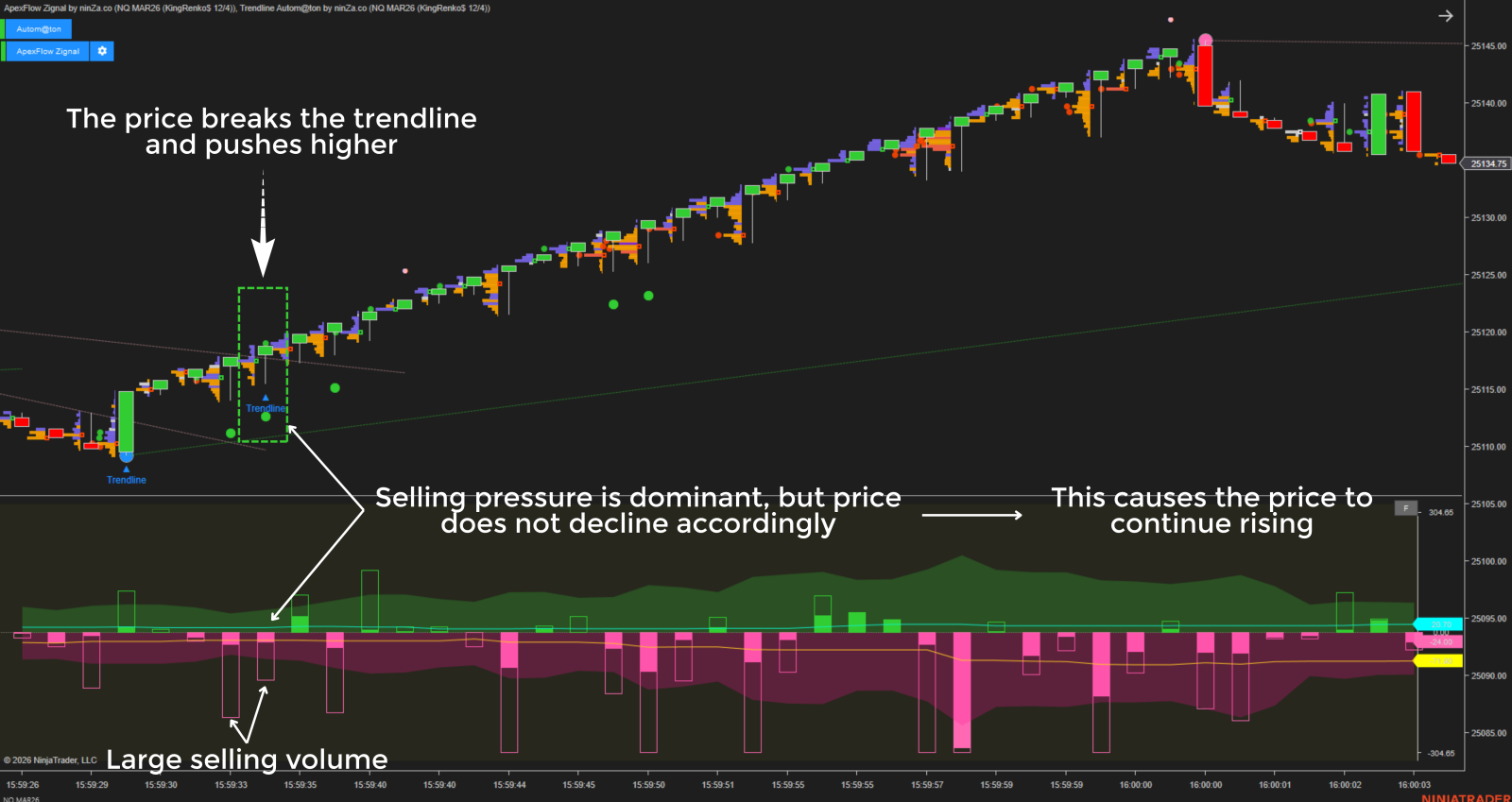
As price approaches a descending trendline, selling pressure typically increases. When a Sell Absorption Bar forms at this area, it shows that sell volume is high, yet price does not decline accordingly. This means sell orders are being absorbed by buyers.
Once supply has been absorbed, sellers lose the ability to push price lower. A subsequent break above the trendline is therefore not random, but the result of exhausted supply, allowing price to move higher with better follow-through.
5. Breaking a trendline with a Buy Absorption Bar
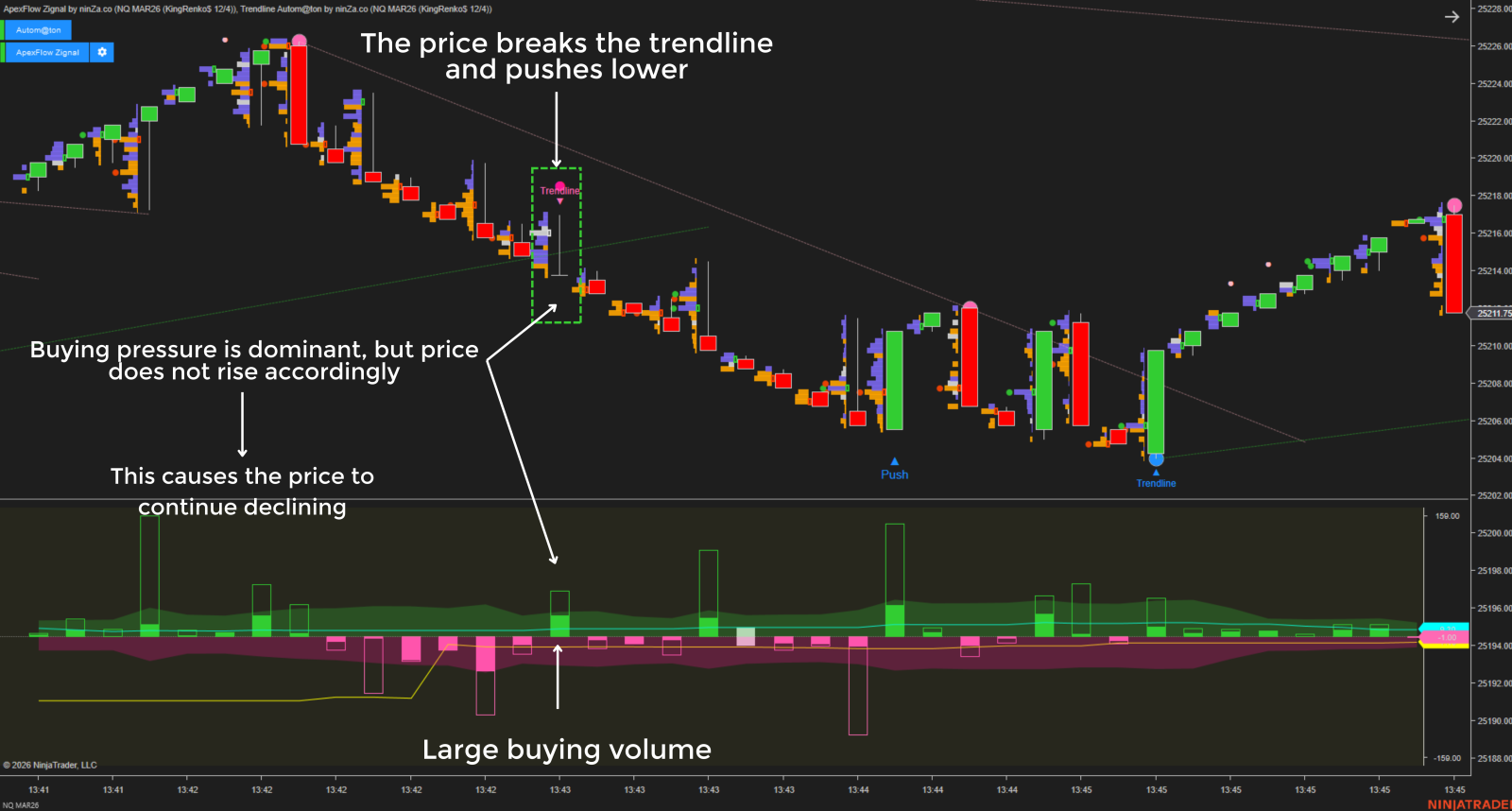
In a downtrend, price may retrace back to the trendline where buying pressure becomes visible. If a Buy Absorption Bar forms, it indicates strong buy volume, but price fails to rise accordingly. Buyers are being absorbed by sellers.
When demand is no longer effective, market structure remains bearish. A break below the trendline in this context confirms that sellers are still in control and that the downtrend is likely to continue.
6. Why this combination creates a trading edge
Trendlines provide context.
Absorption candles provide order-flow confirmation.
Only when these two align does a trendline breakout become tradable. This approach helps traders:
Avoid false breakouts.
Identify when one side is truly exhausted.
Trade based on supply and demand imbalance rather than visual price patterns alone.
7. Conclusion
A trendline break is not an isolated event. It is the outcome of prior absorption. When selling is absorbed, price gains the conditions to break higher. When buying is absorbed, bearish structure is reinforced.
Effective trading is not about drawing more lines, but about understanding what happens at those lines.