If you’re into scalping (especially on Renko charts), you’ve probably run into this repeated situation: Price moves fast, hits a key zone, then bounces/reverses within just a few candles. The problem is:
- Enter too early (before confirmation) → you get caught in noise, whipped out, then the price goes in the right direction.
- Enter too late (wait for too much confirmation) → the price has already moved far, so your stop-loss is too wide, or your target is too short.
In scalping, what you don’t need is another 10 indicators. What you need are 2 super quick answers:
- Is the price at the “Right spot” yet?
- Right at that spot, who’s in control – what’s the momentum?
This article breaks down the workflow into 2 very simple layers:
- Support/Resistance Radar = Price zone map: Automatically marks key support/resistance zones so you know where price is likely to react.
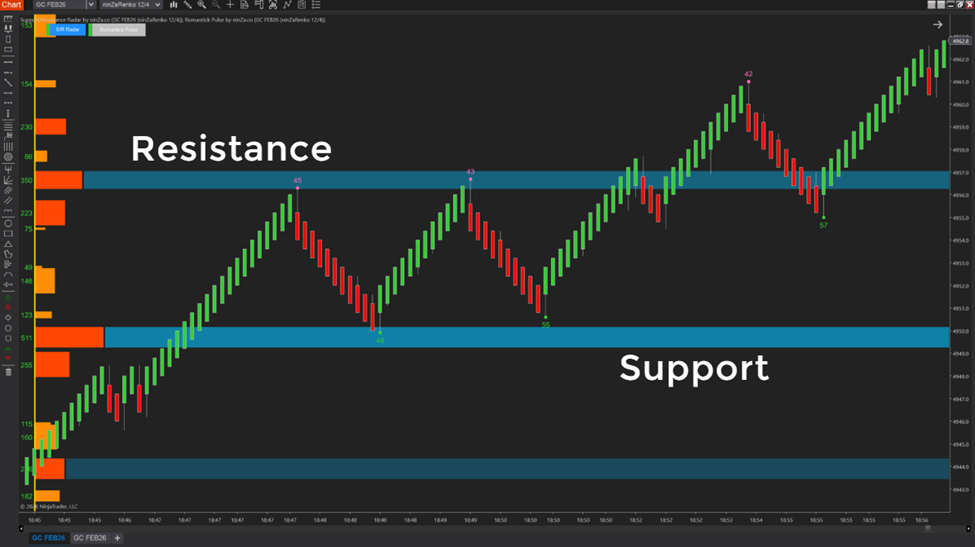
- Romantick Pulse = Confirmation signal at the candle: Gives you a quick Buy/Sell signal so you can enter the trade when the price hits the zone.
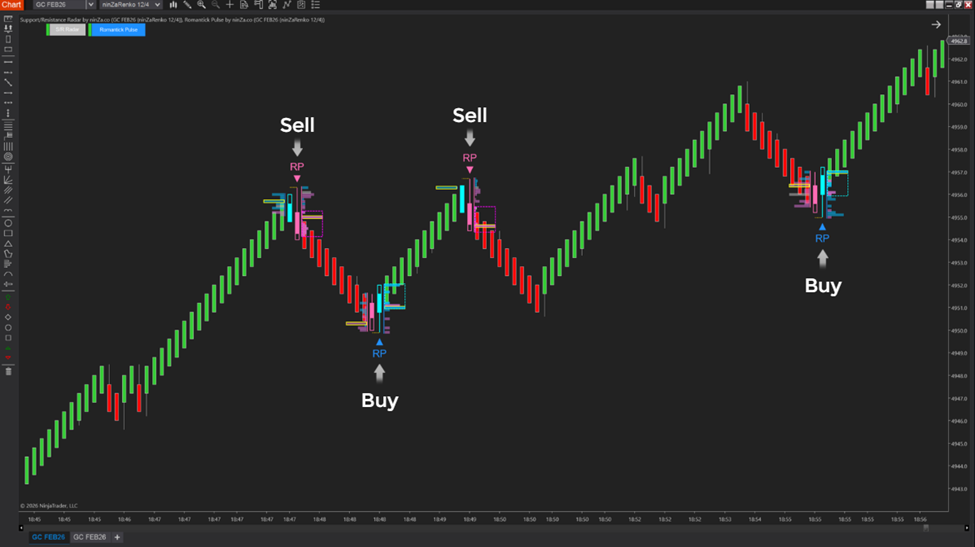
To put it simply: Support/Resistance Radar makes sure you’re not entering trades recklessly, while Romantick Pulse helps you avoid "guessing" when the price just touches a zone.
1. Support/Resistance Radar
Support/Resistance Radar helps you quickly spot price areas that are likely to react, so you can:
- Avoid entering trades in the middle of empty space.
- Focus only when the price moves into key areas.
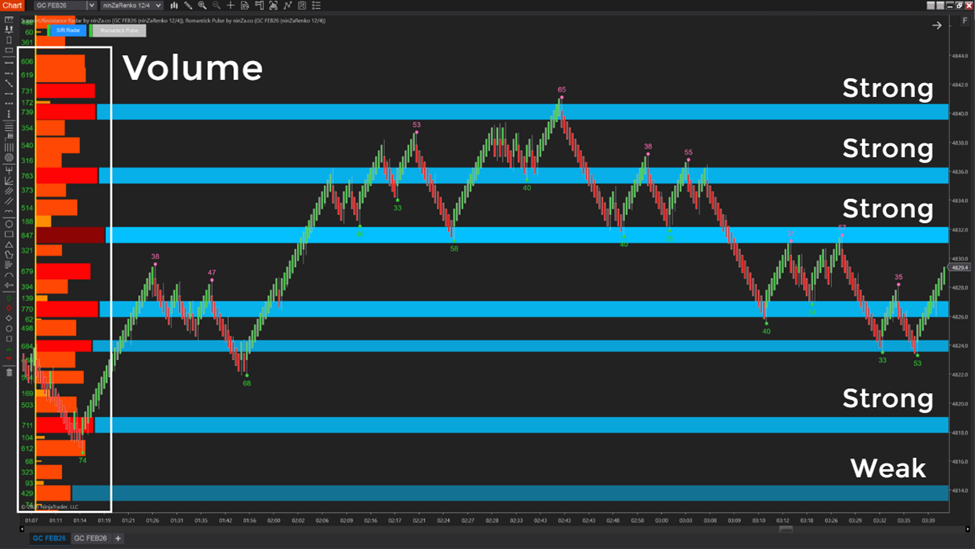
But there are so many support/resistance zones – how do you know which ones are reliable?
➔ The answer lies in the volume column on the left.
➔ The support/resistance zone with higher volume shows it’s a more trusted area → price is more likely to react or reverse there.
2. Romantick Pulse
Romantick Pulse is the “timing” layer that helps you quickly answer: Is it the right time to enter?
Role in the system:
- Support/Resistance Radar tells you “where” to pay attention (the location).
- Romantick Pulse tells you “when” to enter (the timing).
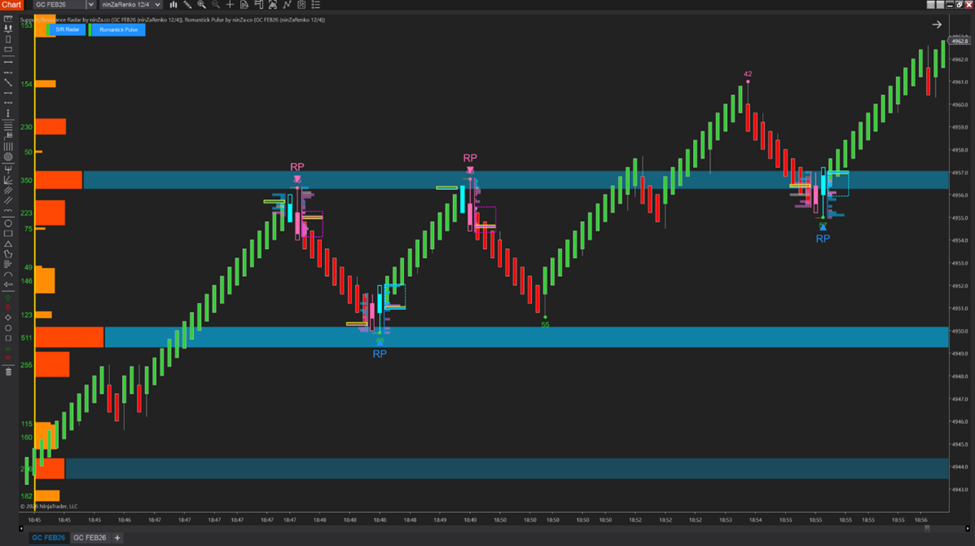
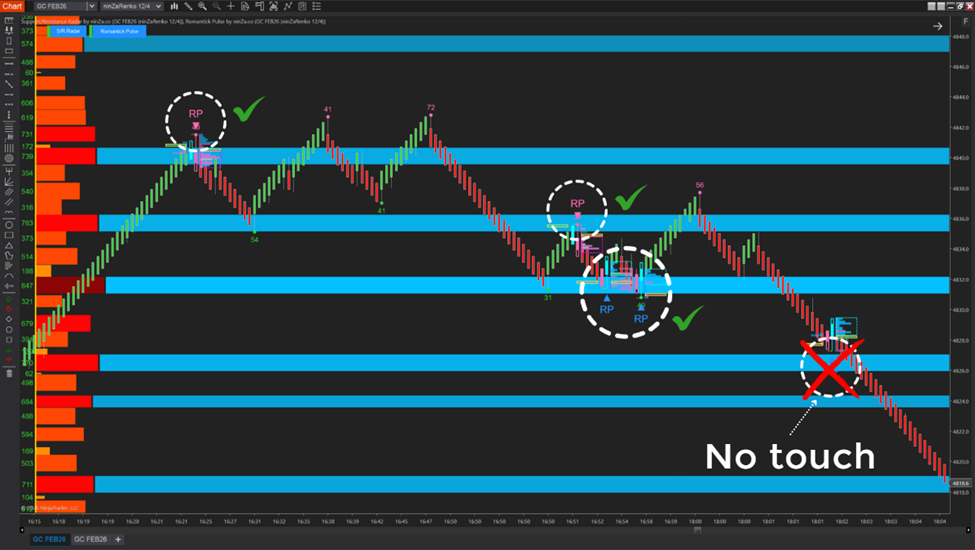
Important rule: Prioritize Romantick Pulse signals only when the price “touches” the zones marked by Support/Resistance Radar.
3. Entry Checklist
For this strategy, we focus only on scalping-style entries – not so much on trend direction. It’s ideal for traders who don’t want to hold positions for too long.
This strategy will cover all the necessary steps, except it doesn't care about trends. The steps are as follows:
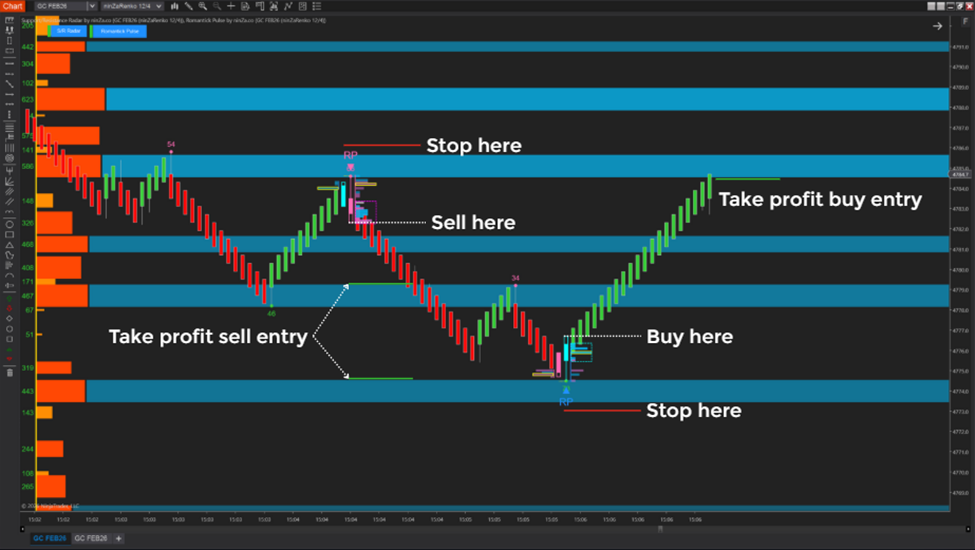
- Identify support/resistance zones using Support/Resistance Radar.
- When the price “touches” those zones and you get a Buy/Sell signal from Romantick Pulse → Enter the trade.
- Set your stop-loss just above/below the touched support/resistance zone and take profit at the nearest support/resistance zone.
Victor Dan / Trader at ninZa.co