ADX(14) – EMA 20 and improving signal reliability
The trading approach developed by Linda Raschke is widely respected for its simplicity, clarity, and long-term robustness. Rather than attempting to predict market turning points, this method focuses on identifying the right market environment and participating only when a trend is already well established.
This article presents the original structure of the strategy as intended, and then discusses how additional confirmation tools can be used to improve signal reliability without altering the core logic.
Take advantage of these exclusive offers and elevate your trading performance:

1. Indicator definitions
ADX (Average Directional Index)
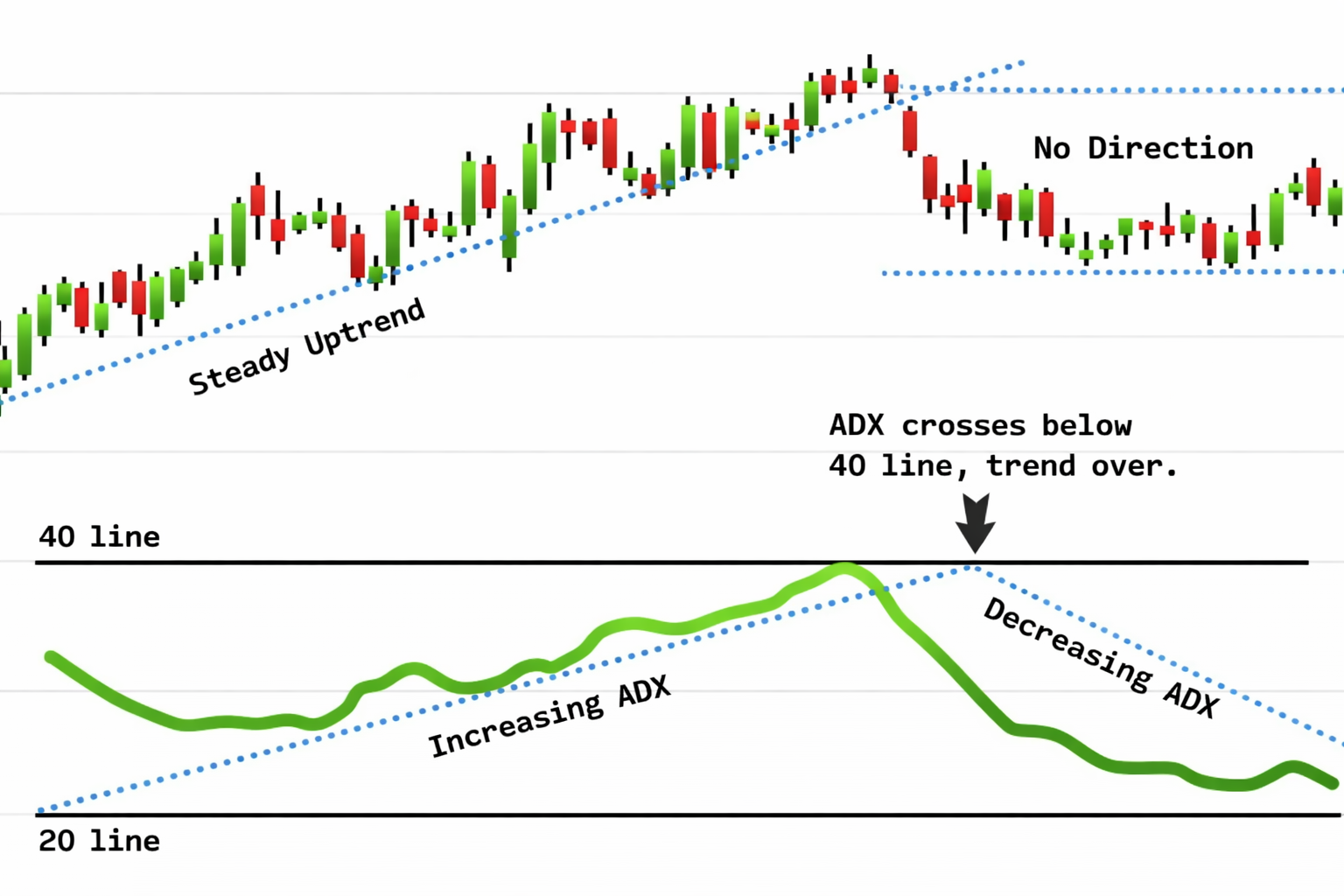
ADX is an indicator used to measure the strength of a trend.
It does not indicate whether the market is bullish or bearish; instead, it reflects how strong and well-defined the current trend is.
Common ADX levels:
Below 20: No clear trend, ranging conditions
20–30: Developing or moderate trend
Above 30: Strong, established trend
Above 40: Very strong trend, possibly extended
EMA
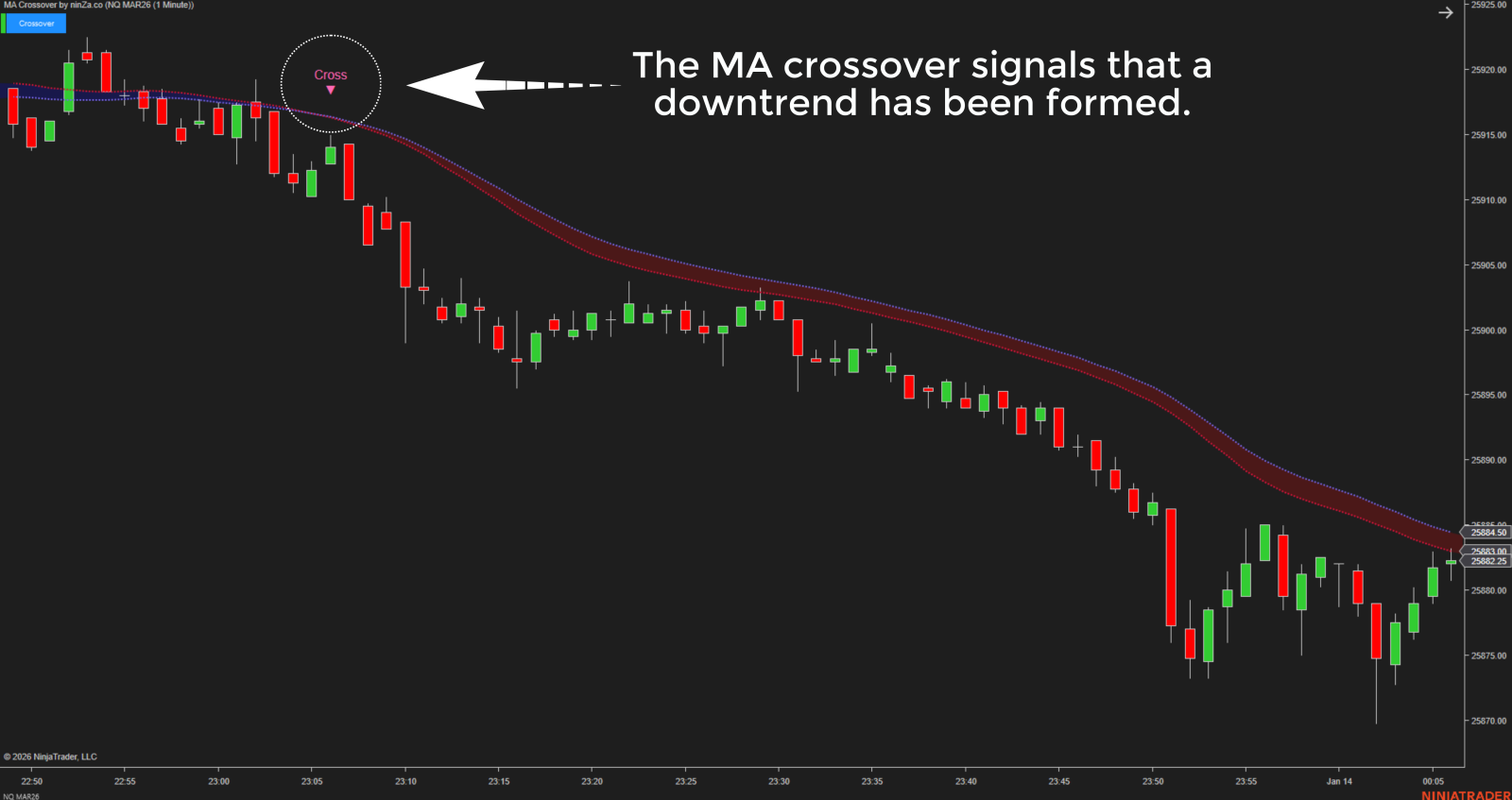
The 20-period Exponential Moving Average reacts more quickly to recent price changes than a simple moving average.
EMA 20 is commonly used to represent the short-term price rhythm within a trending market.
DMI (+DI / -DI)
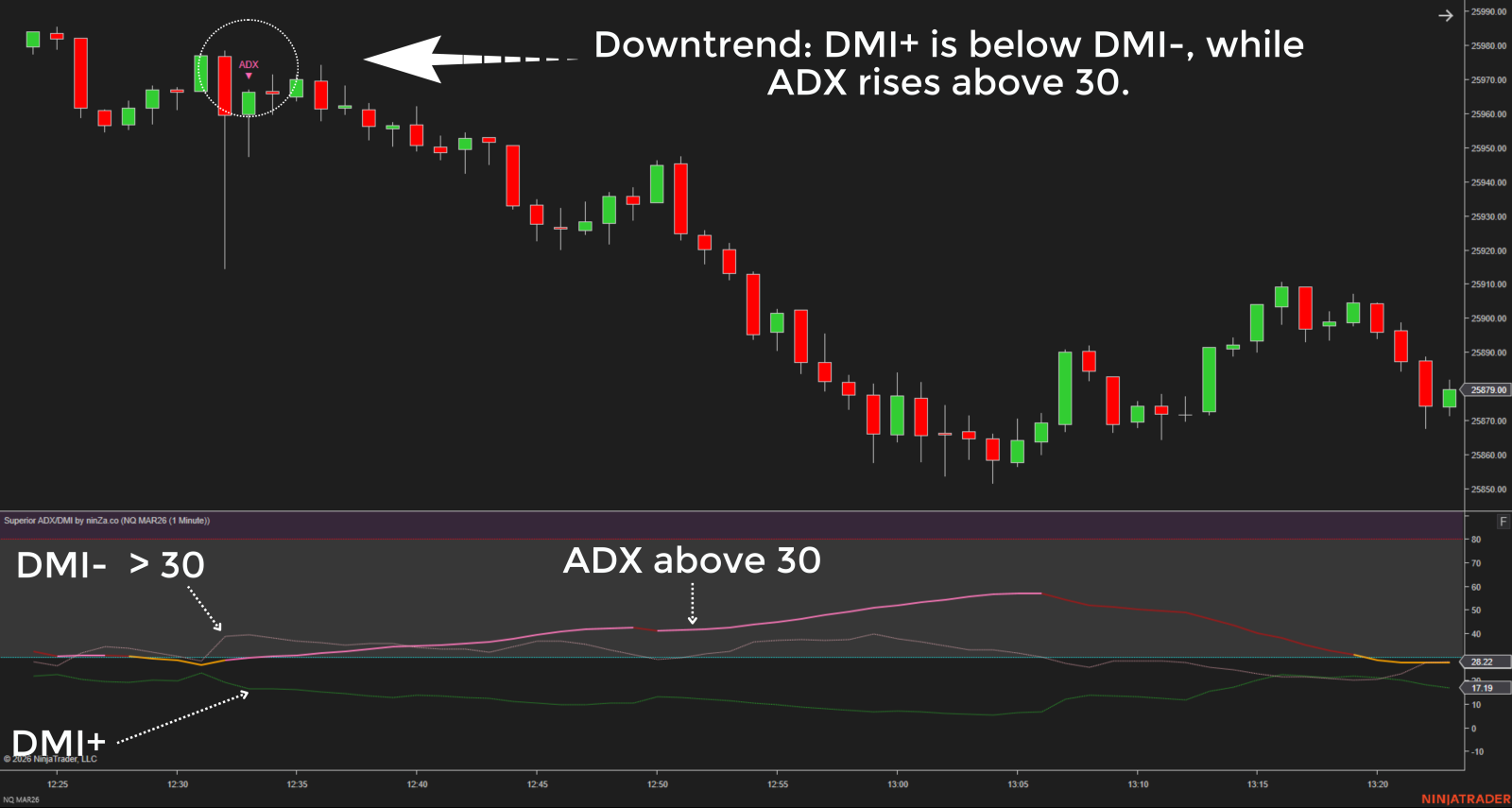
The Directional Movement Index consists of two components:
+DI, representing upward directional pressure
-DI, representing downward directional pressure
DMI illustrates the relative dominance between buying and selling pressure as price evolves.
2. Core philosophy of the Linda Raschke approach
The Linda Raschke approach is built around the following principles:
Trade only in clearly established trends
Avoid picking tops or bottoms
Focus on short-term pullbacks within the main trend
Prioritize entries with limited and well-defined risk
Maintain strict risk management and accept missed opportunities
This is a trend continuation, probability-based approach, not a predictive one.
3. Linda Raschke strategy checklist
3.1. Required market conditions
The strategy is applied only when all of the following conditions are met:
The market is in a clear trend
The trend is mature, not in its initial development phase
ADX(14) is at an elevated level, typically above 30
Price action is orderly and directional, without excessive noise or erratic spikes
BUY Checklist (ADX – EMA 20)
ADX(14) > 30.
An uptrend is established when price remains above the EMA 20.
Price pulls back to the EMA 20 and stalls at the EMA.
When price touches the EMA 20:
Trade management:
Stop loss: below the most recent pullback low.
Take profit on 1/2 of the position at the prior high.
Take profit on the remaining 1/2 at 2R.
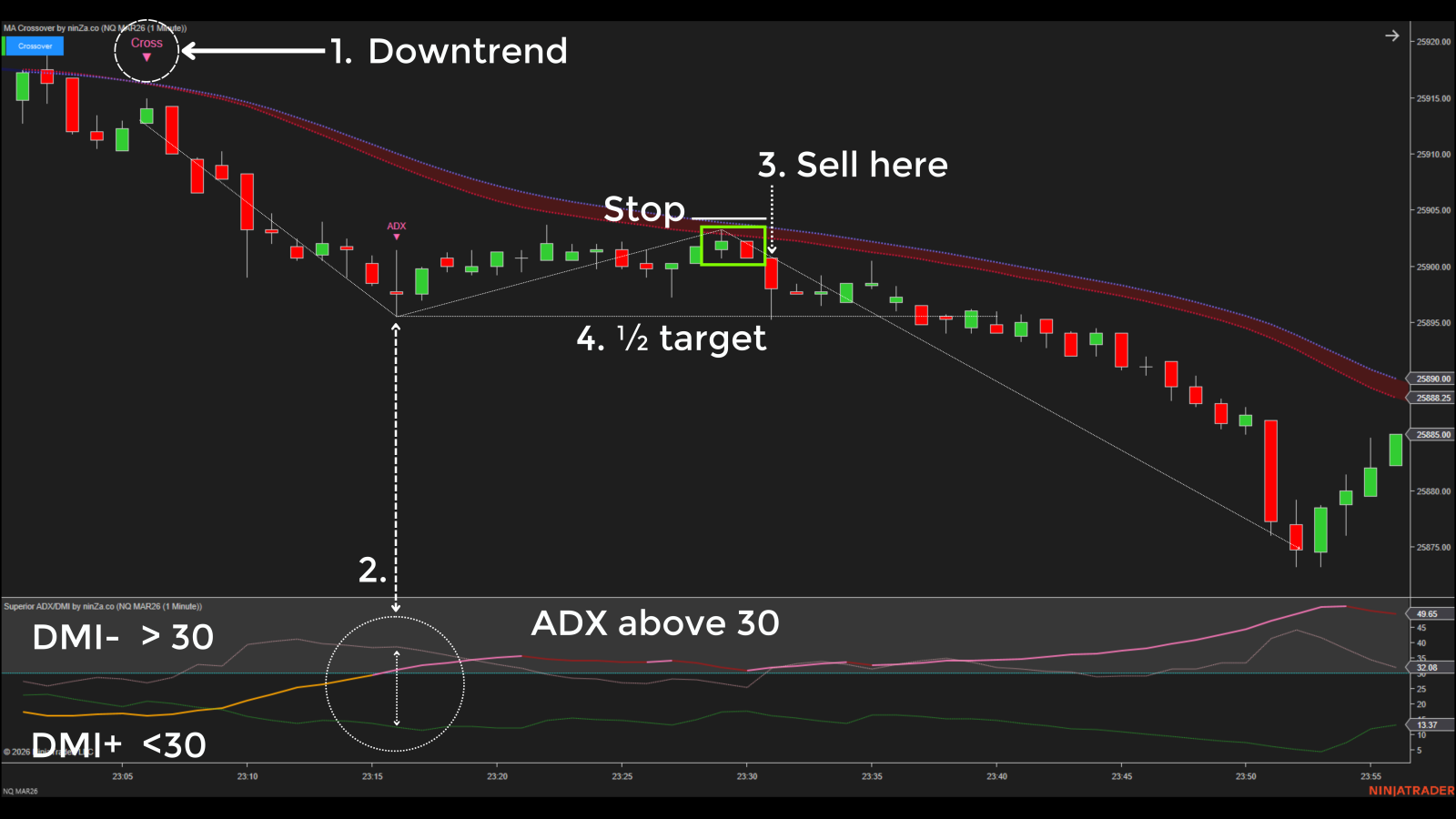
SELL Checklist (ADX – EMA 20)
ADX(14) > 30.
A downtrend is established when price remains below the EMA 20.
Price retraces to the EMA 20 and stalls at the EMA.
When price touches the EMA 20:
Trade management:
Stop loss: above the most recent retracement high.
Take profit on 1/2 of the position at the prior low.
Take profit on the remaining 1/2 at 2R.
3.2. Mandatory rules of the original checklist
Do not trade in sideways or non-trending markets
Do not enter if price is extended too far from the EMA 20
Do not move the stop loss in an unfavorable direction
Exit the trade if the trend structure is invalidated
Be willing to stand aside if the checklist is incomplete
4. Using DMI to improve signal reliability
In the original strategy, ADX measures trend strength but does not indicate which side controls the market.
Adding DMI can help clarify this aspect, particularly when trends exist but follow-through is inconsistent.
Guidelines for using DMI as a supplementary filter:
Favor BUY setups when +DI is above -DI
Favor SELL setups when -DI is above +DI
Avoid trades when the DI lines overlap or lack clear separation
DMI is used strictly as contextual confirmation, not as a standalone entry signal.
Take advantage of these exclusive offers and elevate your trading performance: