In reality, trading is a "high-performance sport": high pressure, quick decisions, and one wrong move can be costly. Elite athletes don’t rely on willpower – they rely on a system. Here are 5 principles that directly apply to trading.
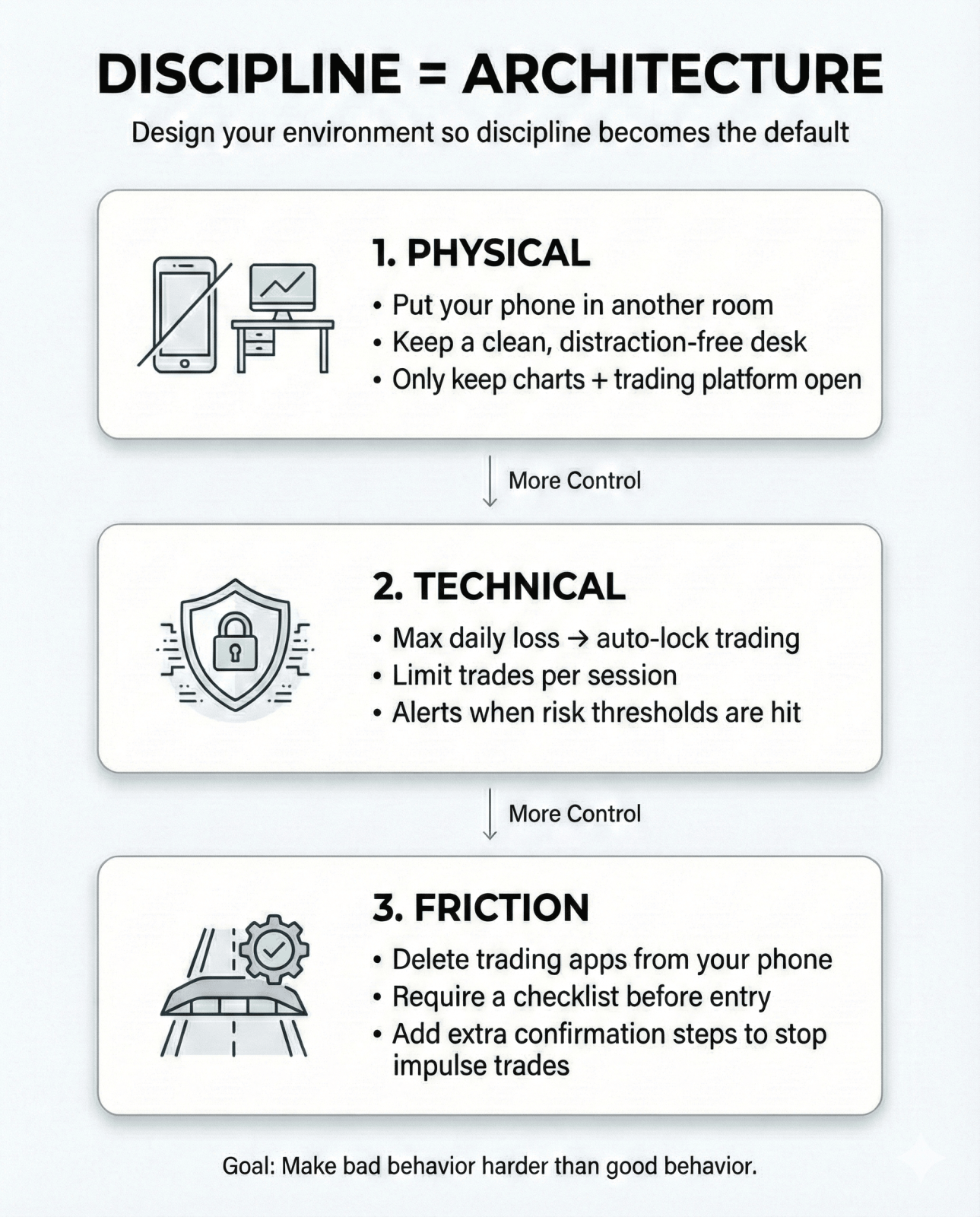
1) Discipline isn’t willpower, it’s a system
Many people think discipline is a “personality trait”, but in a market with no rules, no supervision, and no limits, discipline only lasts if you design a clear structure.
Athletes create “barriers” to avoid breaking discipline when emotions run high. Traders can use commitment devices: make decisions when calm to prevent bad actions when stressed.
Simple examples:
Physical barriers: Keep your phone in another room when trading.
Technical barriers: Set a clear daily loss limit (e.g., 5% of the account) and stop trading once you hit it.
Breaking bad habits: If you tend to "impulsively trade on your phone", delete the trading app and only trade on your computer.
Don’t rely on willpower – make breaking discipline harder than following it.
2) Think like an athlete: Choose the right role and accept losses as a cost
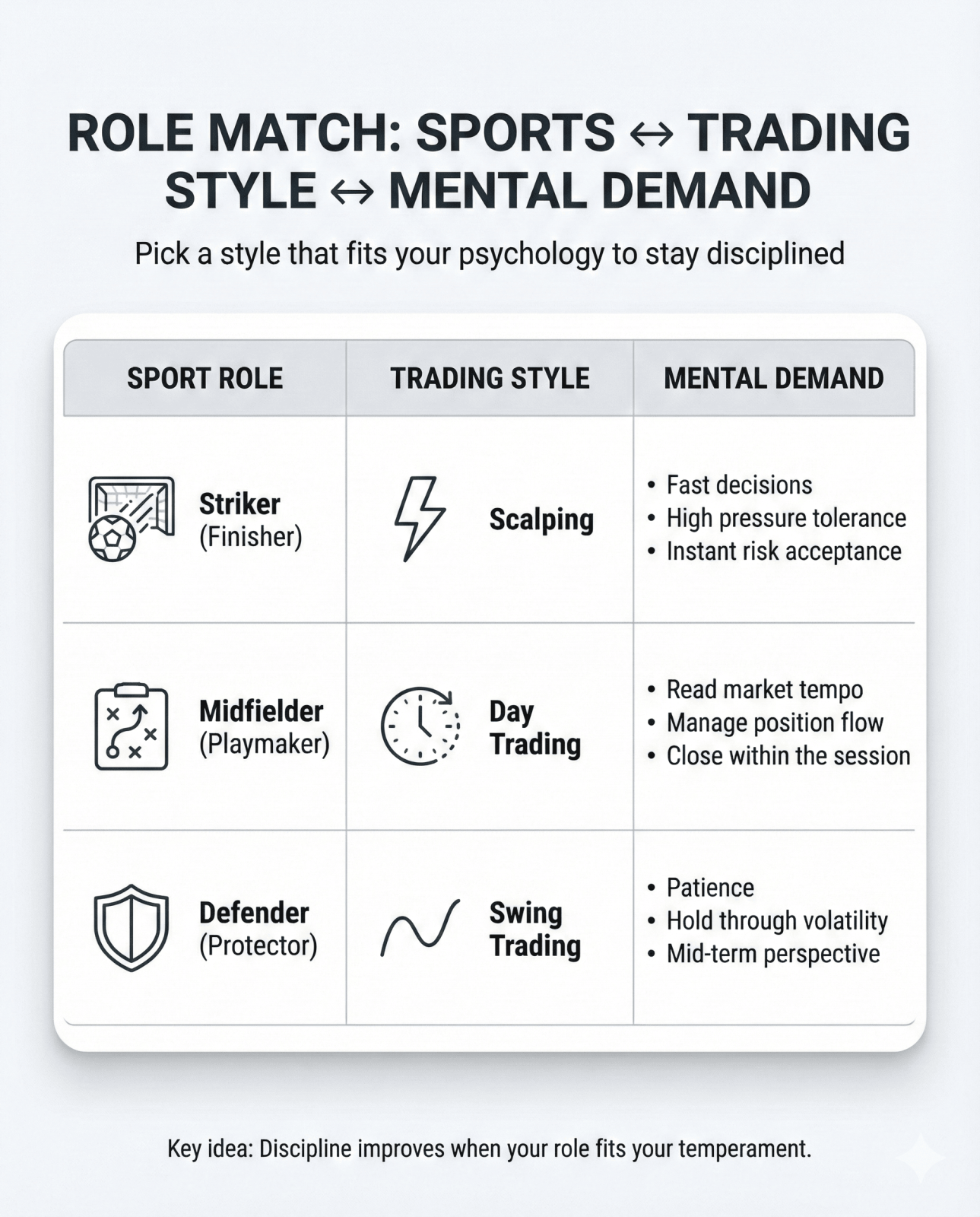
In sports, a good athlete doesn’t try to do everything. They understand their role and hone it.
Trading is the same: many traders lose discipline because they force themselves into a trading style that doesn’t match their psychological makeup.
For example, a slow, methodical person who prefers certainty might try to force themselves into scalping – leading to overwhelm, hasty trades, and emotional mistakes.
You should ask yourself: “What role suits me?”
Along with choosing your role, there’s another crucial element: accepting losses as a cost.
Great athletes don’t win every time. They win because they don’t let one failure destroy their system. Professional traders are the same – they don’t aim to “never lose”. They focus on what they can control: managing their losses.
3) “Experience” isn’t enough: You need deliberate practice
Many people trade for years without making meaningful progress. The reason is they may be repeating the same experiences without correcting their mistakes properly.
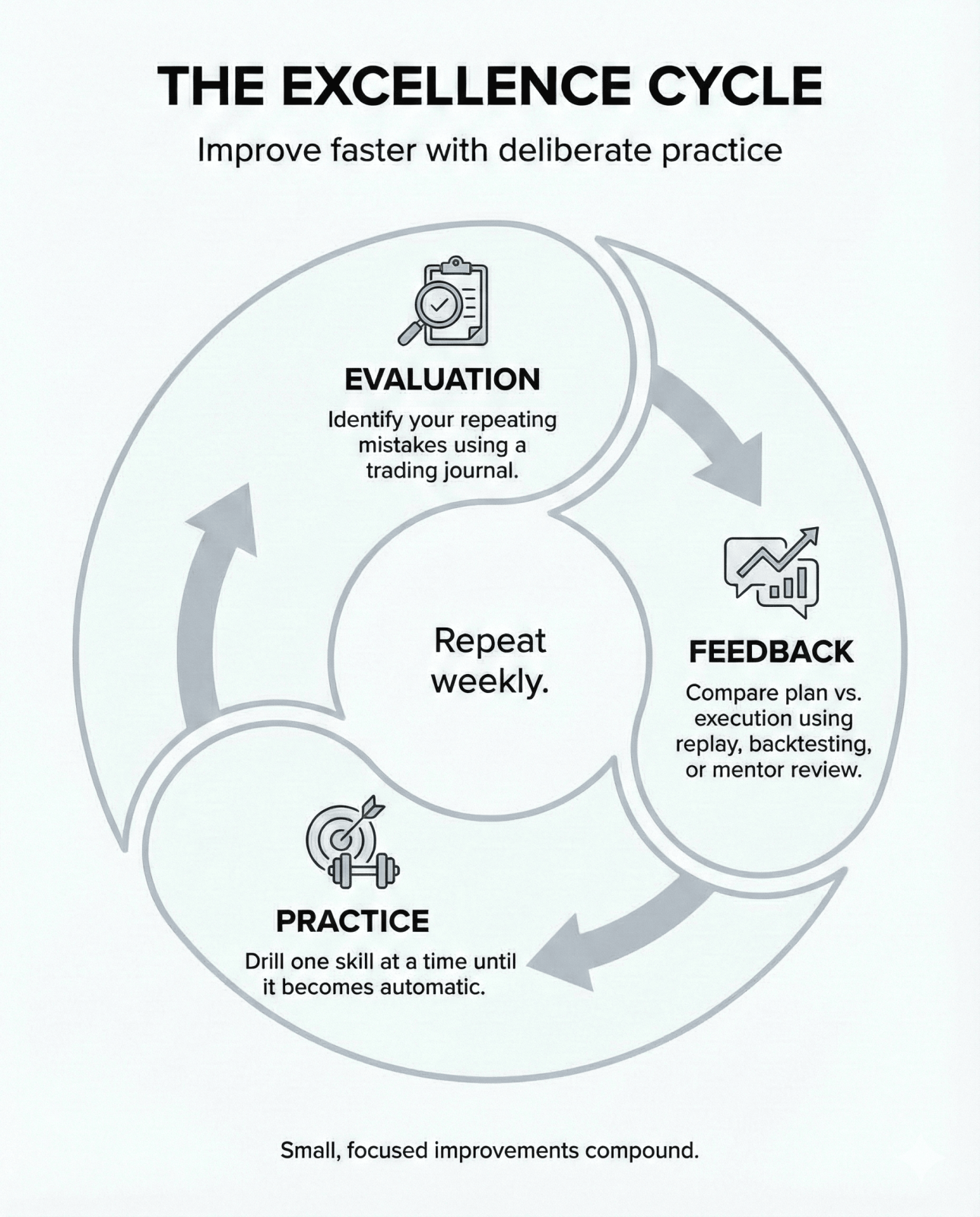
Athletes improve through deliberate practice: focused, goal-oriented practice with feedback, targeting weaknesses.
You can apply this by using the model I follow:
Key point: This kind of practice is mentally exhausting because it forces you to confront your real weaknesses. But this is the quickest way to turn skills into reflexes.
This kind of practice is mentally exhausting because it forces you to confront your real weaknesses. But this is the quickest way to turn skills into reflexes.
4) “Cue Words”: Keywords to bring your mind back to the right process
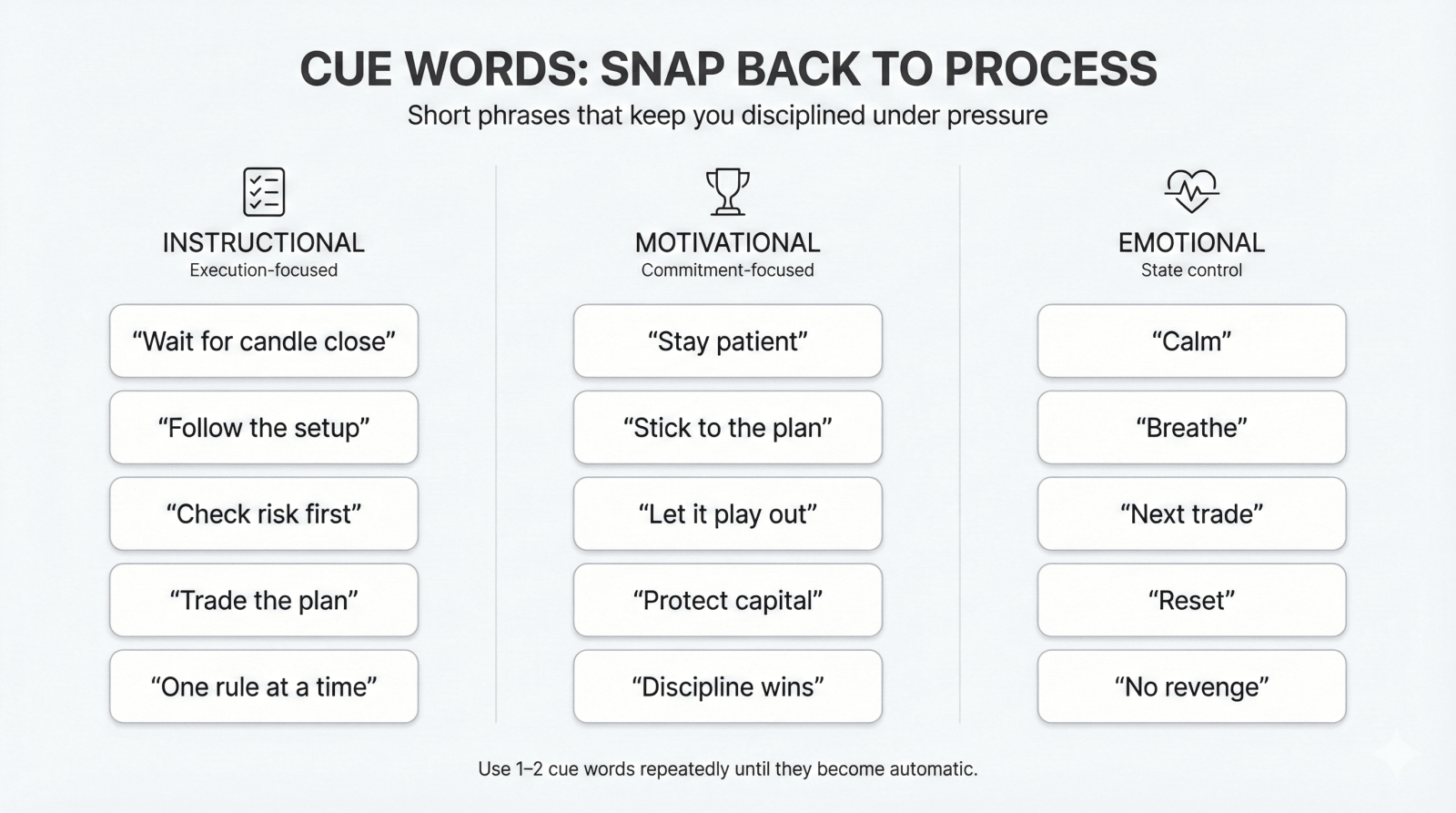
In high-pressure moments, you don’t have time to review an entire checklist. Athletes use cue words – short, memorable phrases to trigger the right state.
Traders can also build a "keyword" list for different situations:
Guidance: "Wait for candle close," "Right setup," "Checklist."
Motivation: "Stick to the plan," "Patience."
Emotional regulation: "Calm down," "Next trade."
The key point is: practice them in simulations/backtests so that when pressure hits, they come up as reflexes.
Instead of asking: “How can I be more disciplined?”
Ask: “How do I design my system so that discipline becomes automatic?”
Victor Dan / Trader at ninZa.co