Many traders fail not because they lack signals, but because they cannot distinguish which signals are valid within the right market context.
Markets generate signals constantly. However:
This is why Sumo Pullback$ and Sonarlike Iceberg Finder were designed to work together, not in isolation.
Sumo Pullback$ – Structural Context
Sumo Pullback$ is not a conventional entry indicator. Its core value lies in defining the internal market structure.
The Sumo Pullback$ framework is built on 3 key elements:
- Valid pullbacks within a trend
- An internal dynamic support/resistance system (Sumo Cloud)
- Signals that appear only when price breaks all three dynamic levels simultaneously
From a structural perspective:
- Breaking 1 level = technical reaction
- Breaking 2 levels = emerging pressure
- Breaking all 3 levels = structural state transition
This is the point where the market shifts from balance to control.
Sumo Pullback$ answers a question that Iceberg alone cannot:
Is the market currently in a price zone and timing that allows the trend to continue?
Why hasn’t Sumo Pullback$ fully unlocked its potential?
The limitation of Sumo Pullback$ is not its concept, but how the signal is expressed.
Key constraints when Sumo stands alone:
- Signals often appear on a single bar
- Optimized primarily for Renko charts
- Less adaptive on tick, time, or volumetric charts
- Misses shallow pullbacks during strong trends
As a result:
The structural concept is strong.
But signal frequency is low, and many valid continuation opportunities are filtered out.
This gap is exactly what Sonarlike Iceberg Finder was designed to address.
Sonarlike Iceberg Finder – Institutional Behavior
Sonarlike Iceberg Finder was not created to replace Sumo Pullback$. It was built to provide behavioral confirmation for Sumo’s structural framework.
What Sonarlike Iceberg Finder can do that Sumo Pullback$ cannot:
- Detect real absorption and aggressive execution
- Signals exist as behavioral clusters, not single moments
- Independent of one specific candle
- Reflects institutional intent, not just price reaction
If Sumo Pullback$ tells us: “The structure has been breached deeply enough”,
Then Sonarlike Iceberg Finder answers: “Who paid the price to break through each layer?”
3-level structural break + Sonarlike Iceberg Finder behavior = Deliberate breakout, not a random fluctuation.
Sonarlike Iceberg Finder effectively extends Sumo’s signal from a single bar into a sustained behavioral phase.
When structure meets behavior…
When these 2 elements are combined, the trading mindset changes completely. Trades are no longer taken because:
❌ “A signal appeared”
❌ “Price broke a level”
❌ “The market feels strong”
Trades are taken because:
✅ Structure allows continuation
✅ Institutions are actively involved
✅ Timing aligns with the trend phase
Clear role separation:
Sumo Pullback$ answers: Where is continuation structurally valid?
Sonarlike Iceberg Finder answers: Who is pushing the market forward?
When both answers align, the true trading edge emerges.
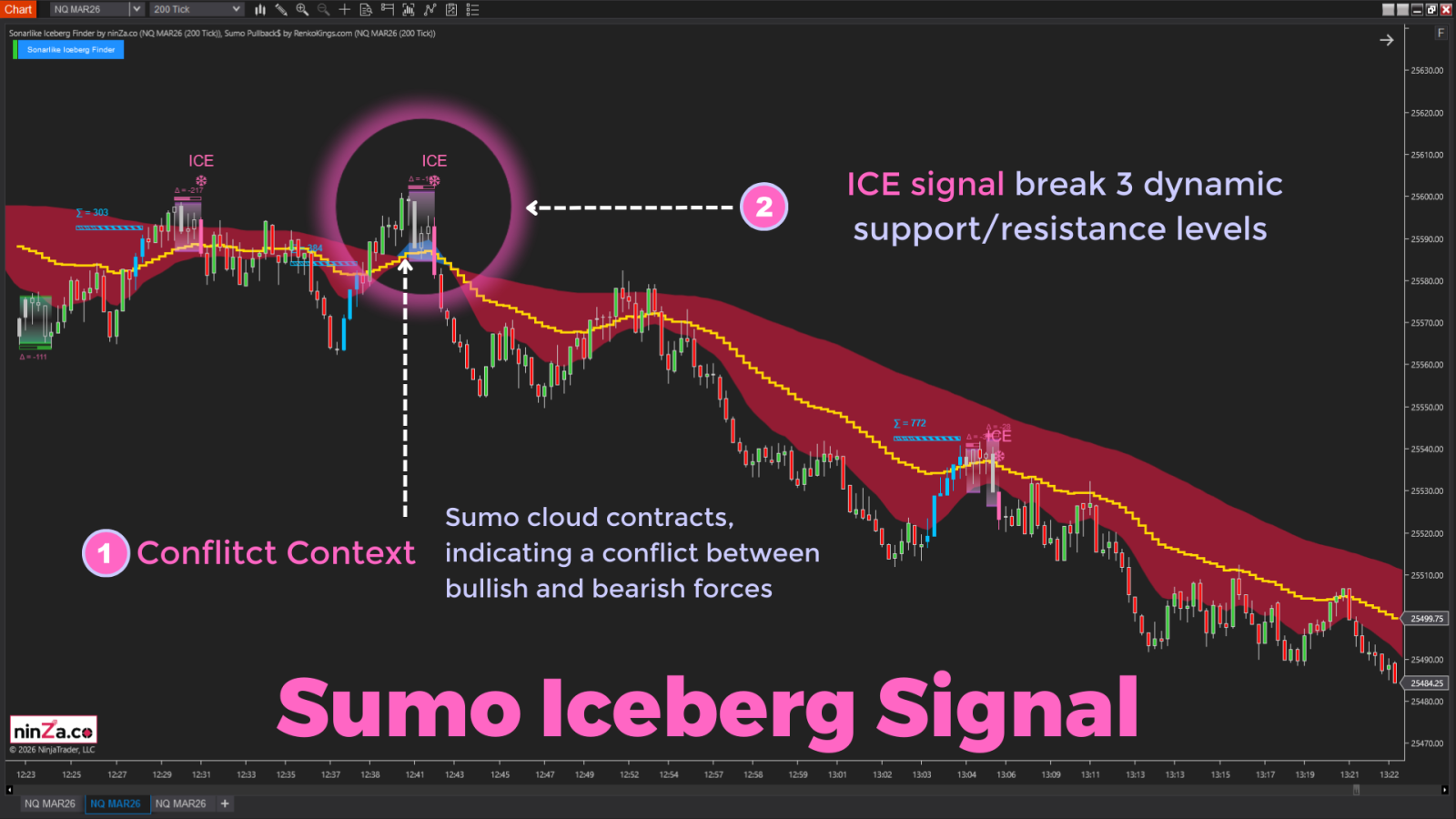
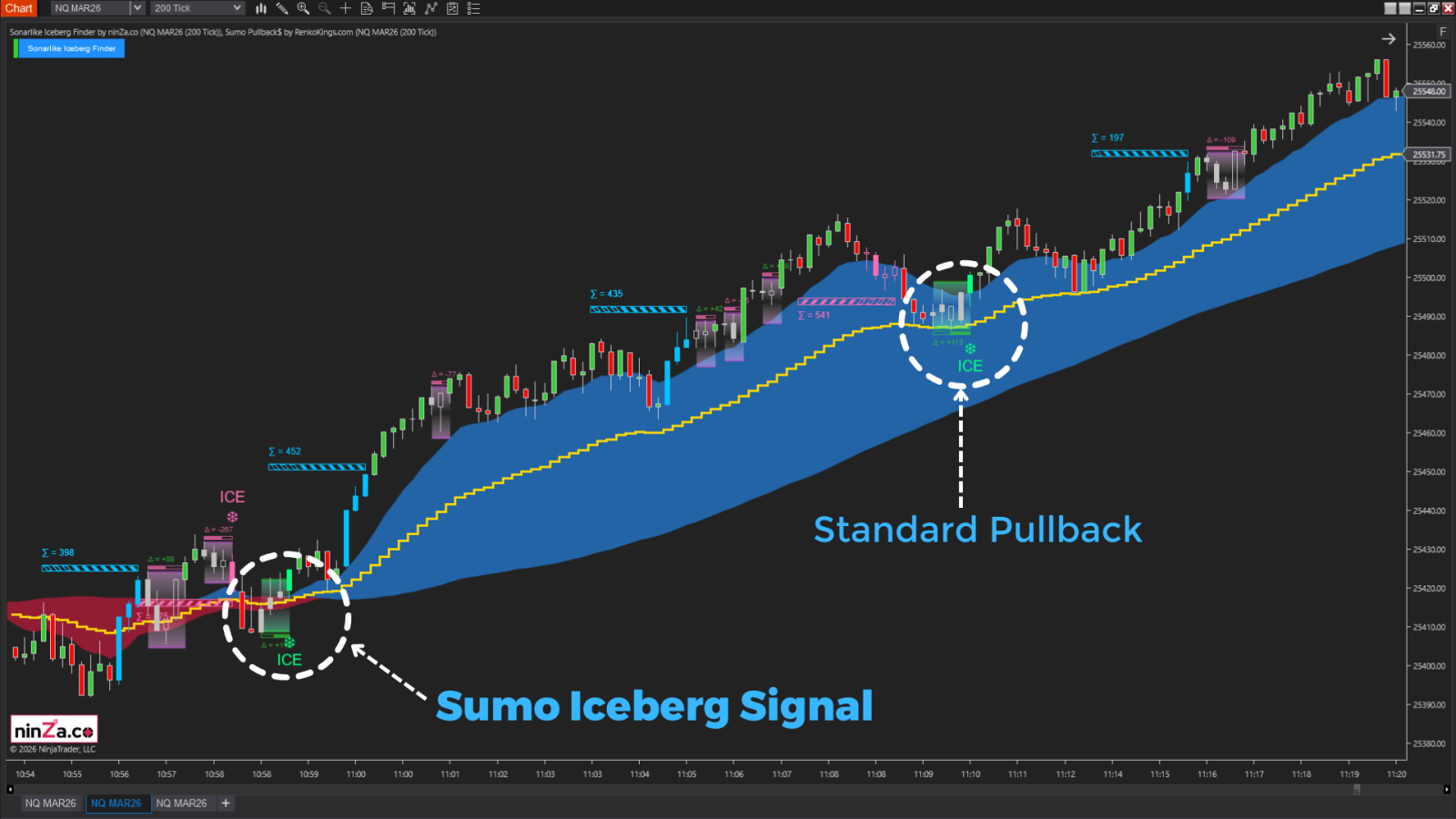
2 core signal mechanisms
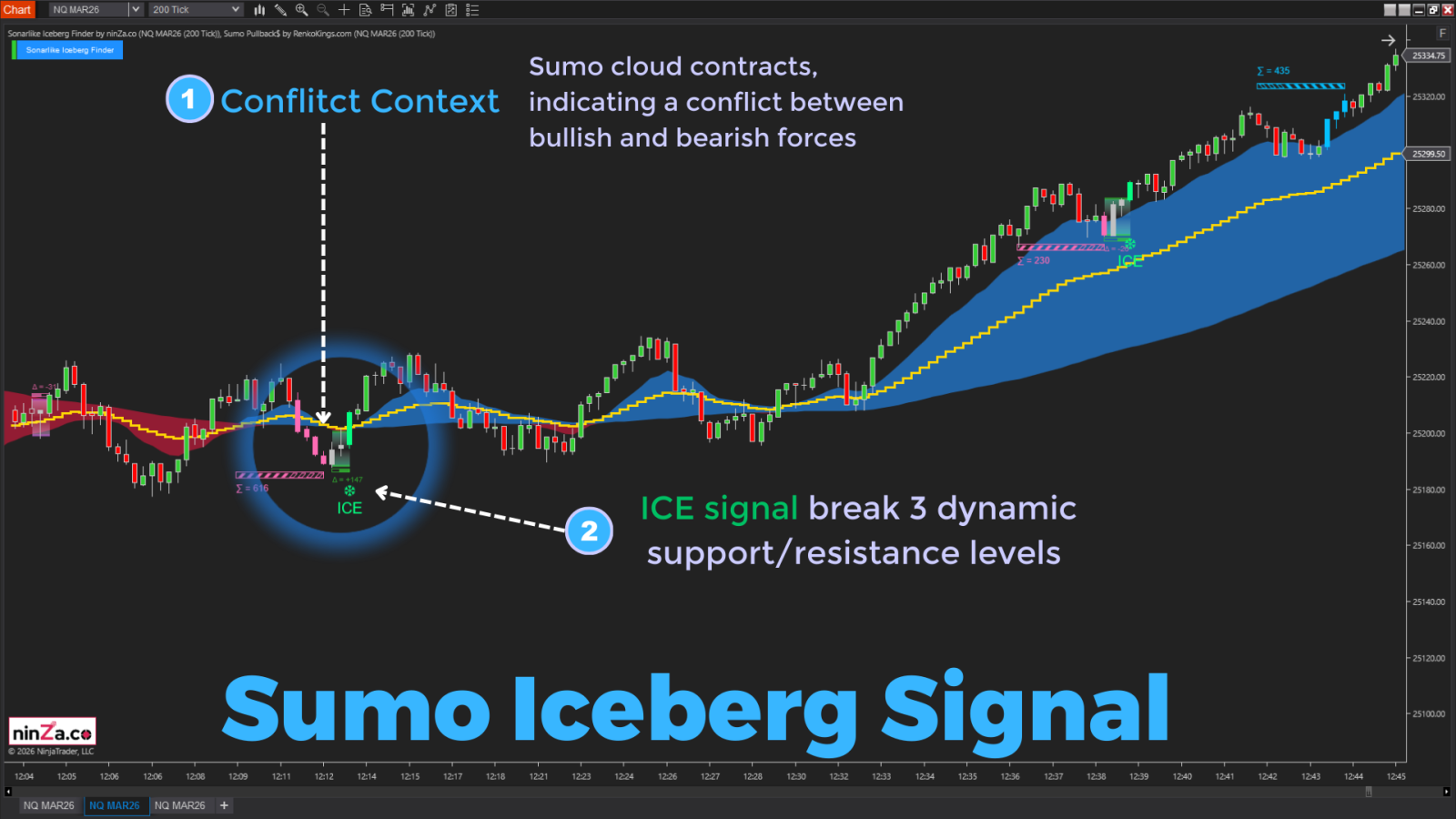
1. Sumo Iceberg Signal – Structural break in a conflict zone
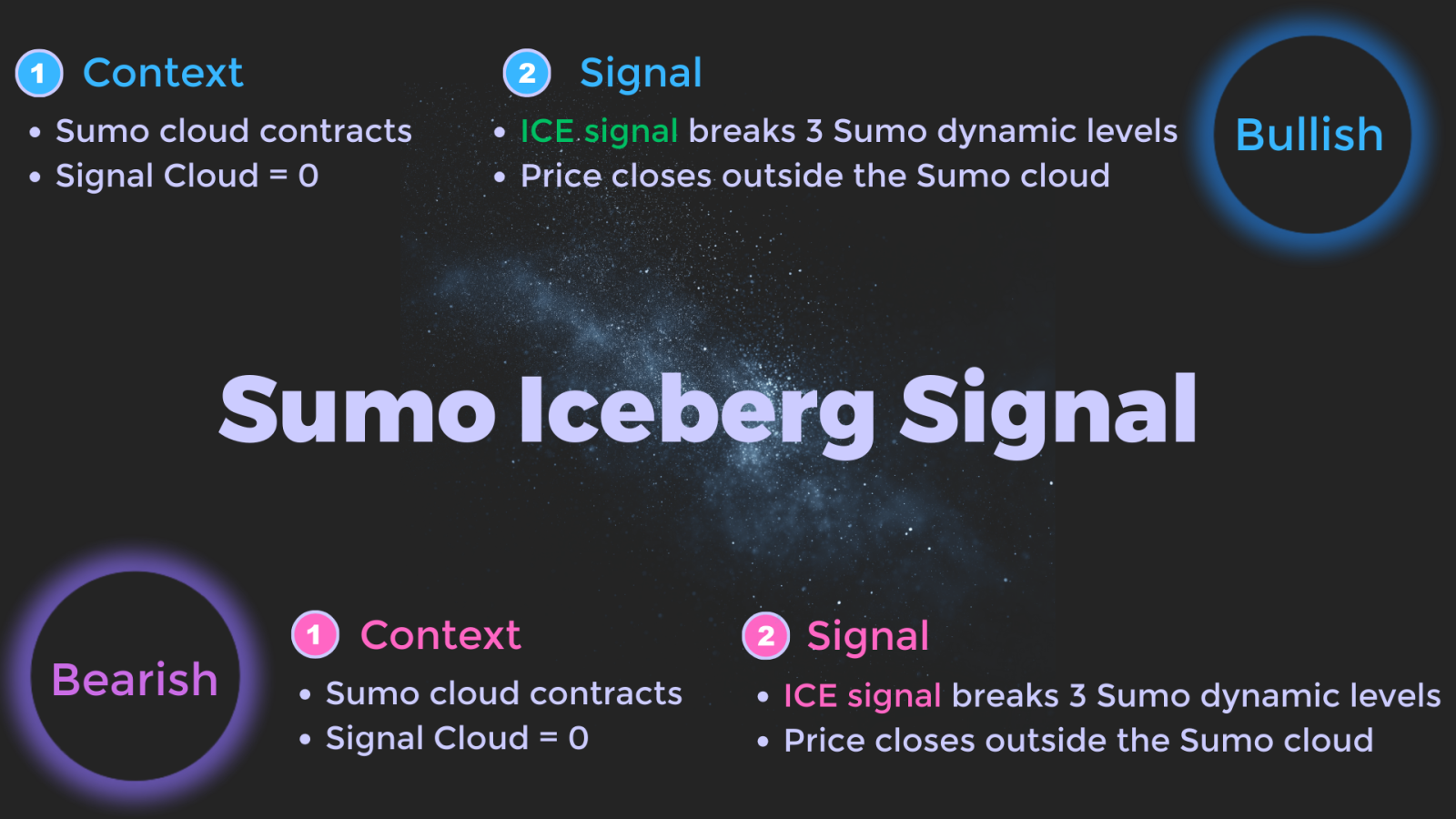
Context
- Sumo Cloud contracts
- Signal Cloud = 0
➡️ Market is in a conflict / balance phase
Signal
- Iceberg breaks all three dynamic S/R levels
- Price closes outside the Sumo Cloud
This is a structural transition signal, not a simple continuation.
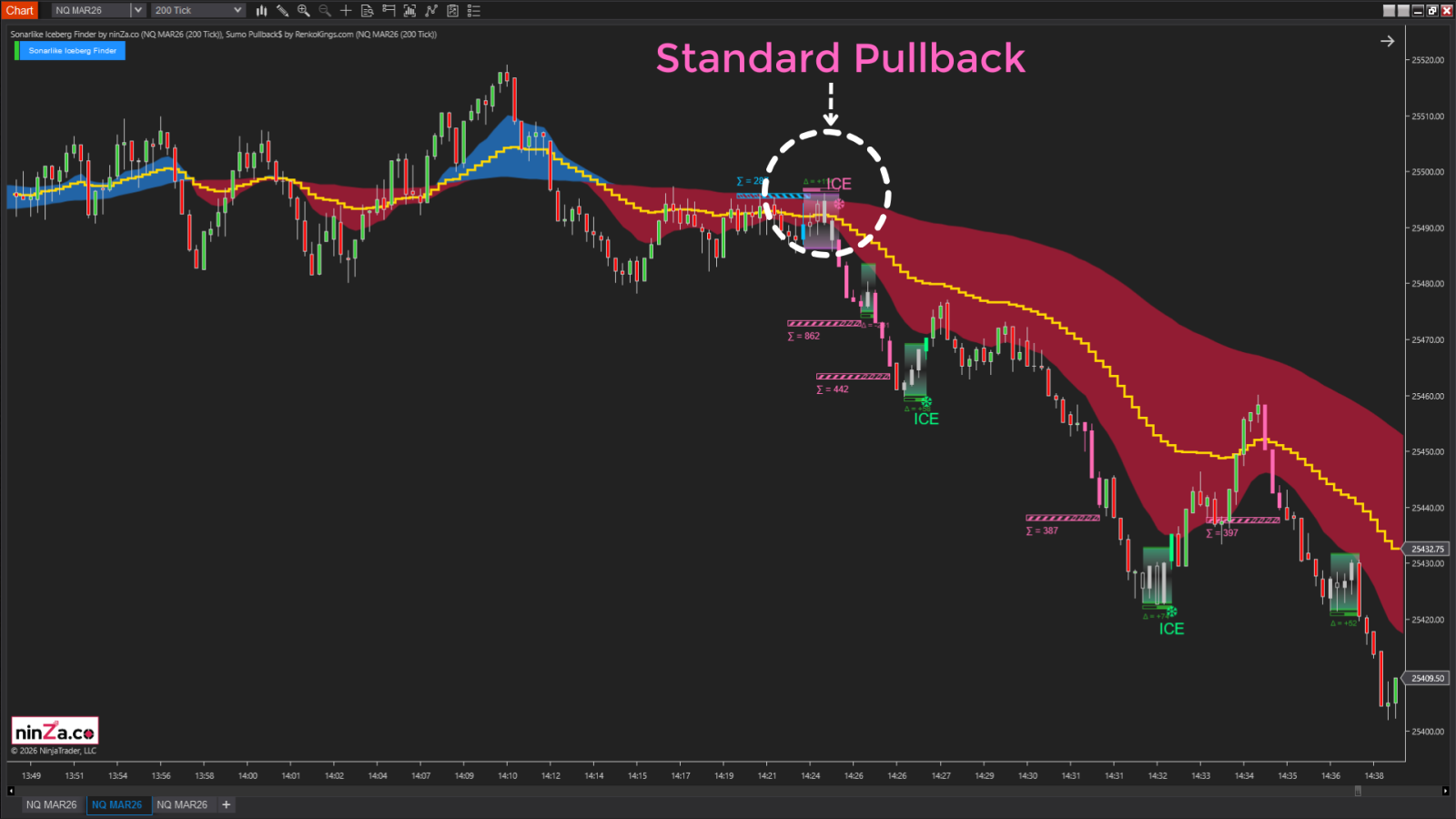
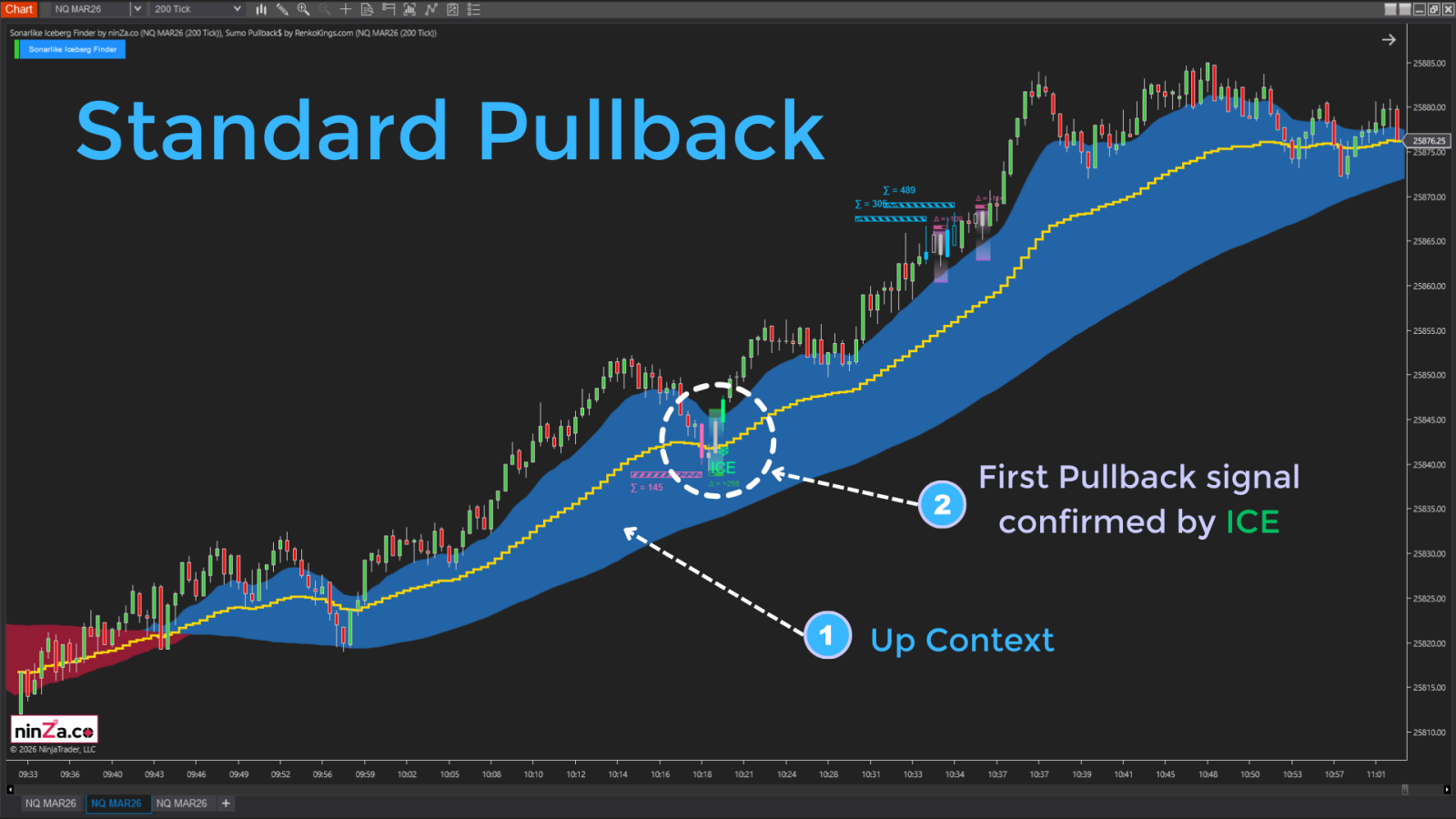
2. Standard Pullback – First Pullback in a Confirmed Trend
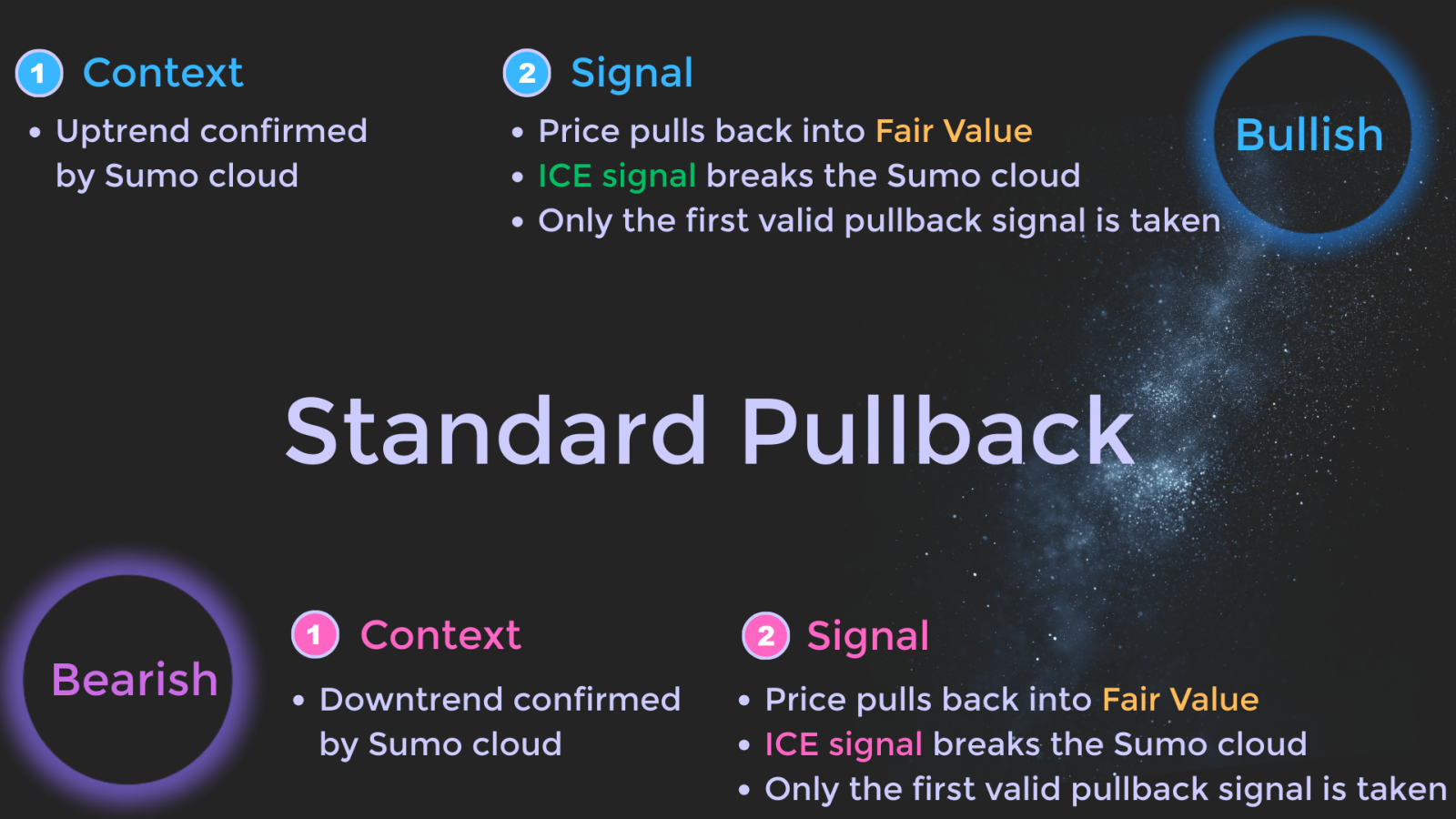
Context
- Trend already confirmed by Sumo Cloud
Signal
- Price pulls back into Fair Value
- Iceberg confirms institutional behavior
- Only the first valid pullback is taken
Designed for optimal risk–reward, not chase entries.
Data Validation – Multi-chart backtesting
A trading system only has value if its edge is data-validated and independent of chart representation.
Backtest framework
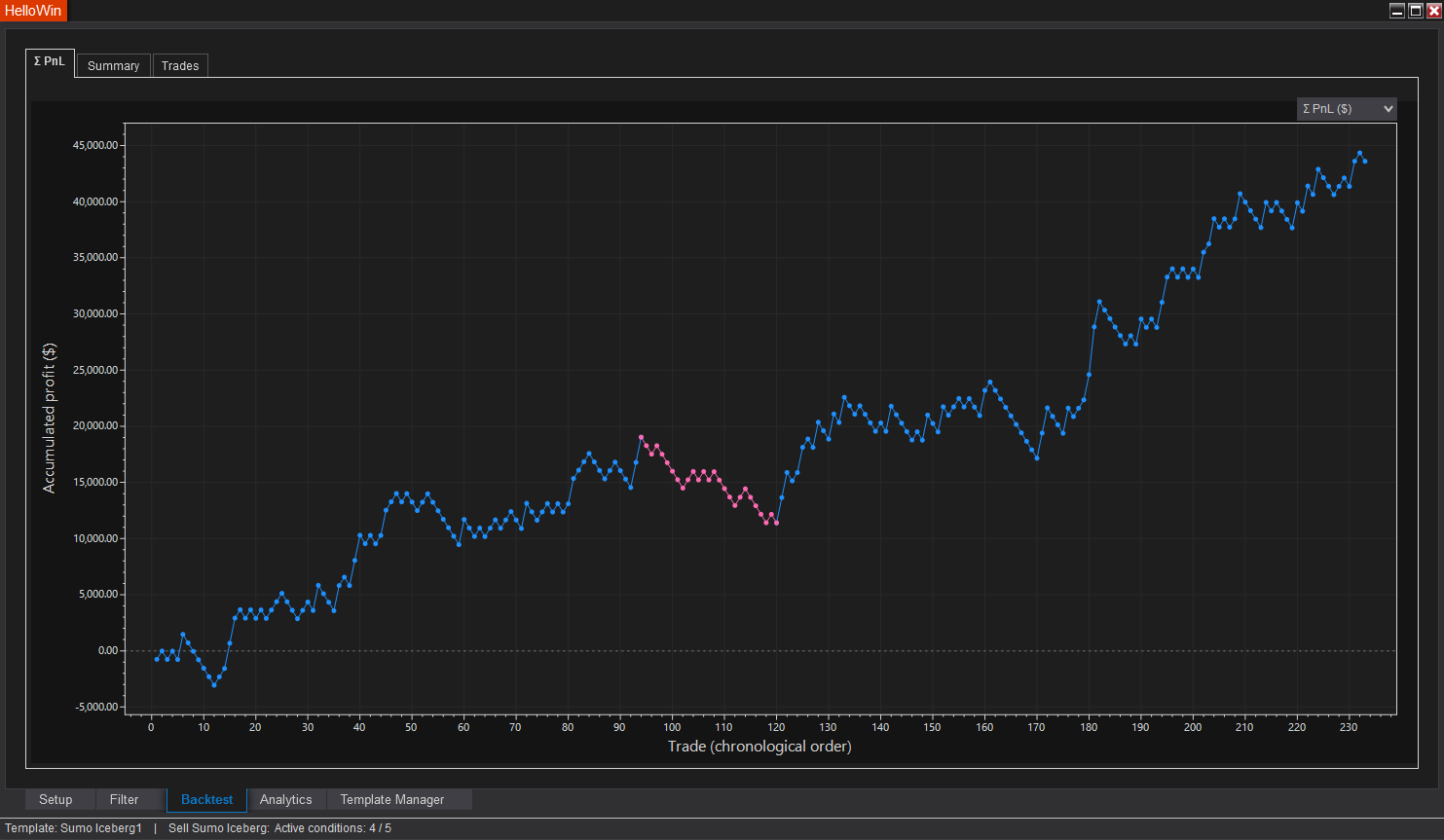
- Instrument: NQ (Nasdaq Futures)
- Baseline chart: 200 tick
- Cross-check: 1-minute chart
- Logic:
- Sumo Iceberg Signal
- Standard Pullback (first valid pullback only)
▸ No curve fitting per chart type
The objective was not to create a smooth equity curve, but to answer one core question:
"Does the structural + behavioral edge persist when price is displayed differently?"
Key results
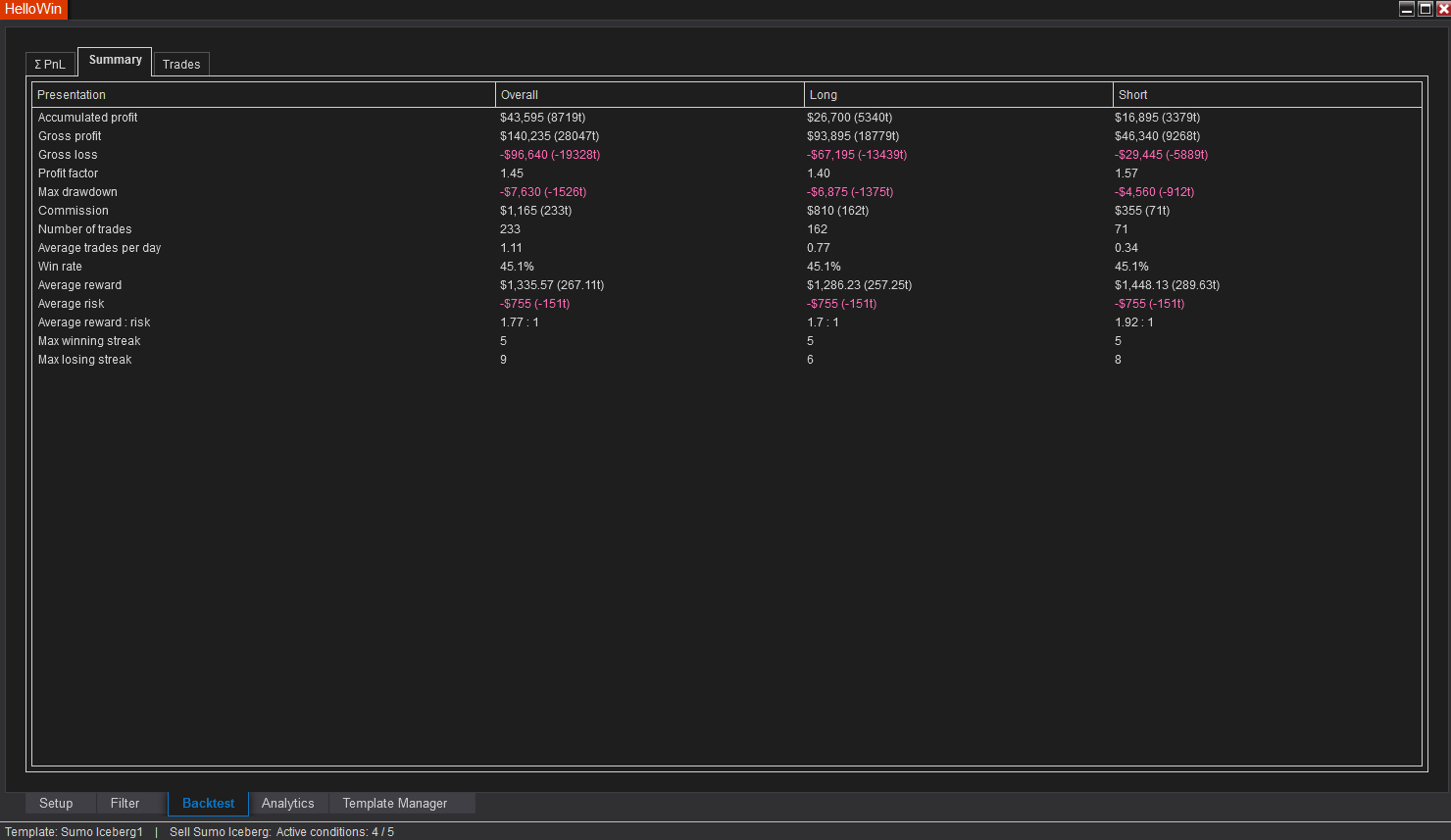
200 Tick Chart
- Accumulated Profit: ~$43,595
- Profit Factor: 1.45
- Win Rate: ~45%
- Reward : Risk: ~1.77 : 1
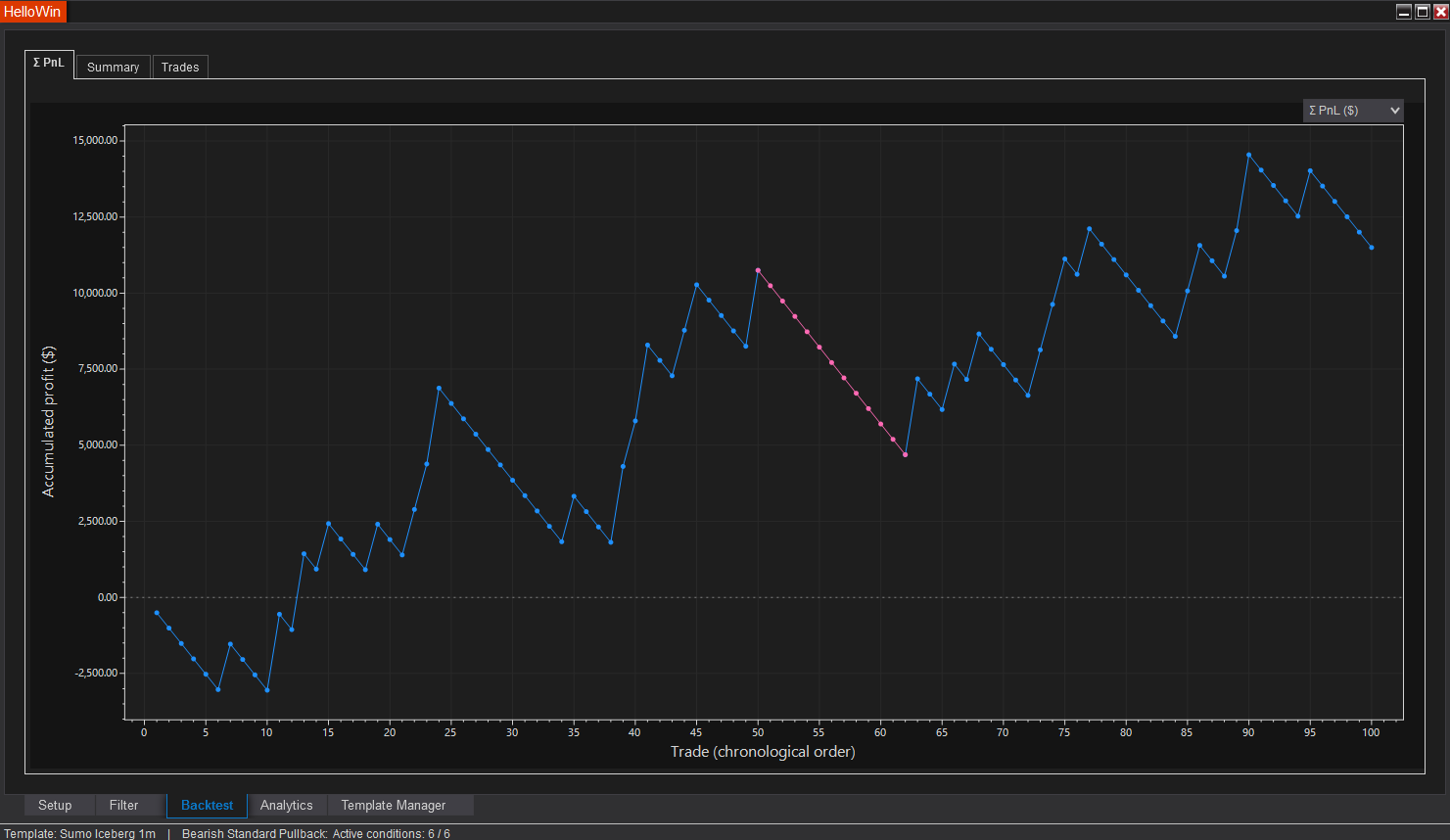
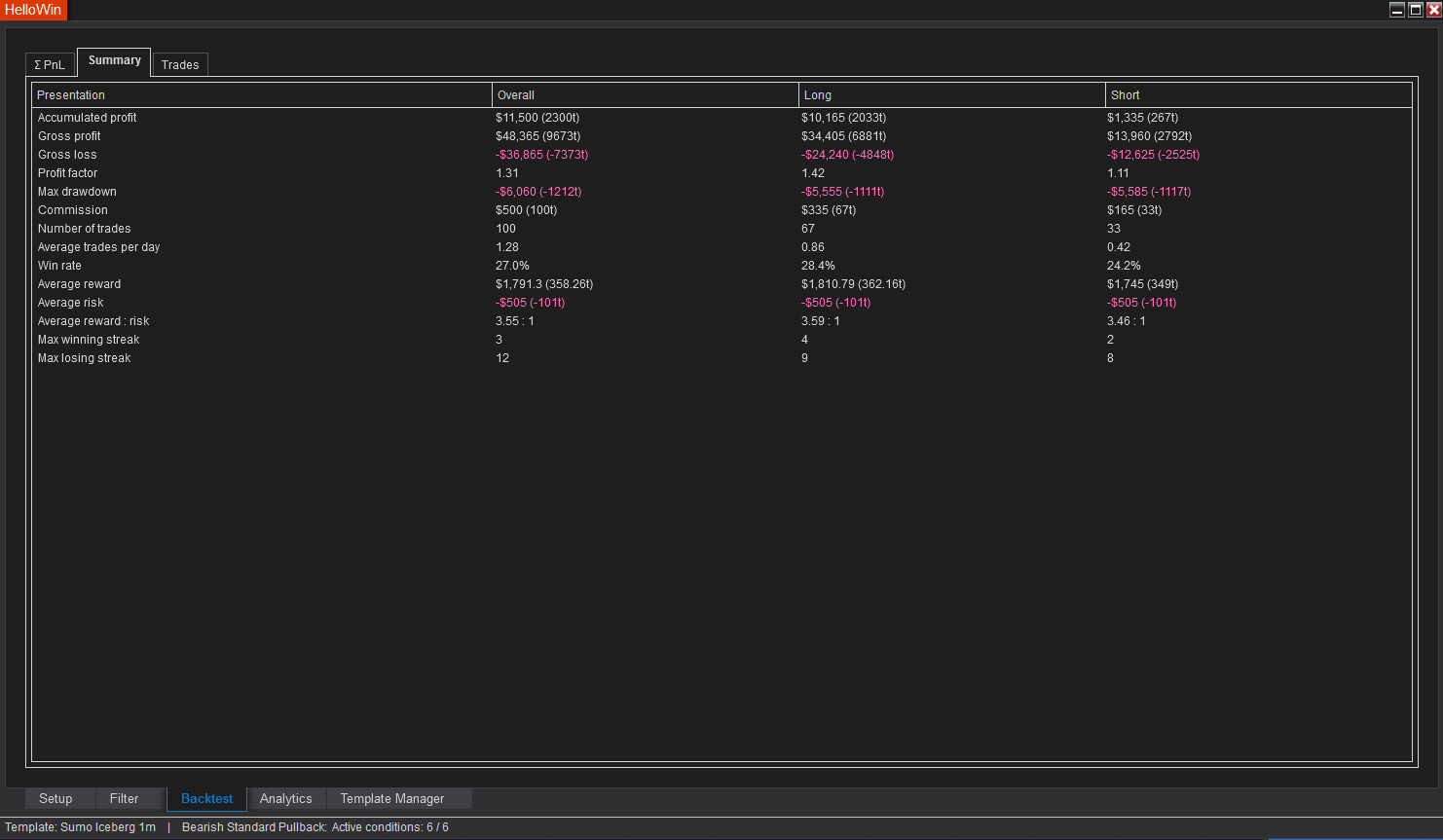
1-Minute Chart
- Accumulated Profit: ~$11,500
- Profit Factor: 1.31
- Win Rate: ~27%
- Reward : Risk: ~3.5 : 1
Fewer signals on time-based charts. Higher trade quality and larger winners
Final Takeaway
The backtest confirms the edge does not come from candle shapes. It comes from:
- Internal market structure
- Institutional execution behavior
Sumo Pullback$ × Sonarlike Iceberg Finder is not designed for high win-rate traders. It is built for traders who understand that:
Sustainable edge comes from trading the right market phase, aligned with the participants who actually move price.