The “Hidden Attribute” of Zenith-X: Deep Pullback
If you only trade based on signals, you are likely using only about 50% of the real power of Zenith-X.
Most traders using Zenith-X tend to enter trades as soon as a signal appears. This approach can work in certain conditions, but it causes you to miss one of the biggest advantages Zenith-X provides: the ability to identify Deep Pullbacks.
Deep Pullbacks typically offer:
In this article, I share how I trade Deep Pullbacks using a very simple checklist:
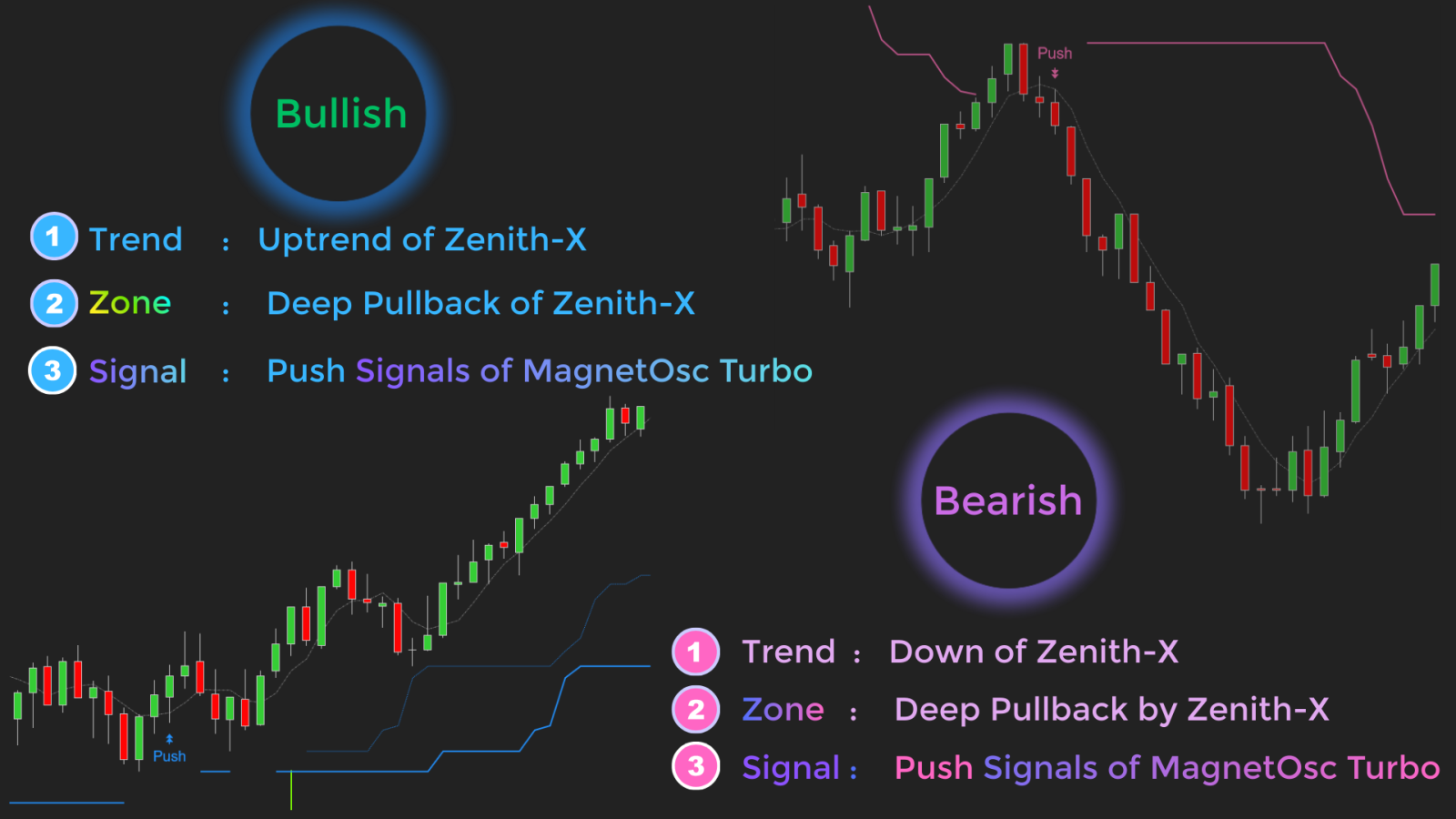
1️⃣ Zenith-X Signals
Zenith-X provides multiple signals to help read market structure, but there is only one actual trade signal: the Pullback Signal.
The key question is not:
“Is there a Pullback Signal or not?”
The real question is:
Is this a shallow pullback, or a Deep Pullback?
This distinction is what makes Deep Pullback a “hidden attribute” worth exploiting.
2️⃣ Regular Pullback vs Deep Pullback
🔹 Shallow Pullback (regular pullback)
Characteristics
Price pulls back lightly and resumes quickly
Usually occurs when momentum remains strong
Most effective in clean areas with minimal nearby support/resistance
Limitations
R:R is often modest since entries are closer to the middle of the move
Price may move briefly, then reverse and stop out near nearby levels
Easily affected by noise if the market actually needs a deeper correction
Summary: Shallow pullbacks are easy to trade, but not always worth trading.
🔹 Deep Pullback (the hidden attribute)
Characteristics
Deep Pullbacks do not appear frequently, but when they do, they often represent the highest-quality pullback zones.
Why Deep Pullbacks are valuable
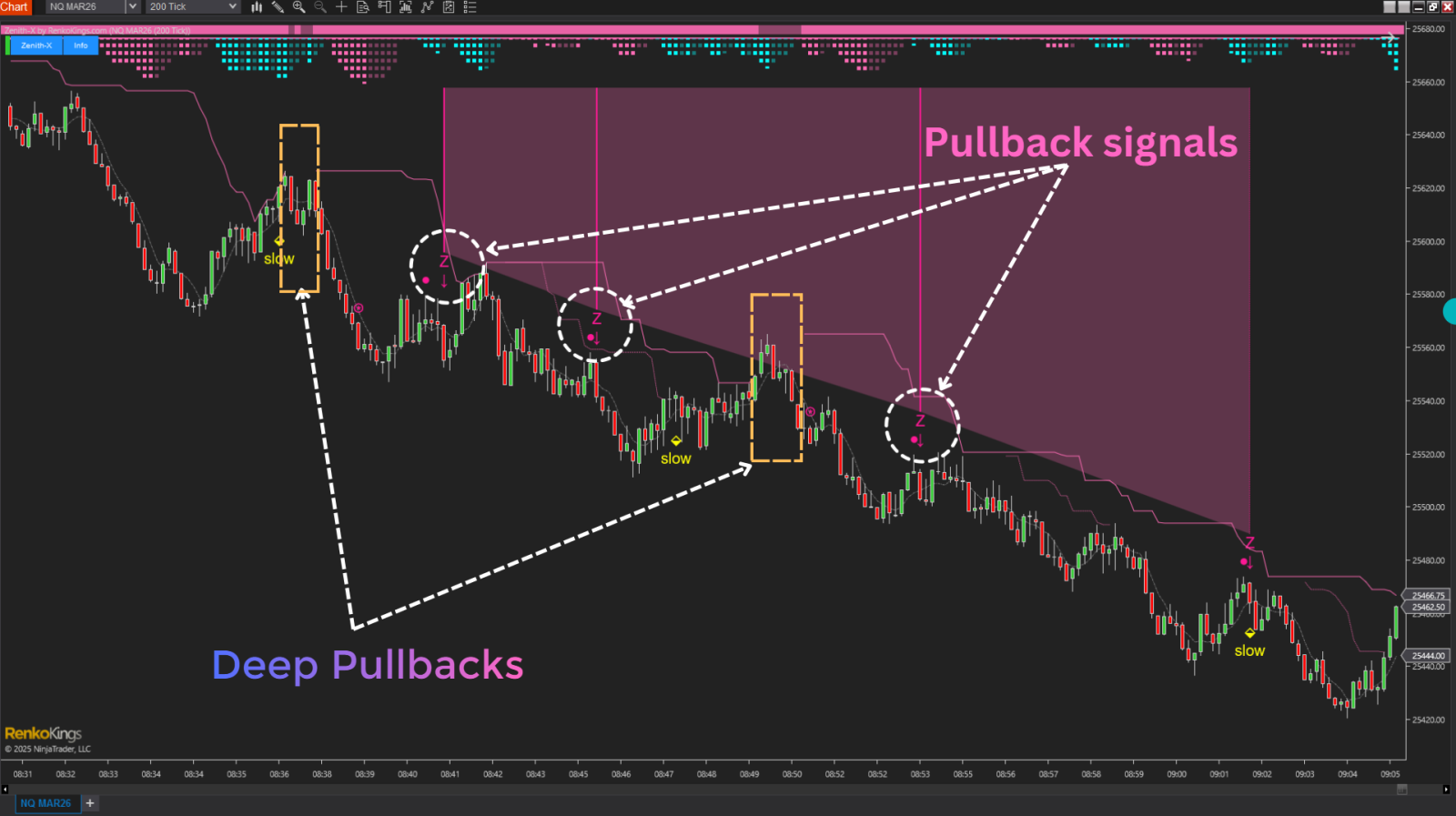
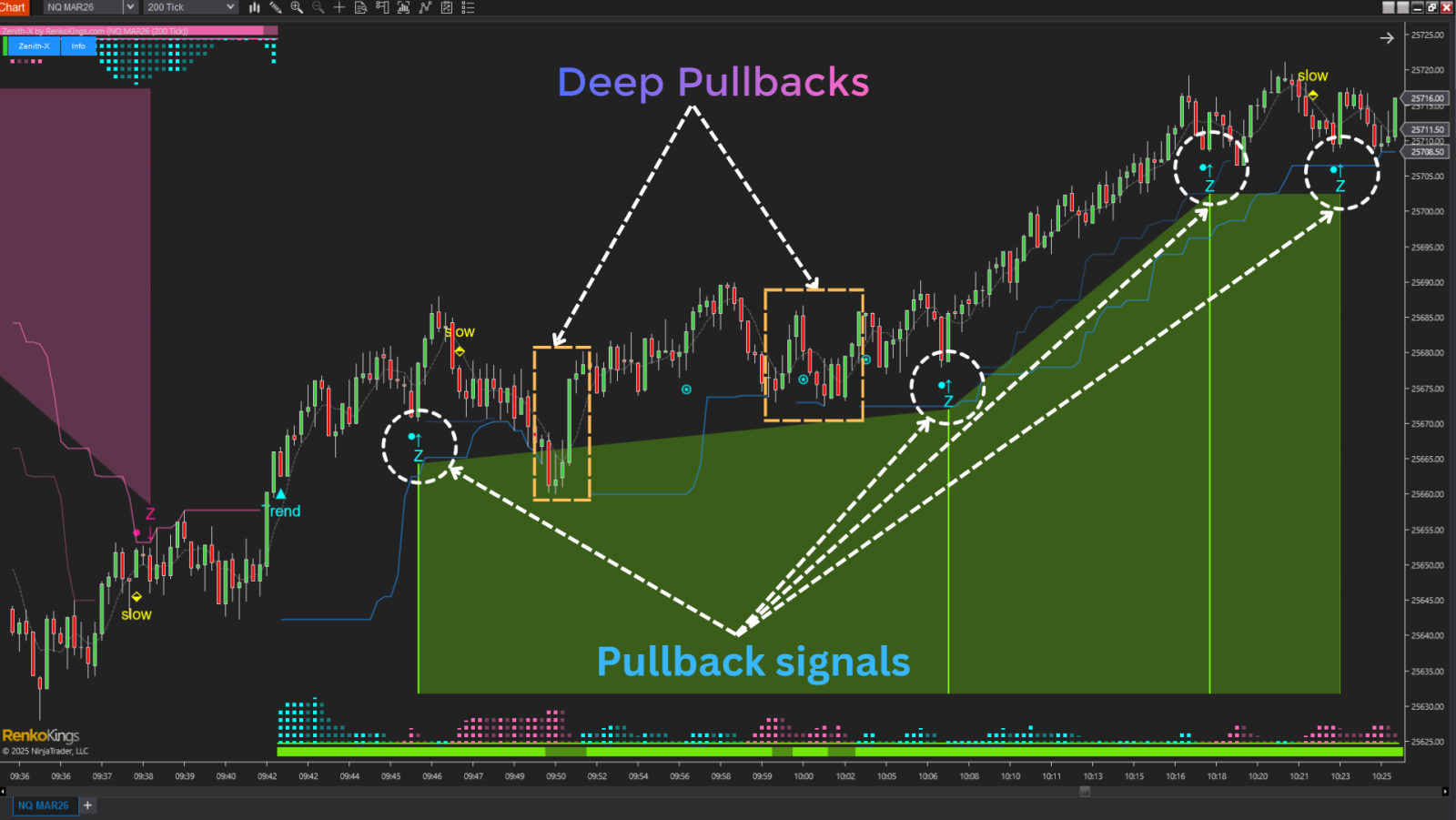
3️⃣ Three-Layer Structure: Trend → Zone → Signal
To trade Deep Pullbacks with discipline, I use a three-layer structure.
A setup is valid only when all three layers are present.
🔵 Layer 1 — Trend
Zenith-X confirms that the market is in:
Rules
⚠️ Most important:
When price enters a Deep Pullback Zone, the trend must still be intact.
A Deep Pullback is a deep correction within a trend, not a trend reversal.
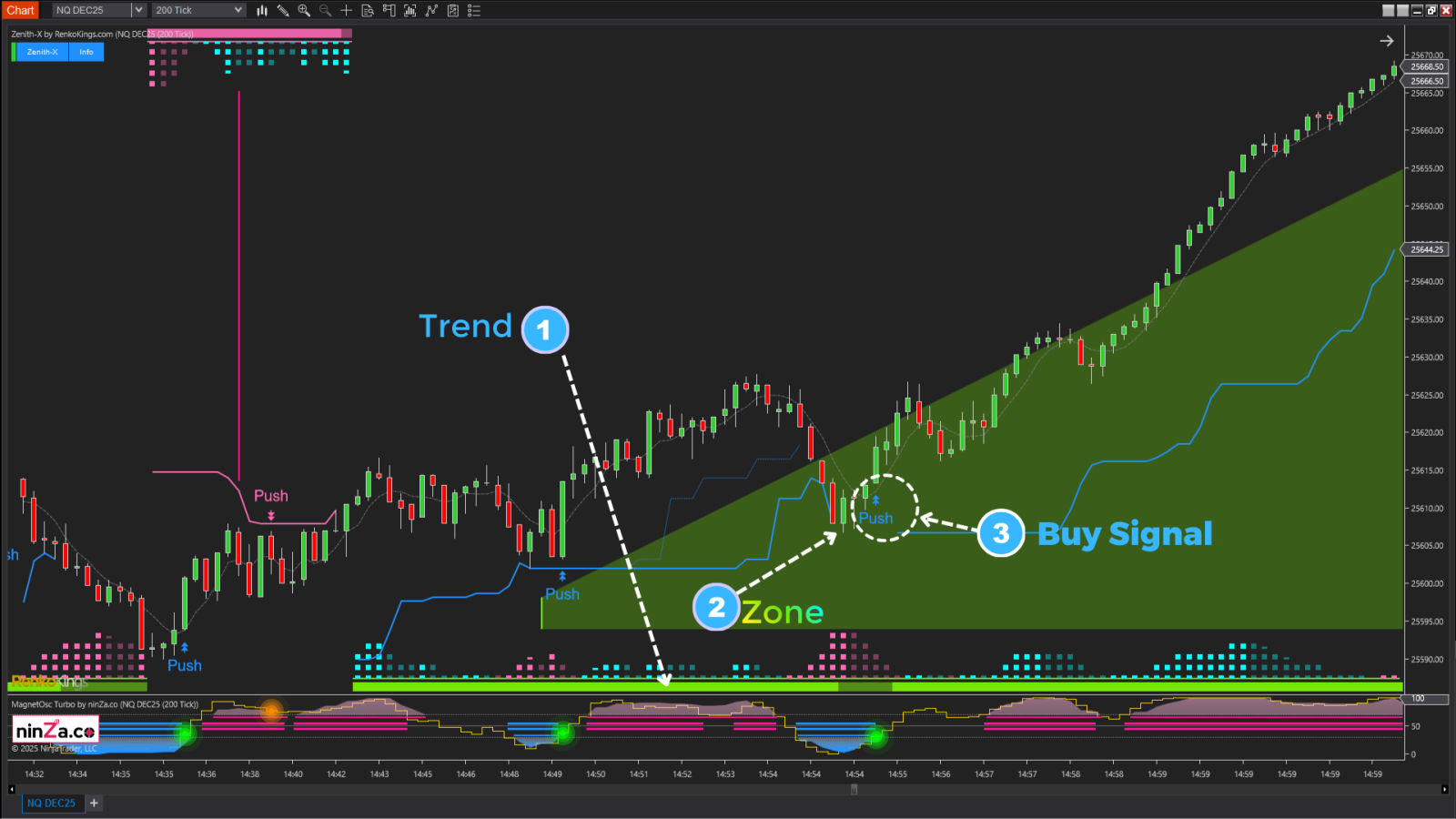
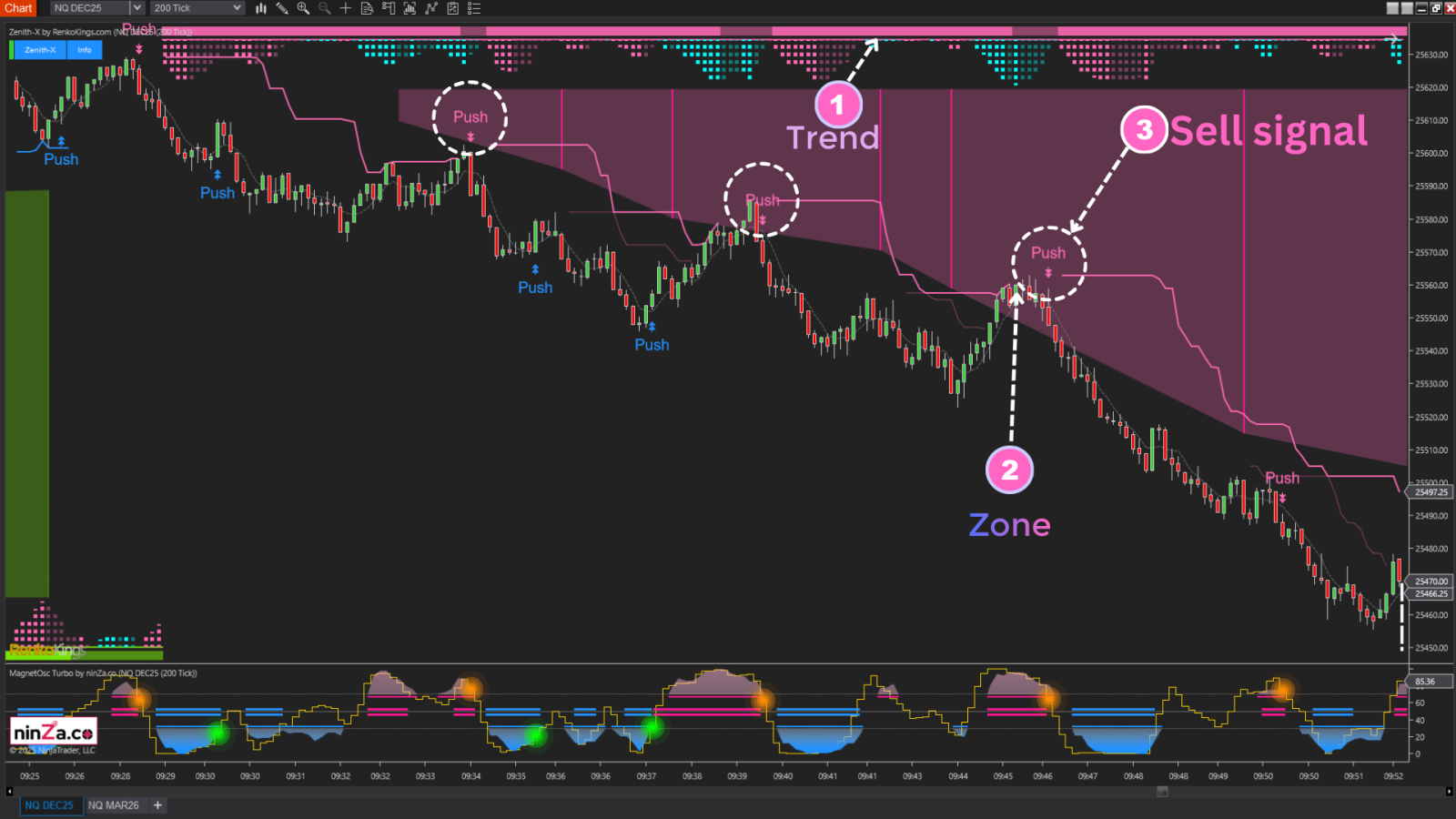
🟩 Layer 2 — Zone: Deep Pullback Zone
The Zone is a deep corrective area where the trend weakens temporarily but structure is not broken.
Identification
This state indicates the market is:
👉 In short:
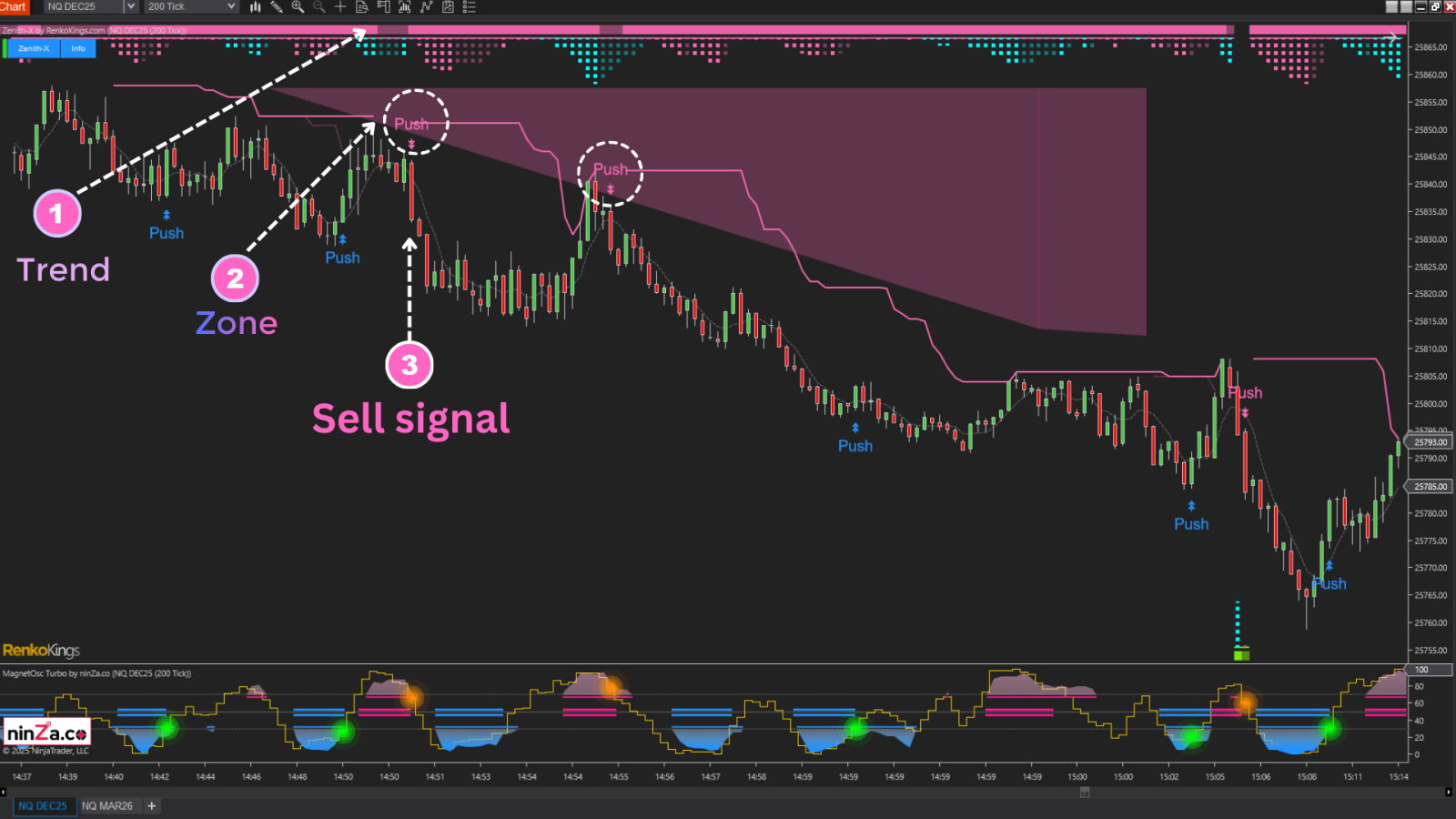
🟣 Layer 3 — Signal: Push Signal (MagnetOsc Turbo)
At the Deep Pullback Zone, I do not enter immediately.
I wait for the Push Signal from MagnetOsc Turbo to trigger the entry.
In this system, Push Signal is the only entry signal at Layer 3.
Why I use Push Signal
Push Signal helps to:
Rules
👉 Push Signal appears inside the Deep Pullback Zone, with the trend still intact → valid setup.
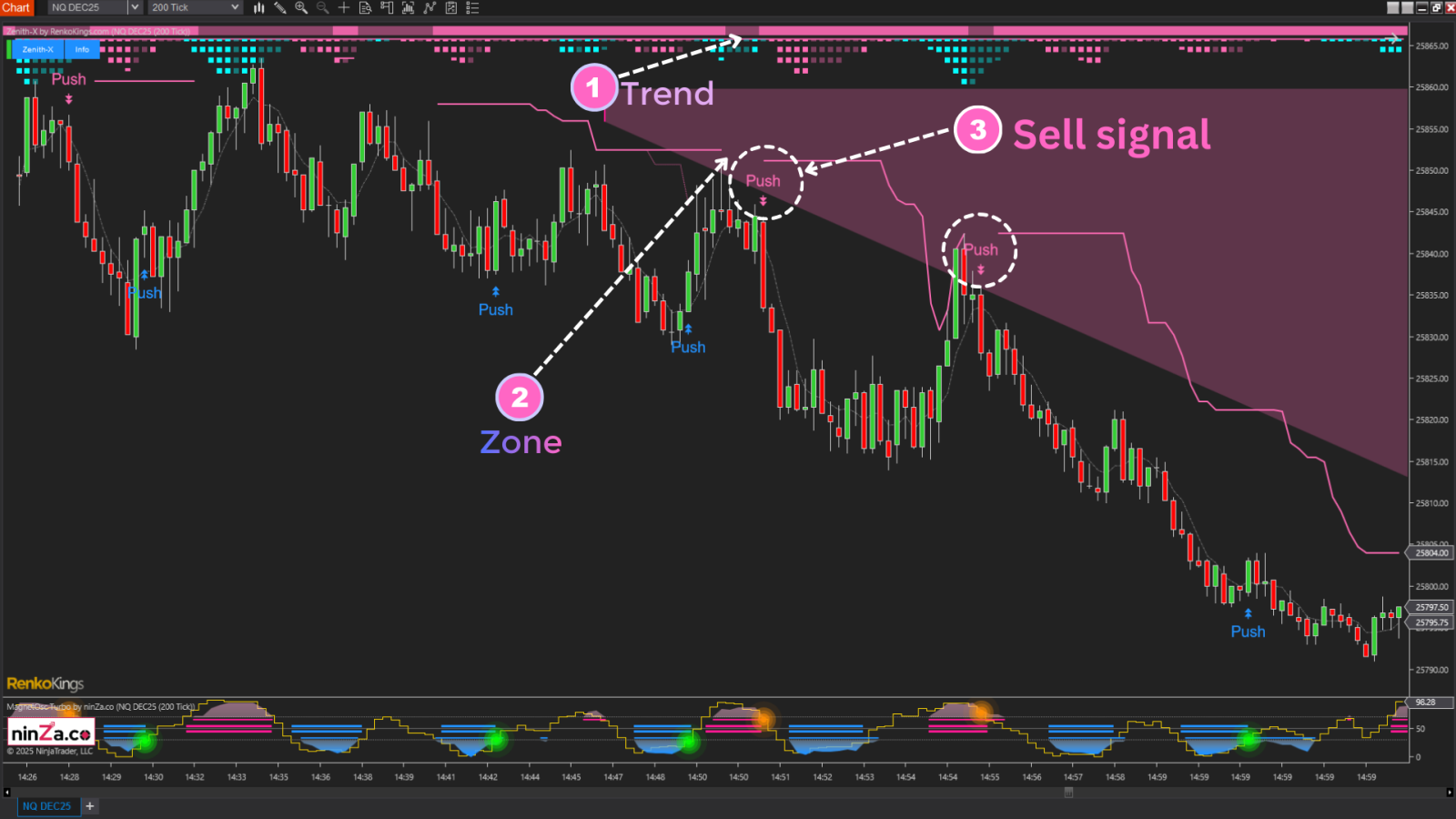
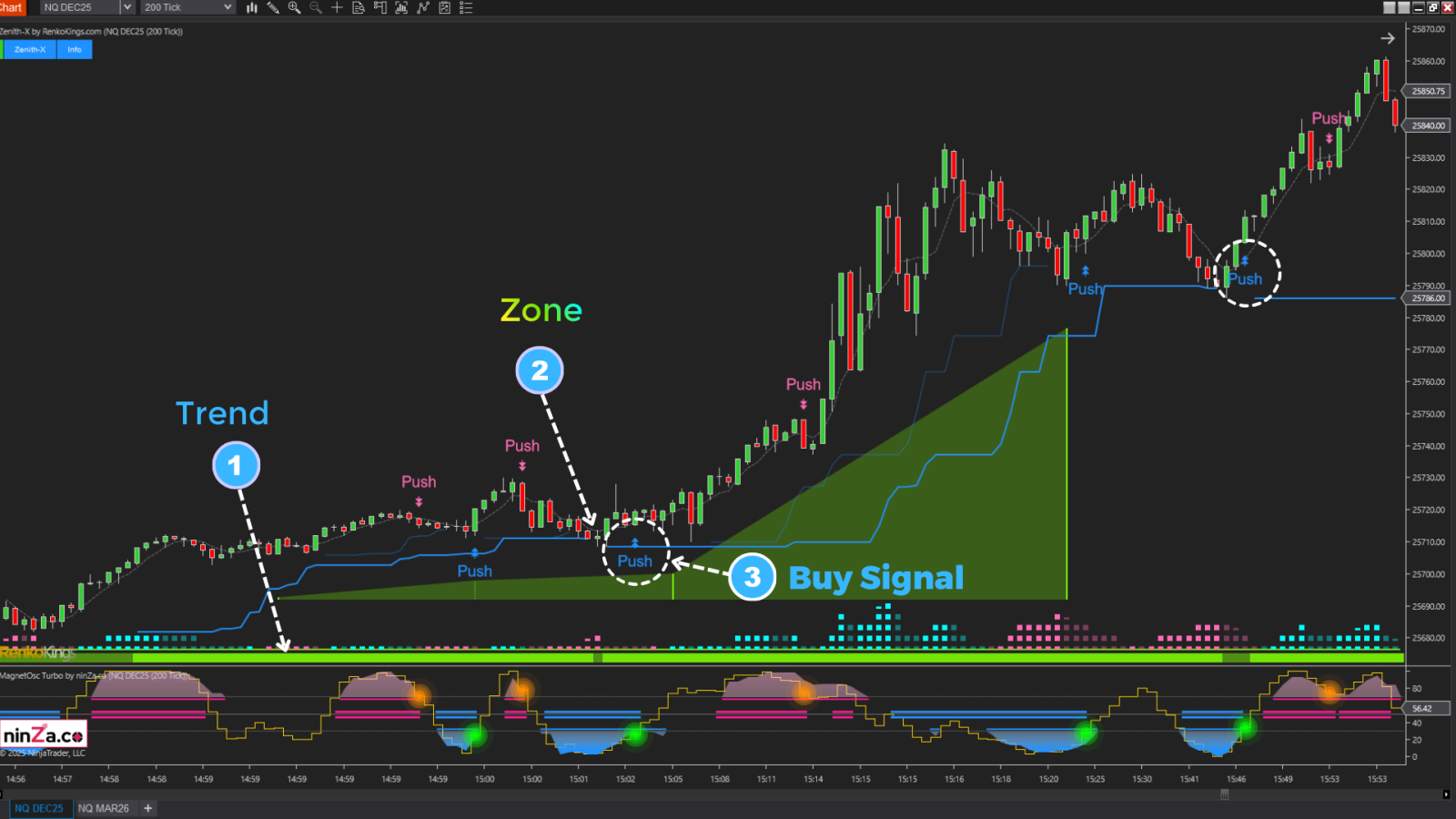
Entry Checklist
I only enter a trade when:
✅ Trend: Zenith-X confirms the trend, trade in the same direction
✅ Zone: Deep Pullback (Trend Plot cut/paused, trend faded but intact)
✅ Signal: Push Signal from MagnetOsc Turbo, aligned with trend (Bullish/Bearish by color)
→ Enter trade
Missing one condition → No trade
📊 Backtest Results (NQ 150 Tick – 60 Trading Days)
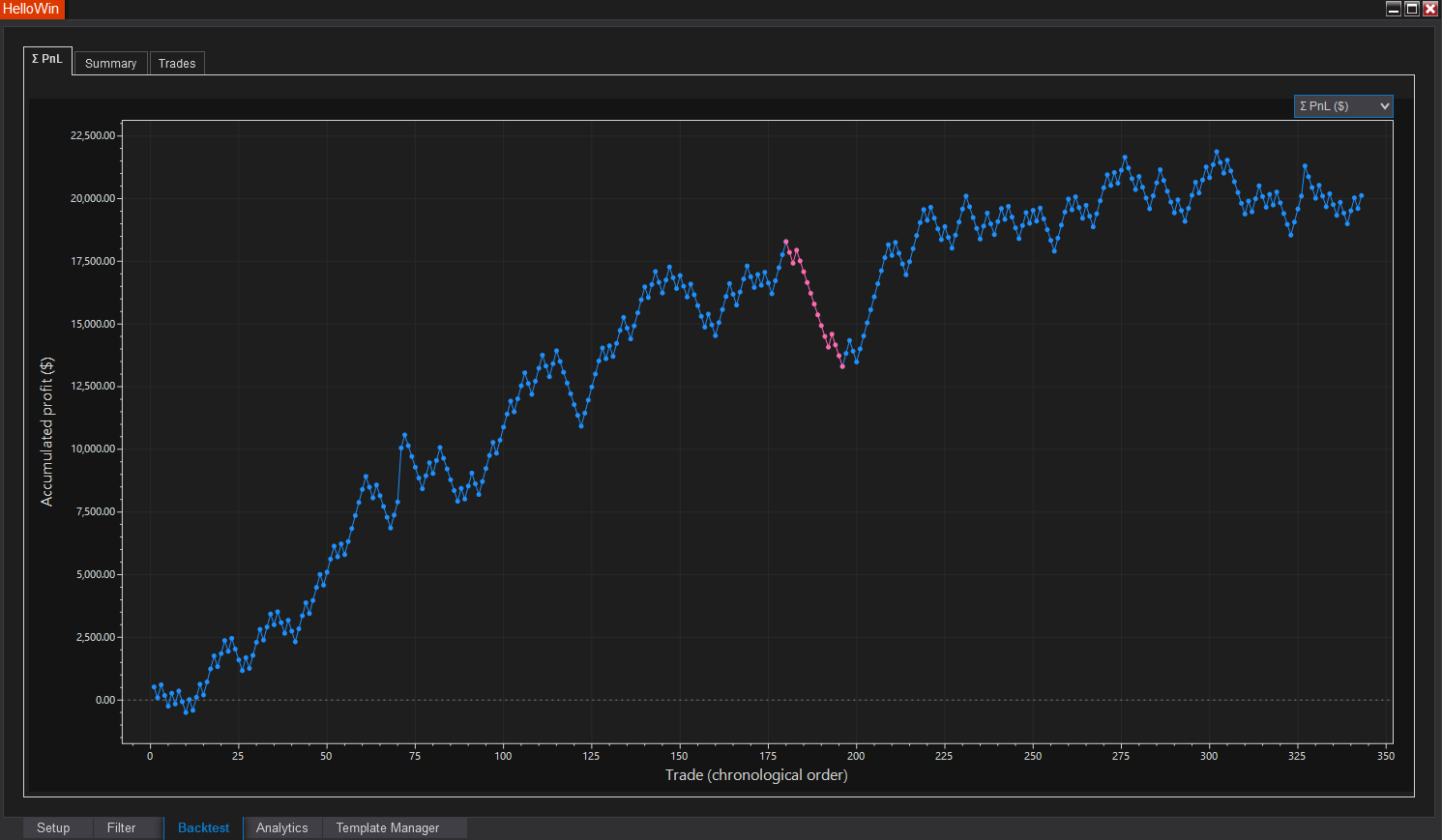
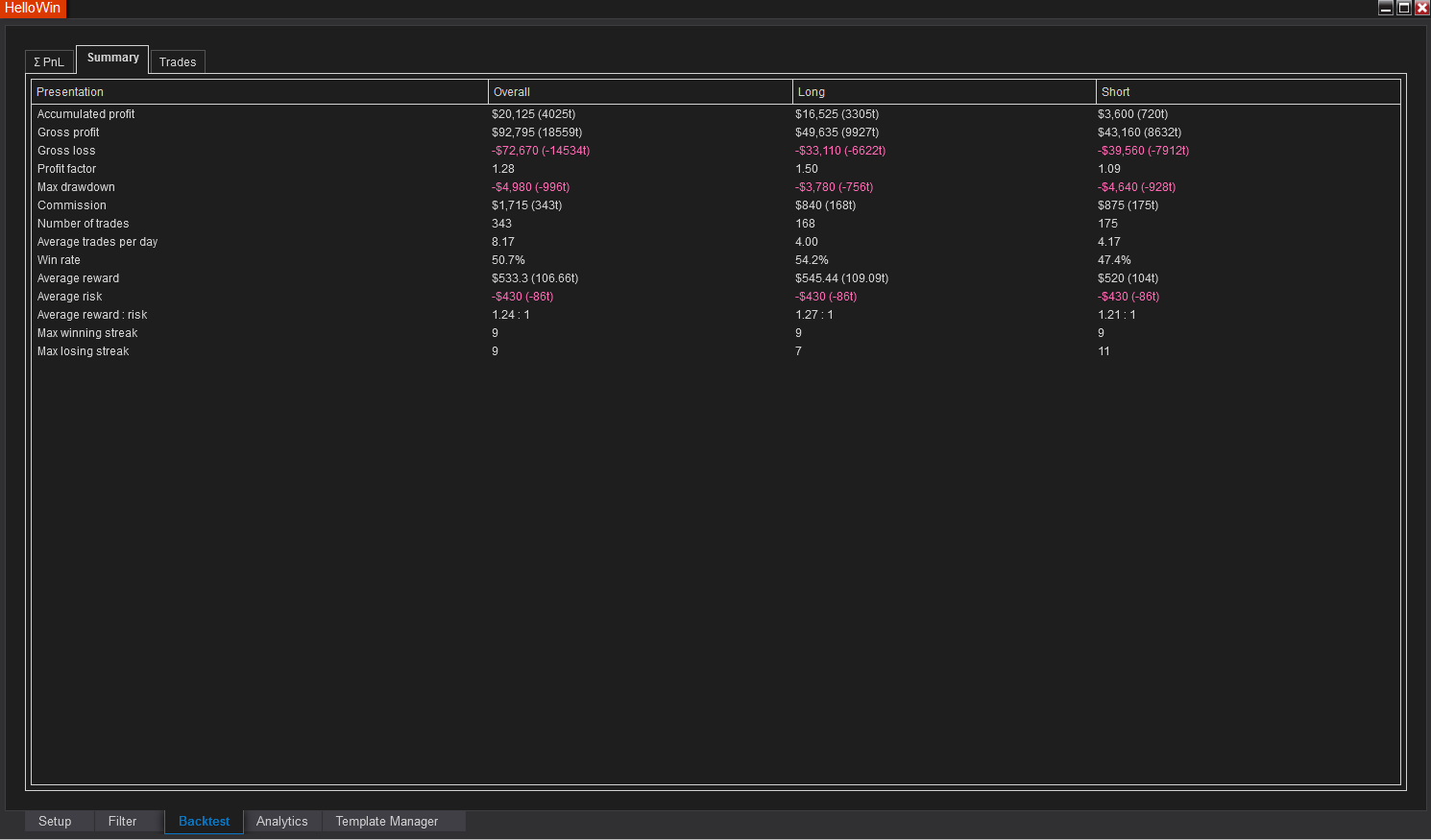
Accumulated Profit: ~ $20,000
Profit Factor: ~ 1.28
Win Rate: ~ 50%
Max Drawdown: ~ $5,000
Average Reward : Risk: ~ 1.2 – 1.3 : 1
Trade count large enough to reflect multiple market conditions
Note
These results do not guarantee future performance and are not intended to show that the system “does not lose,” but they indicate that:
The Deep Pullback + Push Signal logic performs consistently in real market conditions
Drawdown is controlled by:
Profits come from clear trend continuations, not from catching tops or bottoms
Conclusion
Zenith-X is not just a signal indicator — it is a market structure system.
When you:
you are trading:
The right context
The right location
The right timing
And that is where probability begins to work in your favor.