Most traders spend a lot of time refining their entries.
Far fewer spend the same effort on trade management – which is where the majority of real profits or losses occur.
I used to face 2 recurring problems:
Interested in this strategy? Grab ATR-TradeShield + Multi-Timeframe Fu$ion for just $496 and get a FREE Superior RSI!

This is a limited-time deal, so don’t wait! Grab this offer now and start managing your profits like a pro before it's gone.
Over time, I realized that trailing stops should NOT be reactive or emotional. They need context, structure, and consistency.
In this post, I’ll share the trailing stop checklist I currently use, built around an ATR-based structure, multi-timeframe confluence, and momentum confirmation.
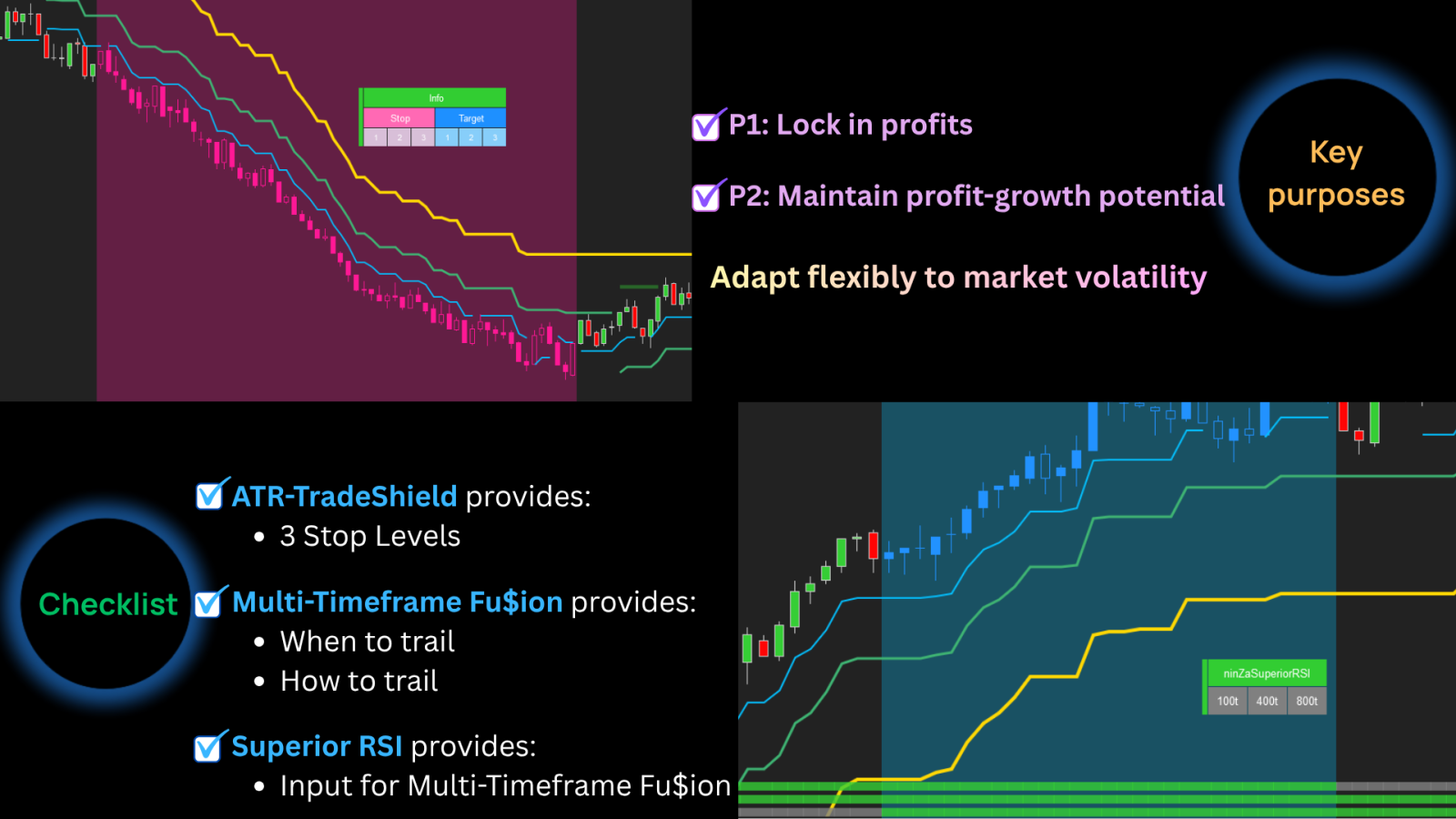
This checklist is built around 2 core purposes:
Purpose 1 (P1) – Lock in profits
→ Protect unrealized gains once the trade starts working.
Purpose 2 (P2) – Maintain profit-growth potential
→ Allow trades to develop without choking strong trends.
And adapt to market volatility
→ Adjust stop behavior based on changing market conditions.
3 Key elements behind the checklist
✅ ATR-TradeShield – Trailing Stop Structure
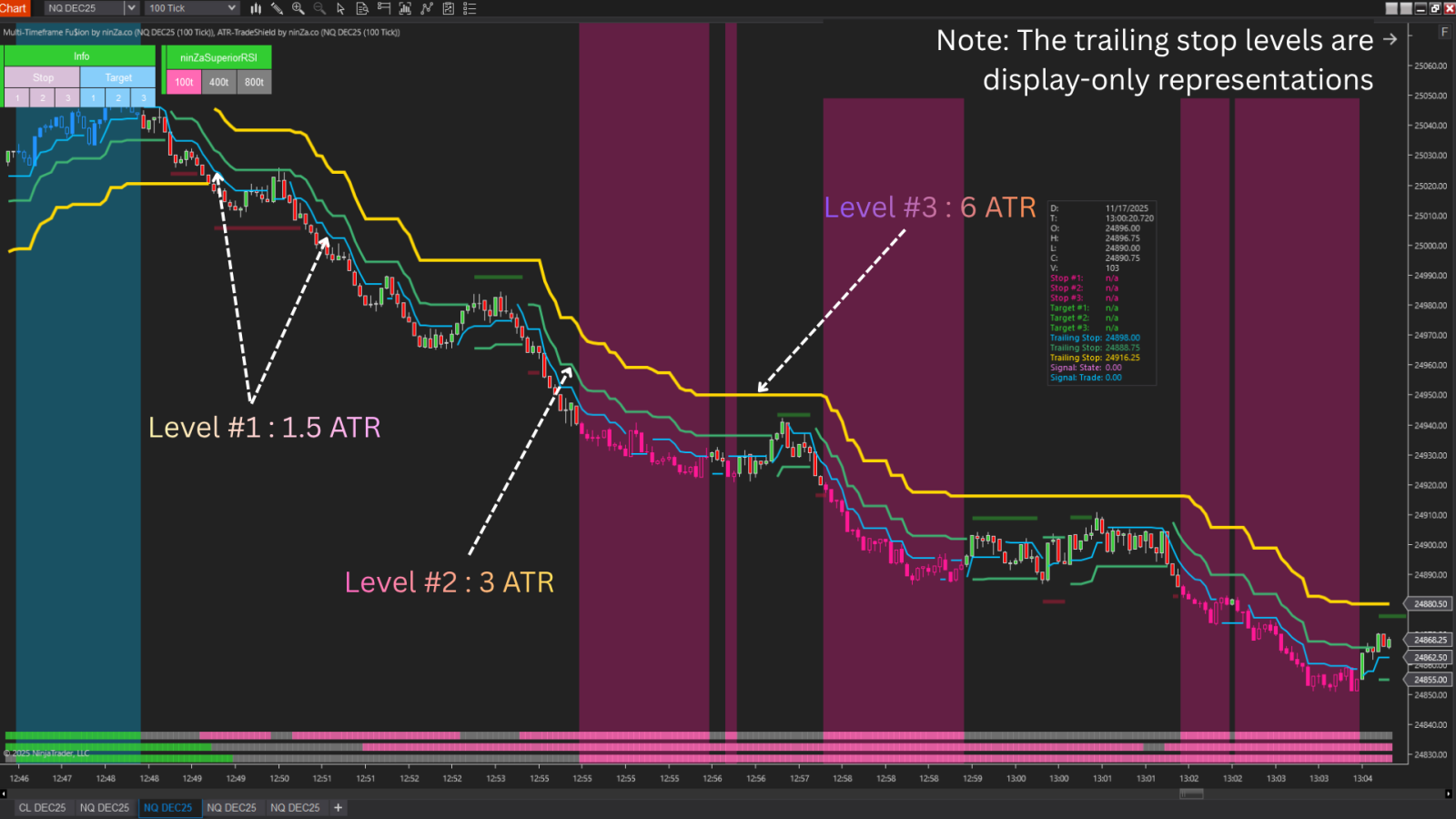
ATR-TradeShield provides 3 trailing stop levels:
Level #1: 1.5 ATR
Tight trailing, focused on capital protection.
Level #2: 3 ATR
Balanced trailing, suitable for trend continuation.
Level #3: 6 ATR
Loose trailing, designed to capture extended moves.
These levels are visual decision aids only, they are not automated execution rules.
✅ Multi-Timeframe Fu$ion – Market Context
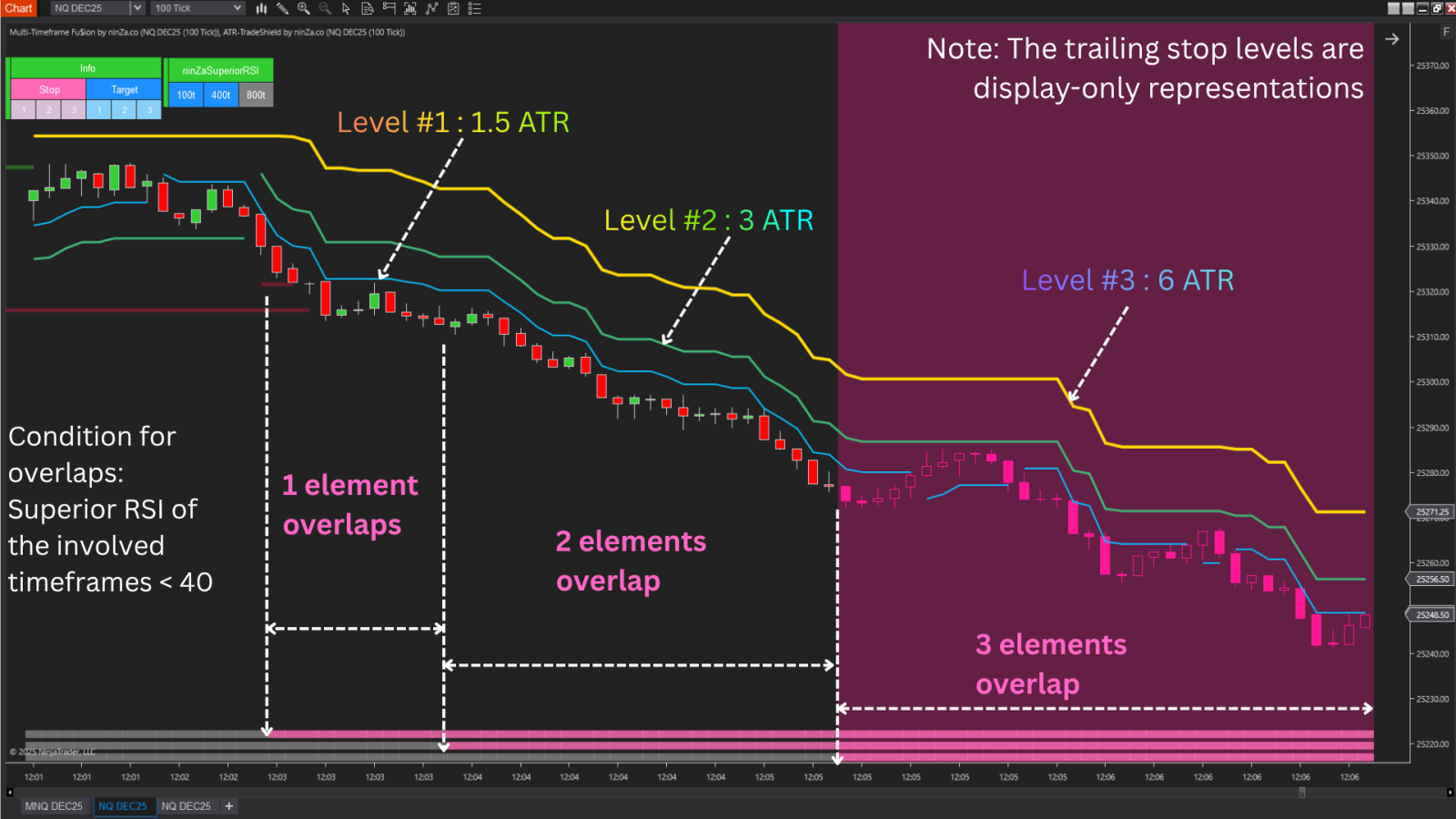
Multi-Timeframe Fu$ion addresses 2 critical questions:
It does this by checking how many timeframes show RSI in the same direction:
Greater overlap = stronger directional consensus = more flexibility in trailing.
✅ Superior RSI – Momentum Filter
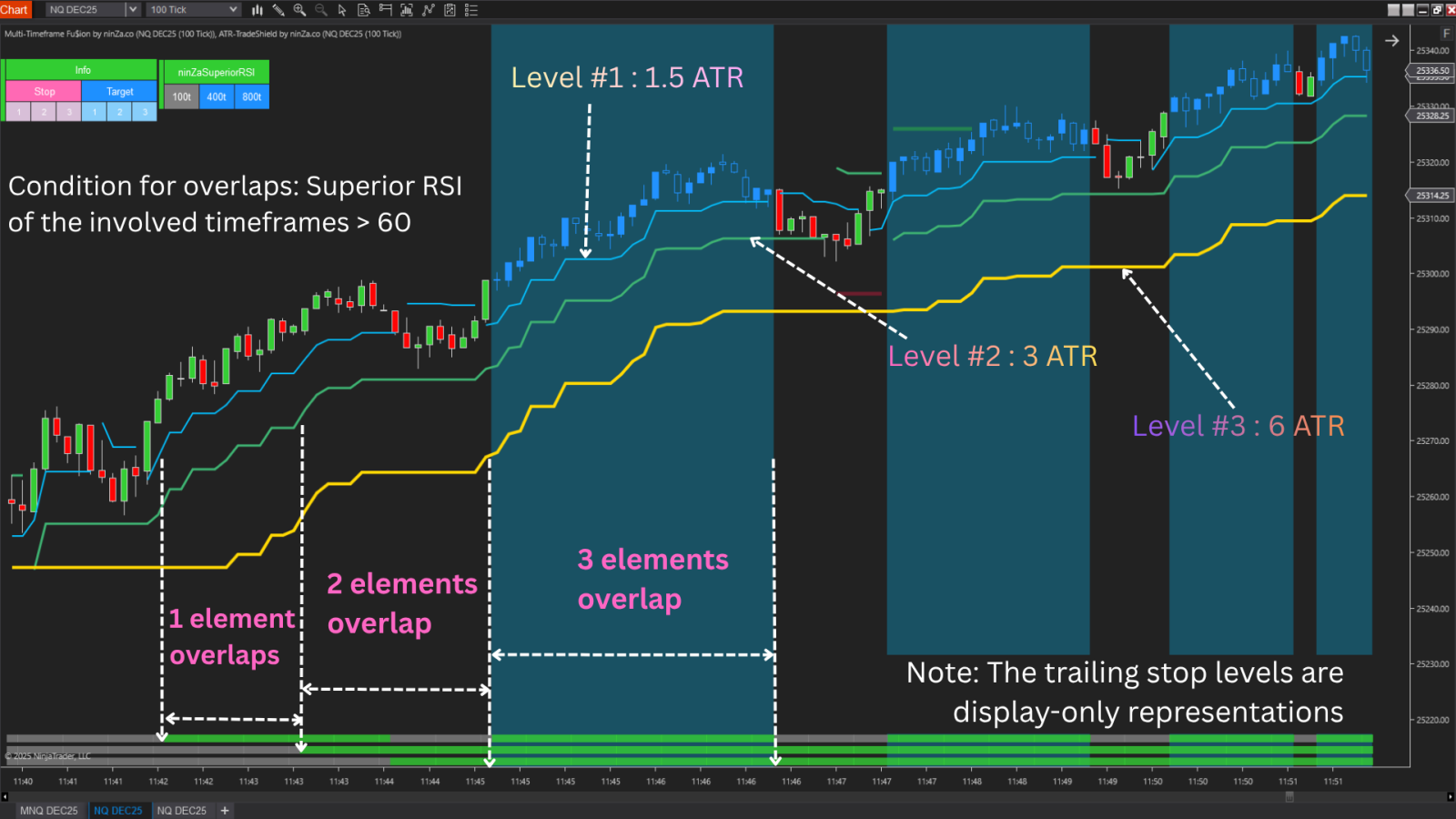
Superior RSI is used as a momentum and regime filter, helping distinguish trend continuation from short-term noise.
General guidelines:
Overlaps are only considered valid when RSI across the relevant timeframes is aligned.
How the Trailing Stop Checklist is applied
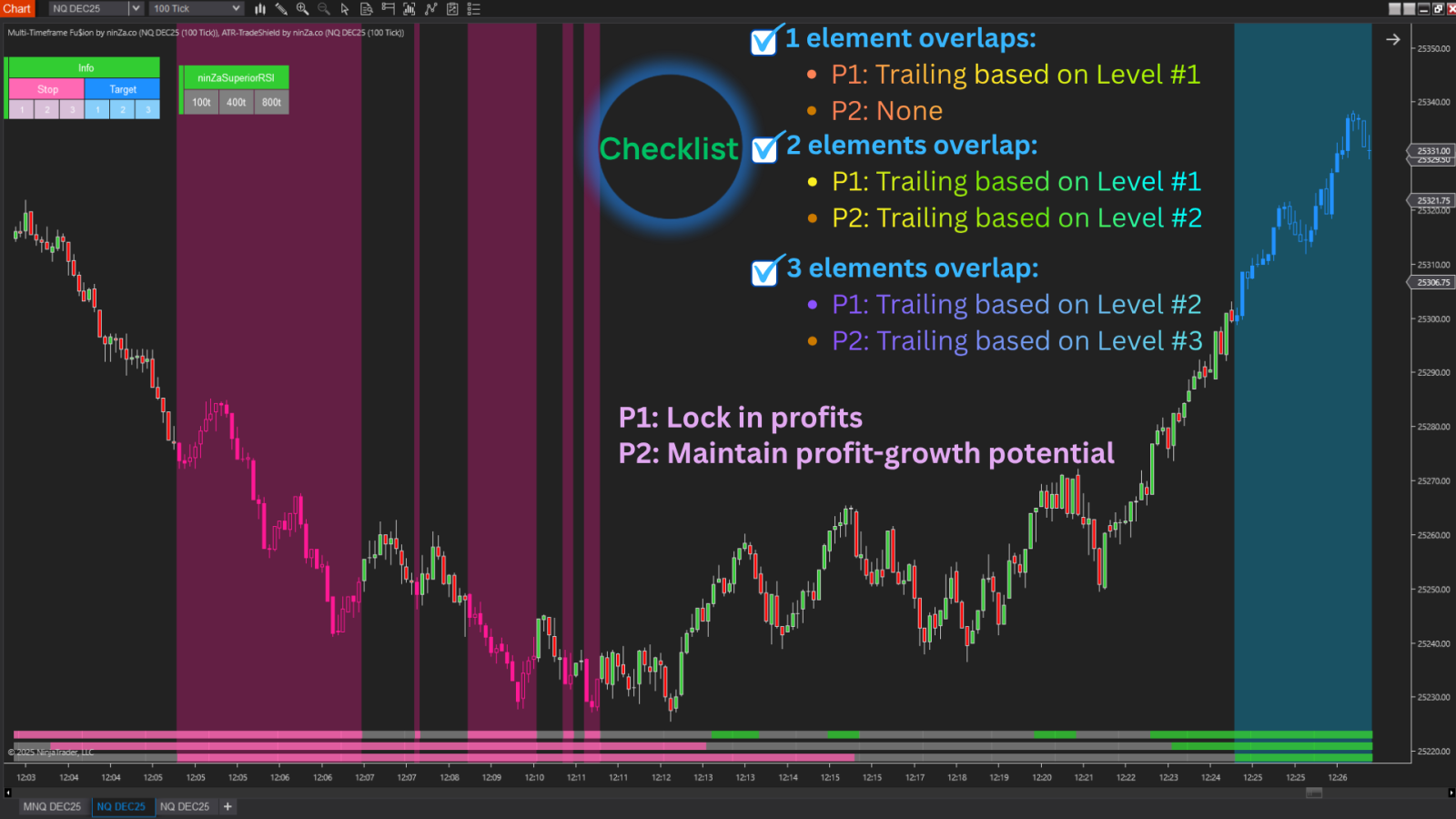
🔹 Scenario 1: 1 Element Overlap
Conditions
Action
Purpose
Prioritize profit protection and reduce exposure to false breakouts.
🔹 Scenario 2: 2 Elements Overlap
Conditions
Action
Purpose
Balance risk control with the ability to stay in the trade.
🔹 Scenario 3: 3 Elements Overlap
Conditions
Action
Purpose
Shift focus from protection to maximizing trend capture.
Why this checklist works for me
This checklist removes a large part of the discretionary and emotional decision-making that often comes with trailing stops.
By enforcing the same logic across trades, it creates consistency and keeps trade management grounded in market structure rather than fluctuating P&L.
Most importantly:
I no longer try to predict tops or bottoms.
I react to context and confirmation, not expectations.
Final thoughts
This checklist will not make every trade profitable. What it does is:
If your entries are solid but results remain inconsistent, the issue may not be where you enter, but how you manage the trade.
Trade management is not about control – it is about structured adaptation.